Plant Overview
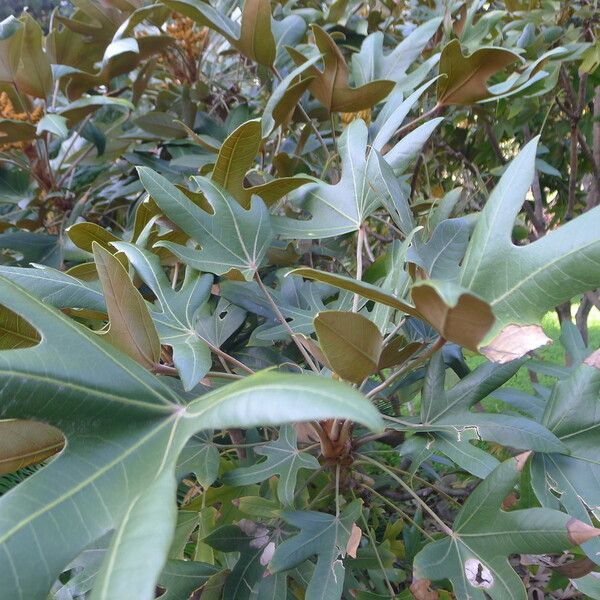
Often called the Finger-leaved Oreopanax, this stunning Mexican native looks like it stepped straight out of a prehistoric jungle. With its massive, architectural leaves that fan out like giant, outstretched hands, it adds a touch of ancient drama to any collection. It is a member of the Araliaceae family, making it a sophisticated, more exotic cousin to the common English Ivy.
🔍 How to Identify
- 🌿 The "Finger" Leaves: The most striking feature is its palmate foliage—each leaf is deeply divided into 7 to 10 long, elegant lobes that resemble a splayed hand.
- 🧶 Rusty Velvet: New growth emerges covered in a beautiful, copper-colored "fuzz" (called indumentum), which protects the young leaves before they transition to a smooth, leathery dark green.
- 🌳 Upright Structure: Unlike its vining ivy cousins, this plant grows as a sturdy, multi-stemmed shrub or small tree with a distinct, woody trunk.
🏡 In Your Garden
- ☁️ Cloud Forest Origins: Because it hails from high-altitude forests in Mexico and Guatemala, it craves high humidity and "bright shade." It will struggle in the dry, hot air of a typical radiator-heated room without a humidifier.
- 🪴 Root Stability: It prefers a very airy, well-draining potting mix. It dislikes being moved frequently, as its root system is adapted to the stable, consistent conditions of the forest floor.
⚠️ Safety & Toxicity
- 🐾 Moderate Risk: Like most members of the Aralia family, this plant contains saponins and calcium oxalate crystals. It is considered toxic to cats, dogs, and horses if ingested.
- 🧤 Skin Irritation: The sap and the fine hairs on new growth can cause mild skin irritation or "dermatitis" for those with sensitive skin. It is best to wear gloves when pruning or repotting.
✨ Fun Fact
The genus name Oreopanax is derived from the Greek words for "Mountain" and "All-healing." While this specific species is mostly ornamental, its close relative, Ginseng, is world-famous for its medicinal properties!

Detailed Care Instructions

Place in a window with dappled sun or a spot in the middle of a room. Or directly in a window facing west or east.

When the top few inches of soil dry out, water your plants. If the top few inches of soil are still moist, do not water your plant. Wait a few days, then poke your finger into the soil to see if anything has changed. Overwatering poses a disease risk, such as the development of fungal diseases in the roots. These plants have adaptations in there leaves that allow them to survive in low water supply.








