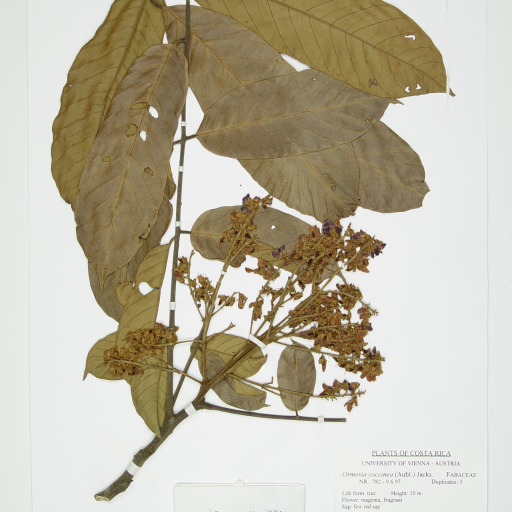
Plant Overview
Known as the "Huayruro" in its native South America, Ormosia coccinea is most famous for its striking, "ladybug-like" seeds. These seeds have been prized for centuries by indigenous cultures as symbols of good fortune, protection, and fertility. While it begins its life as a modest sapling, it eventually matures into a towering giant of the Amazonian canopy.
🔍 How to Identify
- 🔴 The Seeds: The most iconic feature; hard, shiny, scarlet-red seeds marked with a distinct black spot on one end, resembling a beetle.
- 🌿 The Foliage: Large, compound leaves made up of several pairs of oval, leathery leaflets that create a dense, tropical canopy.
- 📦 Seed Pods: Flattened, woody pods that split open upon maturity to reveal the brightly colored seeds dangling inside.
🏡 In Your Garden
- 🌳 Space Requirements: This is not your average backyard shrub. Because it grows into a massive rainforest tree, it is rarely cultivated in domestic gardens and is instead found in botanical collections or large tropical estates.
- 🧪 Soil Enrichment: As a member of the legume family, this tree is a "nitrogen fixer." It works with specialized soil bacteria to pull nitrogen from the air and store it in the ground, naturally fertilizing the surrounding earth.
- 💧 Tropical Mimicry: It requires deep, well-draining soil and a climate that stays warm and humid year-round. It struggles significantly if the temperature drops or the air becomes too dry.
⚠️ Safety & Toxicity
- 🚫 Toxicity Status: Highly Toxic if ingested.
- ⚠️ The Risk: The seeds contain potent alkaloids (including ormosine). While they are popular for making necklaces and bracelets, they are dangerous if swallowed by children or pets. If the hard outer shell is cracked or crushed, the toxins are more easily absorbed by the body.
- 🧤 Handling: While the seeds are generally safe to touch when intact for jewelry, they should always be kept out of reach of curious toddlers who might mistake them for candy.
✨ Fun Fact
In Peru, it is a traditional custom to give Huayruro seeds to newborns or keep a bowl of them by the front door. They are believed to ward off "mal de ojo" (the evil eye) and ensure that wealth never leaves the home.

Detailed Care Instructions
To grow an Ormosia coccinea plant, also known as the red bead tree, you can follow these steps:
- Obtain seeds or a young seedling of the Ormosia coccinea plant. You can find them online or at a local nursery.
- Prepare a pot or planting container with well-draining soil. The soil should be slightly acidic to neutral and rich in organic matter.
- Soak the seeds in water for 24 hours to help with germination. If you have a seedling, skip this step.
- Plant the seeds or transplant the seedling into the prepared pot, placing them at a depth of about three times the seed size. If planting multiple seeds, space them a few inches apart.
- Water the newly planted seeds or seedlings thoroughly. Keep the soil consistently moist but not waterlogged.
- Place the pot in a location that receives bright, indirect sunlight. Ormosia coccinea appreciates warm temperatures, ideally between 65°F to 75°F (18°C to 24°C).
- Maintain a regular watering schedule, ensuring the soil stays moist but avoiding overwatering. Allow the top inch of soil to dry out before watering again.
- Fertilize the plant once a month during the growing season with a balanced, water-soluble fertilizer. Follow the package instructions for the appropriate dosage.
- Provide support as the plant grows taller. Ormosia coccinea can develop into a small to medium-sized tree, so you may need to stake the main stem to encourage upright growth.
- Prune any dead, damaged, or overcrowded branches to maintain a healthy and attractive shape.
- Protect the plant from frost or freezing temperatures. If necessary, move it indoors during winter or provide a protective cover.
- Be patient, as it may take several years for the Ormosia coccinea plant to start producing the vibrant red beads it is known for. Once matured, it will typically flower in spring and produce pods containing the distinctive red seeds.
Remember to research and understand the specific care requirements for Ormosia coccinea, as plant care can vary based on climate and environmental conditions.
Ormosia Coccinea is a plant species that requires moderate watering. It should be watered when the top layer of soil feels dry to the touch. It is important not to overwater the plant as it may result in root rot. During hot weather, the plant may require more frequent watering. When watering, it is best to water around the base of the plant rather than on top of its leaves to prevent fungal diseases. Additionally, the plant prefers well-draining soil, so it is essential to ensure that the pot has drainage holes to allow excess water to drain out.
For optimal growth and flowering of this plant, it is recommended to fertilize with a balanced, slow-release fertilizer in early spring and mid-summer. Avoid over-fertilizing, as this may lead to excessive foliage growth at the expense of flowers. Additionally, it is important to ensure that the soil is well-drained and consistently moist, as dry or waterlogged soil can harm the plant's roots.
Ormosia Coccinea plant prefers a well-draining soil that is slightly acidic to neutral in pH. The soil should be rich in organic matter and nutrients, such as nitrogen, phosphorus, and potassium. It is recommended to use soil that is a mixture of sandy loam, peat moss, and perlite or vermiculite for optimal drainage and moisture retention. Avoid using heavy clay or compacted soils that can retain too much moisture and lead to root rot. The plant also benefits from regular fertilization with a balanced fertilizer to promote healthy growth and blooms.
To propagate this plant, take a mature stem cutting with at least three leaves. Remove the lower leaves and dip the cut end into rooting hormone. Place the cutting into a pot filled with well-draining soil and water it thoroughly. Cover the pot with plastic wrap or a plastic bag to retain moisture and keep the cutting in a warm, bright area but out of direct sunlight. Keep the soil consistently moist and check for roots after 4-6 weeks. Once the cutting has rooted, remove the plastic covering and gradually acclimate it to its new environment before transplanting it to a larger pot or garden bed.








