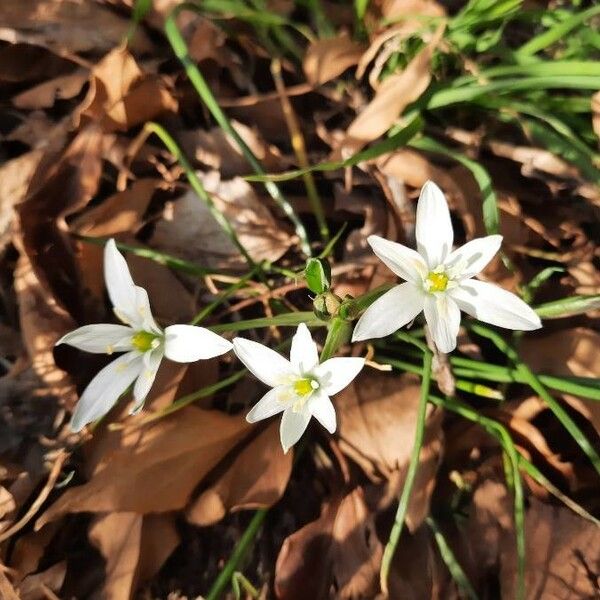
Plant Overview
Often called the Grass-leaved Star of Bethlehem, Ornithogalum orthophyllum is a charming, low-growing bulb that brings a touch of celestial beauty to grassy meadows and rock gardens. These resilient perennials are famous for their brilliant white, star-shaped blossoms that seem to "twinkle" against the green landscape in late spring. While they may look like common grass for most of the year, their sudden burst of symmetrical flowers marks the true transition into the warmer months.
🔍 How to Identify
- 🌟 Starry Blooms: The flowers feature six pure white petals (tepals), each marked with a distinct green stripe on the underside, which is visible when the buds are closed.
- 🍃 Linear Foliage: The leaves are narrow, fleshy, and grass-like, often featuring a subtle white longitudinal stripe running down the center.
- 📏 Prostrate Growth: Unlike some of its taller cousins, this species stays very low to the ground, usually reaching only 4 to 8 inches in height.
🏡 In Your Garden
- 🌱 The "Disappearing" Act: Like many spring ephemerals, this plant goes dormant in the summer. Once it finishes blooming, the foliage will yellow and wither; this is a natural survival strategy to endure the heat, so avoid the urge to overwater during this "nap."
- 🪨 Rock Garden Specialist: Because it thrives in well-drained, gritty soil and doesn't mind a bit of a squeeze, it is the perfect candidate for rockeries or the front of a sunny border where larger plants won't overshadow it.
⚠️ Safety & Toxicity
- 🚫 Status: Toxic if Ingested.
- 🐾 Details: All parts of the plant, especially the bulb, contain cardiac glycosides and alkaloids. These are highly toxic to cats, dogs, and horses if eaten. In humans, ingestion can cause stomach upset or more serious heart-related symptoms, so it is best kept away from curious toddlers.
✨ Fun Fact
The genus name Ornithogalum translates from Greek as "bird's milk." In ancient times, this phrase was used to describe something wonderful, rare, or exceptionally beautiful—a testament to how much people adored these tiny white stars throughout history!

Detailed Care Instructions
To grow Ornithogalum Orthophyllum plant, follow these steps:
- Choose a suitable location: Select a bright spot that receives indirect sunlight throughout the day. This plant can also tolerate partial shade.
- Soil requirements: Use well-draining soil with a good amount of organic matter. A mixture of equal parts potting soil, perlite, and sand is a great choice.
- Planting: Ornithogalum Orthophyllum can be grown from bulbs or seeds. If using bulbs, plant them about 2-3 inches deep in the soil, leaving about 4-6 inches of space between each bulb. If using seeds, plant them about 1/4 inch deep in the soil, following the instructions on the seed packet.
- Watering: Water the plant thoroughly after planting and then keep the soil slightly moist but not excessively wet. Allow the soil to dry out slightly between waterings to avoid root rot.
- Fertilization: Use a balanced, water-soluble fertilizer once a month during the growing season (spring and summer). Follow the instructions on the fertilizer package for the correct dilution ratio.
- Maintenance: Remove any dead or yellow leaves regularly. If grown indoors, rotate the pot once in a while to ensure even growth.
- Propagation: Ornithogalum Orthophyllum can be propagated through division. As the bulbs multiply, carefully separate them during the dormant season and replant them in new pots or areas.
- Dormancy: After blooming, the plant may go dormant. Reduce watering and place it in a cool, dry location for about 8-12 weeks to allow it to rest. Resume regular watering and move it back to a sunny location to encourage new growth.
- Pests and diseases: Watch out for common pests such as aphids and spider mites. Treat any infestations promptly using organic insecticides or insecticidal soap.
By following these guidelines, you should be able to successfully grow Ornithogalum Orthophyllum plants.

Place in a bright room that is sun drenched almost all day. Or directly in a south-facing window.

The Ornithogalum Orthophyllum plant requires regular watering, but it is essential to avoid overwatering. It is best to keep the soil slightly moist and not let it dry out completely between watering. The plant prefers well-draining soil, so make sure the pot has drainage holes, and excess water can escape.
To water the plant, fill up a watering can or container with room temperature or lukewarm water. Slowly pour the water into the soil, making sure to distribute it evenly throughout the pot.
It is recommended to water the plant once a week, but it may require more frequent watering during the hot summer months or in dry environments. It is also beneficial to mist the leaves regularly to increase humidity and prevent the plant from drying out.
It is important to avoid getting water on the plant's foliage as this can lead to rot and disease. If there is excess water in the tray or saucer under the pot after watering, make sure to discard it to prevent the plant from sitting in water.
Overall, regular and consistent watering is crucial for the health and growth of the Ornithogalum Orthophyllum plant.
To properly fertilize this plant, apply a balanced fertilizer with equal amounts of nitrogen, phosphorus, and potassium. Make sure to follow the manufacturer's instructions for dilution and application frequency. Avoid over-fertilizing as this can lead to excessive leaf growth and reduced blooming. It is recommended to fertilize once a month during the growing season, which is typically spring and summer. Always water the plant thoroughly before and after fertilizer application.
It is recommended to use a well-draining soil mixture for this plant. A mixture of peat moss, perlite, and sand in equal parts can provide the ideal growing conditions. This mixture should allow excess water to drain away from the roots and prevent the soil from becoming waterlogged, which can lead to root rot. Additionally, a slightly acidic to neutral pH soil is preferred for optimal growth and health. Avoid using heavy soils or compost mixes that retain too much moisture.
To propagate this plant, start by choosing a healthy mature plant and inspecting it for any signs of disease or pests. Once you have identified a healthy plant, remove a stem or leaf cutting with a clean, sharp knife. Make sure the cutting is at least 4 inches long and has several leaves attached.
Next, prepare a rooting hormone by mixing a small amount of powdered rooting hormone with water according to the package instructions. Dip the cut end of the stem or leaf cutting into the rooting hormone and shake off any excess.
Prepare a planting medium consisting of equal parts peat moss and perlite. Fill a small pot with the planting medium and make a small hole in the center. Insert the cutting into the hole and gently pack the soil around it.
Water the cutting thoroughly and cover it with a clear plastic bag to create a greenhouse-like environment. Place the pot in a warm, bright location, but out of direct sunlight. Avoid over-watering the plant, but make sure it stays moist.
After a few weeks, new roots should begin to develop, and the plant can be potted into a larger container or planted in the garden.








