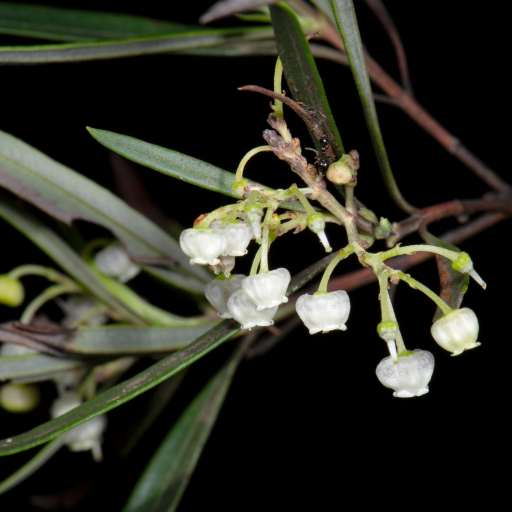
Plant Overview
Known affectionately as the Baja Bird-bush, this rare beauty is a true "lone wolf" of the botanical world. It is the only species in its entire genus, making it a unique evolutionary relic found only in a tiny sliver of the world—the coastal chaparral of San Diego and Northern Baja California. Its scientific name, oppositifolia, highlights its most rebellious trait: unlike its Manzanita cousins, its leaves grow in perfectly symmetrical pairs.
🔍 How to Identify
- 🍃 Opposite Leaves: Unlike almost all other shrubs in the heath family, its narrow, leathery, dark-green leaves grow directly across from one another on the stem.
- 🪵 Peeling Bark: The trunk features stunning, shredding bark that transitions from a dusty gray to a rich, mahogany-red, giving the plant a rugged, "shaggy" appearance.
- 🔔 Urn-Shaped Flowers: In late winter and spring, it produces drooping clusters of tiny, white, bell-like flowers that look like miniature porcelain lanterns.
🏡 In Your Garden
- 🌱 The Homebody: This plant has a very sensitive root system and famously hates being moved once established. If you plant one, choose its "forever home" carefully to avoid transplant shock.
- ☀️ Coastal Specialist: It thrives on neglect once established, preferring well-draining, rocky soil and bright, sunny spots that mimic the breezy cliffs of the Pacific coastline.
- 🐦 Wildlife Magnet: True to its name, the Baja Bird-bush is a favorite for local pollinators and birds who seek out the nectar in its delicate blossoms and the shelter of its dense branches.
⚠️ Safety & Toxicity
- ✅ Generally Safe: The Baja Bird-bush is considered non-toxic to humans and common household pets like dogs and cats.
- 🧤 Skin Awareness: While not poisonous, the stiff, leathery leaves and woody stems can be quite scratchy, so wearing gloves during occasional pruning is a good idea to avoid minor skin abrasions.
✨ Fun Fact
The name Ornithostaphylos literally translates from Greek as "Bird Grapes" (ornis for bird and staphyle for a bunch of grapes), referring to the way birds feast on its small, berry-like fruits in the wild.

Detailed Care Instructions
Here are some steps you can follow to grow the Ornithostaphylos Oppositifolia plant:
- Obtain seeds or plants: You can either purchase seeds or find a nursery that sells Ornithostaphylos Oppositifolia plants.
- Choose the right location: Ornithostaphylos Oppositifolia plants prefer full sun to partial shade. Choose a location in your garden that receives several hours of direct sunlight each day.
- Prepare the soil: The soil should be well-draining, loose, and rich in organic matter. If your soil is heavy or clay-like, you can amend it with compost to improve drainage.
- Plant the seeds or seedlings: If you have seeds, sow them in the prepared soil according to the packet instructions. If you purchased seedlings, dig a hole large enough to accommodate the plant's root ball and gently place it in the hole. Cover the roots with soil and firm it gently around the plant.
- Watering: Water the plant thoroughly after planting. Water regularly, keeping the soil evenly moist but not waterlogged. Avoid overwatering as it may cause root rot.
- Mulching: Apply a layer of organic mulch, such as wood chips or straw, around the base of the plant. Mulching helps retain moisture, suppresses weed growth, and keeps the soil temperature consistent.
- Pruning: Prune the plant to shape it or remove dead, damaged, or diseased branches. Pruning also helps promote bushier growth.
- Fertilization: Apply a balanced slow-release fertilizer in early spring or late winter, following the manufacturer's instructions. Avoid over-fertilizing, as it can lead to excessive foliage growth with reduced flowering.
- Pest and disease control: Regularly inspect the plant for pests, such as aphids or mites. Treat any infestations promptly with organic insecticides or by handpicking the pests. Keep an eye out for signs of disease, such as leaf spots or wilting, and address them accordingly.
- Winter protection: In colder regions, where temperatures drop below freezing, protect the plant by mulching heavily around the base and providing a wind barrier or using a frost cloth.
Remember to research and understand the specific needs of the Ornithostaphylos Oppositifolia plant as it may have unique requirements based on your geographic region or climate.

Place in a bright room that is sun drenched almost all day. Or directly in a south-facing window.
To water this plant, it is important to take into consideration the specific care instructions for its species. One should ensure that the soil is consistently moist, but not waterlogged, as this may cause root rot. It is best to water deeply but infrequently, allowing the soil to partially dry out between watering sessions. During periods of active growth, the plant may require more frequent watering, while during periods of dormancy, it may require less. It is also important to avoid getting water on the foliage, as this may lead to disease or damage. Finally, the plant should be watered using room temperature or lukewarm water, as extreme temperatures can shock or stress the plant.
For best results, fertilize the plant in the early spring using a slow-release, balanced fertilizer. Alternatively, you can use homemade compost or well-aged animal manure. Apply the fertilizer to the base of the plant, being careful not to get any on the leaves. Water the plant thoroughly after fertilizing. Avoid fertilizing in the fall or winter, as this can stimulate new growth that may not have time to harden off before the cold weather arrives.
For Ornithostaphylos Oppositifolia plant, it is recommended to use soil that is well-draining and sandy in texture. The pH of the soil should be on the acidic side, around 5.5-6.5. Adding organic matter like peat moss or leaf mold can help improve the soil's moisture retention and nutrient availability. Avoid using heavy clay soils as they can retain too much water and lead to root rot. It is also important to maintain adequate drainage to prevent waterlogging. If planting in pots, ensure there are drainage holes in the bottom and use a potting mix specifically designed for acid-loving plants.
To propagate this plant, you can take stem cuttings in the summer or fall. Cut a stem that is about 4-6 inches long and remove the leaves from the bottom half. Dip the cut end in rooting hormone and plant it in a mixture of equal parts peat moss and sand. Water the cutting well and cover it with a plastic bag to create a humid environment. Place the cutting in a bright, indirect light and keep the soil moist. After a few weeks, the cutting should start to produce new growth and can be moved to a larger pot or planted in the garden.








