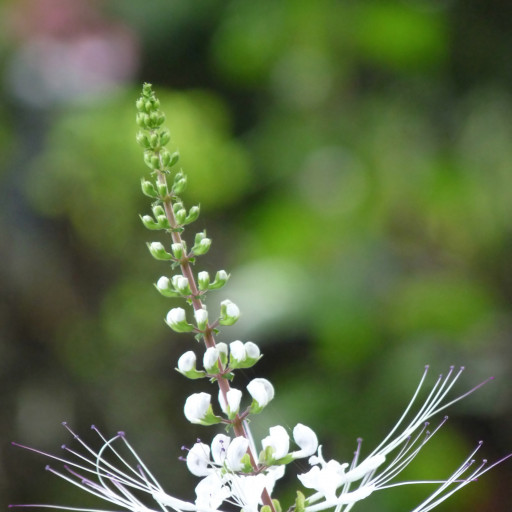
Plant Overview
Known affectionately as "Cat's Whiskers" or "Java Tea," this elegant perennial looks like it stepped straight out of a botanical fairy tale. Native to the tropical regions of Southeast Asia and Australia, it has been a staple in traditional herbal medicine for centuries. Its striking, ethereal blooms make it a favorite for gardeners looking to add a touch of delicate, whimsical architecture to their landscape.
🔍 How to Identify
- 🐱 The Whiskers: Its most iconic feature is the cluster of flowers with incredibly long, delicate stamens that extend outward, perfectly mimicking the whiskers of a cat.
- 🍃 The Foliage: The leaves are dark green, egg-shaped, and feature sharply saw-toothed (serrated) edges. They grow in opposite pairs along the stem.
- 📐 Square Stems: As a proud member of the Mint family (Lamiaceae), if you feel the stem, you will notice it is distinctly four-angled or square-shaped.
🏡 In Your Garden
- 💧 Thirsty Nature: Unlike many of its mint cousins, the Cat’s Whisker plant is not drought-tolerant. It craves consistent moisture and will quickly "faint" or wilt if the soil dries out, though it usually bounces back once watered.
- ✂️ The Pruning Secret: This plant can become "leggy" or sparse if left to its own devices. To keep it bushy and full of blooms, pinch off the tips of the stems regularly; this encourages the plant to branch out rather than just growing tall.
- 🦋 Pollinator Magnet: While humans love it for the aesthetic, butterflies and bees are drawn to the nectar-rich tubular flowers, making it an excellent choice for a vibrant, living garden.
⚠️ Safety & Toxicity
- ✅ General Safety: Orthosiphon aristatus is generally considered non-toxic to humans and is famously consumed as "Java Tea."
- 🐾 Pet Caution: While not listed as a primary toxic plant for cats or dogs, the high mineral and potassium content used in its medicinal properties can cause stomach upset if ingested in large quantities by curious pets.
- 🍵 Medicinal Note: While used to treat kidney and bladder issues, always consult a professional before using homegrown plants for tea, as concentration levels can vary.
✨ Fun Fact
In the 1900s, the Dutch introduced this plant to Europe, where it became a sensation under the name "Java Tea." It was so highly valued for its health benefits that it became a major colonial export from Indonesia to the West!

Detailed Care Instructions
| Humidity | High |
| Lighting | Part Sun |
| Toxicity | Poisonous |
| Difficulty | Medium |
| Hibernation | Cold Period |
| Temperature | 18°C - 28°C |
| Hardiness Zones | 9A - 11 |
To grow Orthosiphon Aristatus, also known as cat's whiskers or Java tea, you can follow these steps:
- Climate: Orthosiphon plants thrive in warm tropical climates but can also be grown as houseplants in cool regions. They require temperatures above 50°F (10°C) and prefer temperatures around 70-90°F (21-32°C).
- Sunlight: Place the plant where it gets partial shade to full sunlight. If growing as a houseplant, place it near a bright window or under fluorescent lights.
- Soil: Use well-draining soil that is rich in organic matter. A mix of potting soil, perlite, and sand works well. Ensure the soil remains moist but not waterlogged.
- Watering: Water the plant regularly, keeping the soil consistently moist but not overly wet. Mist the leaves occasionally to maintain humidity levels.
- Fertilizer: Feed the plant with a balanced liquid fertilizer every month during the growing season (spring and summer). Follow the instructions on the fertilizer package for the correct dosage.
- Propagation: Orthosiphon Aristatus can be propagated from stem cuttings or seeds. Take 4-6 inch (10-15 cm) stem cuttings in spring or early summer, dip them in rooting hormone, and plant them in moist soil. Place them in a warm and humid environment until roots develop.
- Pruning: Trim the plant regularly to promote bushiness and control its size. Pinch off the tips of the stems to encourage branching.
- Pests and diseases: Orthosiphon plants are relatively pest-free, but they can occasionally suffer from aphids, spider mites, or mealybugs. Monitor the plant for signs of pests and treat with appropriate insecticides or neem oil if necessary.
- Harvesting: Harvest leaves from the plant once it has matured, usually after 3-4 months. Leaves can be dried and used to make herbal teas or as medicinal ingredients.

Place in a window with dappled sun or a spot in the middle of a room. Or directly in a window facing west or east.

To properly water this plant, you should first determine the soil moisture level by sticking your finger about an inch deep into the soil. If it feels dry, it's time to water. Use a watering can or hose with a gentle spray nozzle to moisten the soil evenly. Water until excess water drains out of the bottom of the pot or onto the ground. This plant prefers consistently moist soil, but make sure not to overwater as this can lead to root rot. Allow the top inch of soil to dry out before watering again. The frequency of watering may vary depending on factors like temperature, humidity, and amount of sunlight.
To fertilize this plant, use a well-balanced fertilizer with equal amounts of nitrogen, phosphorus, and potassium. Apply the fertilizer once a month during the growing season, which is typically spring to fall. Dilute the fertilizer to half strength and water the plant thoroughly after applying to prevent fertilizer burn. Avoid over-fertilizing as it can damage the plant.
Orthosiphon Aristatus requires a well-draining soil mix that is slightly acidic. It prefers soils with a pH range of 5.5-6.5. A good soil mix for this plant should be composed of a combination of peat moss, perlite or vermiculite, and sand. These components will provide the necessary drainage and aeration required for the plant to grow well. It is important to make sure that the soil is not compacted and that it is kept moist but not waterlogged. Additionally, adding organic matter such as compost or well-rotted manure can be beneficial for the plant's overall health and growth.
Orthosiphon Aristatus can be propagated through stem cuttings. Select a healthy stem with a few leaves and cut it just below a node. Remove the lower leaves and dip the cut end in rooting hormone powder. Plant the cutting in a pot filled with moist potting soil and cover it with a clear plastic bag to create a humid environment. Keep the soil moist and place the pot in a warm, bright location but out of direct sunlight. In a few weeks, roots will develop and new growth will appear. Gradually acclimate the new plant to lower humidity and increase light levels to prevent shock.
Common pests of the cat's whiskers include Spider mites, whiteflies. Make a habit of checking your cat's whiskers frequently for pests so that any infestations can be caught and managed early.








