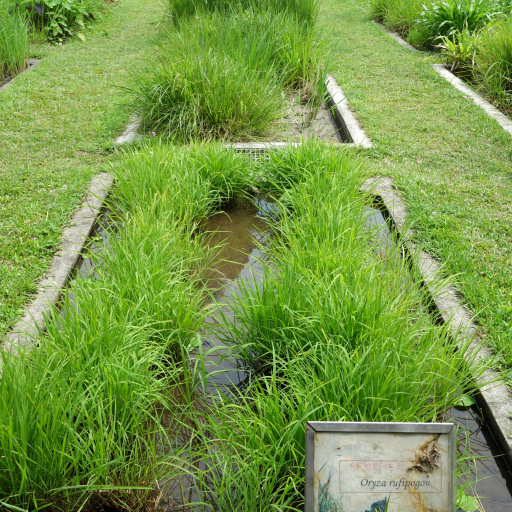
Plant Overview
Known as the "grandfather" of the rice we eat today, Oryza rufipogon is the wild ancestor of modern cultivated rice (Oryza sativa). Often called Brownbeard Rice or Asian Wild Rice, this resilient grass has survived for millennia in the wetlands of Asia. While it is a vital genetic treasure trove for scientists, many farmers view it as a "red rice" weed because of its habit of sneaking into commercial paddies and outcompeting the crop.
🔍 How to Identify
- 🌾 The Seed Awns: The most striking feature is the long, stiff, reddish-brown "beards" (awns) extending from the grain husks, which give the plant its name.
- 📏 Growth Habit: It typically grows taller and more "leggy" than domesticated rice, often reaching up to 5 feet in height with a sprawling or semi-aquatic posture.
- 🍂 Seed Shattering: Unlike domestic rice that holds onto its grains until harvest, this wild version "shatters," meaning the seeds drop to the ground the moment they are ripe to ensure next year's growth.
🏡 Habitat & Ecology
- 💧 Wetland Warrior: This plant loves "wet feet." You will naturally find it thriving in marshes, swamps, ditches, and even the edges of slow-moving rivers.
- 🧬 Genetic Reservoir: It is incredibly hardy. Because it hasn't been "pampered" by human breeding, it retains natural resistances to pests, drought, and flooding that modern rice has lost.
- 🌱 Invasive Potential: In some regions, it is considered a noxious weed. It can cross-pollinate with farmed rice, "polluting" the crop with its red-tinted, lower-quality grains.
⚠️ Safety & Toxicity
- ✅ Safe & Non-Toxic: Oryza rufipogon is non-toxic to humans, dogs, cats, and livestock.
- 🌵 Mechanical Irritation: While not poisonous, the long, sharp awns on the seeds can be prickly. If livestock graze on the mature seed heads, the sharp "beards" can occasionally cause minor irritation to the mouth or throat.
✨ Fun Fact
The "Shattering" Gene is the biggest difference between this wild plant and your dinner. Wild rice evolved to drop its seeds immediately to survive, but thousands of years ago, humans selected a rare mutation that kept the seeds attached to the stalk, making it possible to harvest and feed the world!

Detailed Care Instructions

Place in a bright room that is sun drenched almost all day. Or directly in a south-facing window.

Some plants require more regular watering than others, which should be done every few days. It's critical to maintain the soil moist all of the time. The water requirements of the same plant placed in pots with varying sizes will differ. Because the water in the smaller pot evaporates faster than the water in the larger pot, it will require more watering. Regardless of pot size, the surface should constantly be maintained moist.








