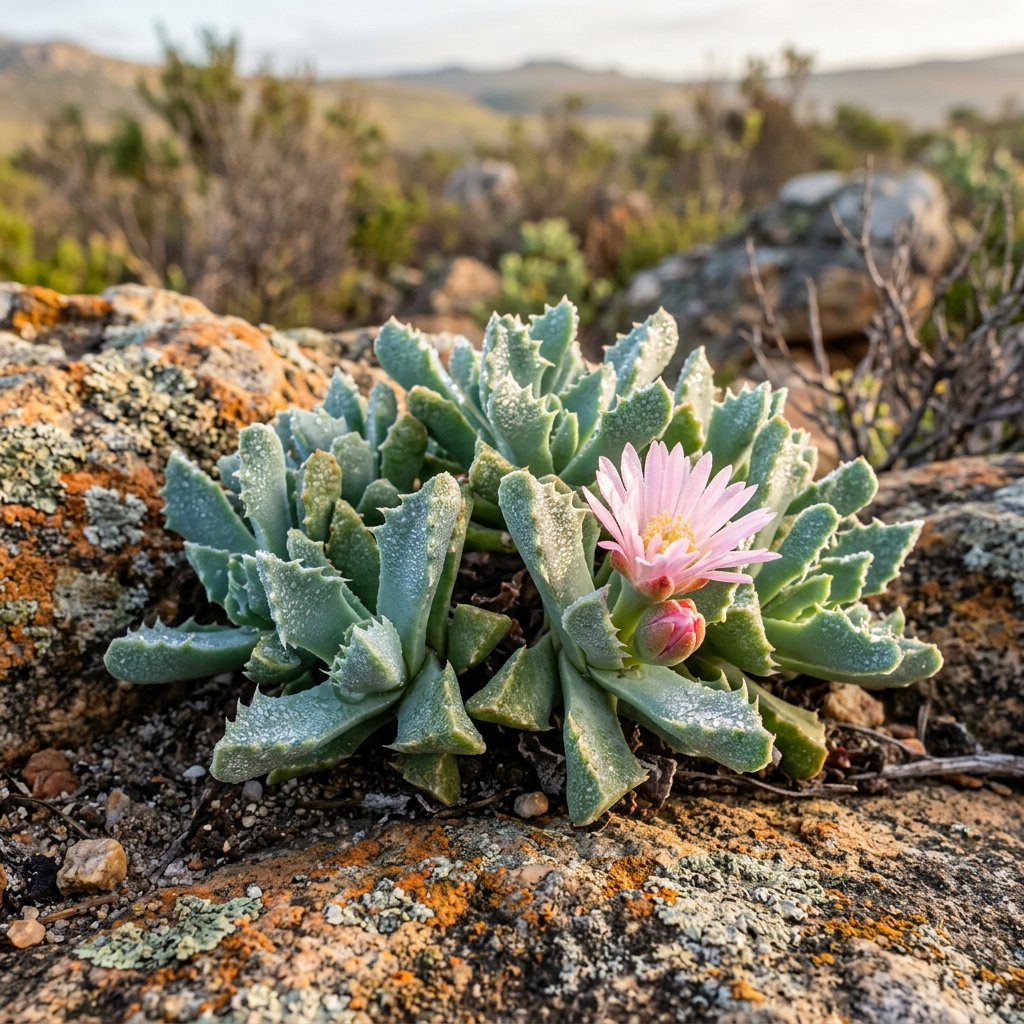
Plant Overview
Often called the Pink Ice Plant or the "Sandstone Vygie," this geometric wonder looks like it was designed by an architect rather than grown in nature. Originating from the rocky outcrops of South Africa, it forms a dense, shimmering carpet of silver-blue foliage that seems to defy the harshest droughts. In the spring, it transforms into a fragrant sea of lavender-pink blooms that attract pollinators from miles away.
🔍 How to Identify
- 💎 Geometric Leaves: The leaves are three-sided (deltoid) and thick, looking like small, blue-grey succulents gems stacked along a stem.
- 🦷 Toothed Margins: Each leaf edge features tiny, often reddish "teeth" that give the plant a fierce but beautiful serrated look.
- 🌸 Daisy-like Blooms: It produces masses of small, multi-petaled flowers that smell faintly of almonds and open only in the bright afternoon sun.
🏡 In Your Garden
- 🏜️ Natural Rock Star: Because of its origin on sandstone slopes, it thrives in rock gardens or hanging baskets where its woody, pinkish stems can spill over the edges.
- ☀️ Sun-Kissed Colors: While the foliage is naturally a powdery blue-green, the leaf edges will turn a vibrant magenta when the plant is "stressed" by bright sunlight or cooler temperatures.
- 🚿 The Drainage Rule: It is highly sensitive to root rot. It prefers a "soak and dry" method and must be planted in gritty, fast-draining soil—if the leaves look slightly wrinkled, it’s finally time for a drink.
⚠️ Safety & Toxicity
- 🐾 Pet Friendly: Oscularia deltoides is generally considered non-toxic to cats, dogs, and horses, making it a "worry-free" addition to a pet-friendly household.
- 👶 Safe for Kids: Unlike many cacti or succulents, it lacks sharp spines or irritating milky sap, though the woody stems can be a bit brittle if handled roughly.
✨ Fun Fact
The name Oscularia is derived from the Latin word "osculum," which translates to "little mouth." If you look at the paired, toothed leaves from the side, they look exactly like tiny, open green mouths ready to snap shut!

Detailed Care Instructions
To grow Oscularia Deltoides plant, also known as Deltoid Leaved Dew Plant, you can follow these steps:
- Choose the right location: Oscularia Deltoides prefers full sun to partial shade, so select a spot where it will receive at least six hours of sunlight per day.
- Prepare the soil: The plant needs well-draining soil, so amend heavy clay soil with organic matter such as compost to improve drainage.
- Planting: Dig a hole large enough to accommodate the plant's root ball. Gently remove the plant from its container and place it in the hole, ensuring the top of the root ball is level with the surrounding soil. Backfill the hole with soil, firming it gently around the plant.
- Watering: After planting, water the plant thoroughly and keep the soil evenly moist but not waterlogged. Watering when the top layer of soil feels dry to the touch is a good rule of thumb.
- Fertilization: Oscularia Deltoides does not require heavy fertilization. Applying a balanced, slow-release fertilizer in the spring can be beneficial, following the package instructions.
- Pruning: Prune any dead or damaged stems with clean, sharp pruning shears to maintain the plant's shape and promote new growth.
- Propagation: Oscularia Deltoides can be propagated through stem cuttings. Take 3-4 inch stem cuttings in the spring or early summer, remove the lower leaves, and plant them in well-draining potting soil. Keep the soil lightly moist until new roots develop.
- Protection from cold: If you live in a region with frost or freezing temperatures, provide winter protection for Oscularia Deltoides by moving it indoors or covering it with a frost cloth.
- Pests and diseases: This plant is generally resistant to pests and diseases. However, keep an eye out for common issues like aphids or mealybugs, and treat them promptly if necessary.
- Enjoy and maintain: With proper care, Oscularia Deltoides will thrive and produce small pink flowers in the spring. Enjoy this beautiful succulent plant and maintain its health by providing adequate sunlight, water, and occasional fertilization.
Remember to consult local gardening resources or consult with an expert if you have specific questions about growing Oscularia Deltoides in your region.

Place in a bright room that is sun drenched almost all day. Or directly in a south-facing window.

To properly water the plant, it is important to ensure that the soil is completely dry before adding water. This can be determined by sticking a finger into the soil and checking for moisture. Once you have determined that the soil is dry, water the plant slowly and evenly, making sure not to oversaturate the soil. Allow the water to soak in fully, and then drain any excess water from the pot. It is important not to leave standing water in the pot, as this can lead to root rot and other issues. As with all succulent plants, it is best to water Oscularia Deltoides sparingly and only when necessary, as they store water in their leaves and can be prone to overwatering damage.
To fertilize this plant, use a balanced, water-soluble fertilizer. Dilute the fertilizer to half the recommended strength and apply it every two weeks during the growing season. During the winter months, reduce the frequency of fertilization to once a month. Be careful not to over-fertilize, as this can cause damage to the plant's roots.
Oscularia Deltoides generally prefers a well-draining soil mixture. It is recommended to use a mix consisting of sandy loam soil mixed with perlite or coarse sand to increase drainage and prevent waterlogging. This plant also prefers a slightly acidic to neutral soil pH around 6.0-7.0. Additionally, adding organic matter such as compost or peat moss to the soil mixture can improve nutrient retention and promote healthy growth. It is important to avoid using heavy soils or soils with high clay content, as this can lead to root rot and other moisture-related issues.
- Choose a healthy parent plant with long stems and multiple leaves.
- Prepare a well-draining pot or container with soil mix made of equal parts of perlite, peat moss, and sand.
- Cut a stem from the parent plant using a sharp and sterile pair of scissors or pruning shears. It should be at least 4 inches long and have 3-4 leaves.
- Remove the bottommost leaves carefully and allow the cut to dry for a few hours to prevent rotting.
- Dip the cut end of the stem in rooting hormone powder to encourage rooting.
- Make a hole in the soil mix, place the stem in it, and gently press the soil around it.
- Water the soil thoroughly and cover the pot with a plastic bag or dome to create a humid environment.
- Place the pot in a bright and warm location but avoid direct sunlight.
- Keep the soil moist but not waterlogged and check for new growth after 3-4 weeks.
- Once the new plant has established roots and several leaves, transplant it to a larger pot or outdoors.








