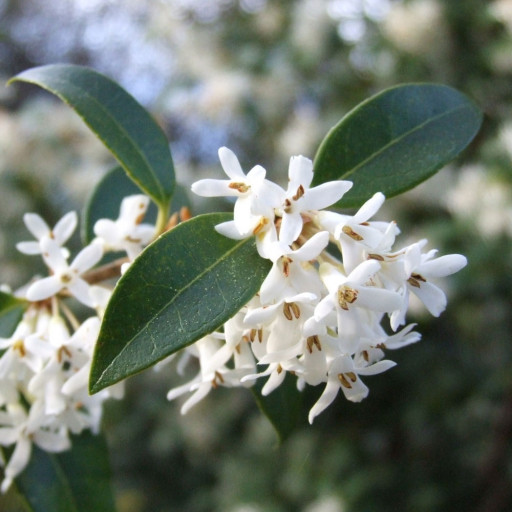
Plant Overview
Often hailed as the "sweet whisper of spring," the Osmanthus × burkwoodii is a sensory masterpiece for any landscape. This hardy, evergreen hybrid is a cross between O. delavayi and O. decorus, bred specifically to combine the intoxicating perfume of one parent with the robust, leathery foliage of the other. It is the silent hero of the garden, blending into the background until its white blossoms release a scent so powerful it can stop a passerby in their tracks.
🔍 How to Identify
- 🍃 Leathery Foliage: Features small, ovate, dark-green leaves that are tough and glossy, usually reaching about 1-2 inches in length.
- 🌸 Hidden Blooms: Clusters of tiny, white, trumpet-shaped flowers emerge from the leaf axils in mid-to-late spring. They are small but remarkably numerous.
- 🌳 Growth Habit: A slow-growing, dense, and rounded shrub. Without pruning, it naturally forms a tidy, architectural mound that stays green all year.
🏡 In Your Garden
- ✂️ Timing the Trim: Because this plant sets its flower buds on the previous year’s wood, you should only prune it immediately after the spring flowers fade. Pruning too late in the year means you’ll be cutting off next year’s fragrance.
- 🌬️ Strategic Placement: Plant it near a window, a walkway, or a patio. The scent is reminiscent of jasmine and orange blossoms and is most potent on warm, still spring evenings.
- 🛡️ Living Privacy: Thanks to its dense, evergreen nature, it is an elite choice for a medium-sized "scented hedge" that provides privacy without looking unruly.
⚠️ Safety & Toxicity
- ✅ Safe Status: Generally considered non-toxic to humans, dogs, and cats. It is a "worry-free" plant for family-friendly backyards.
- 🧤 General Caution: While not toxic, the leaves can be slightly stiff and scratchy. Wearing gloves during heavy pruning is recommended to avoid minor skin abrasions.
✨ Fun Fact
The "Burkwoodii" name is a tribute to the Burkwood brothers, legendary English nurserymen of the 1930s who were famous for creating some of the most durable and fragrant hybrids still used in modern landscaping today!

Detailed Care Instructions
To grow an Osmanthus × Burkwoodii plant, follow these steps:
- Location: Choose a suitable location for planting Osmanthus × Burkwoodii. It prefers full sun to partial shade, so find a spot that receives at least four to six hours of direct sunlight per day.
- Soil: Ensure the soil is well-draining and fertile. Osmanthus × Burkwoodii prefers slightly acidic to neutral soil with a pH range of 6.0 to 7.0. If the soil is heavy or clayey, add organic matter like compost or peat moss to improve drainage.
- Planting: Dig a hole twice as wide and slightly deeper than the root ball of the plant. Carefully remove the plant from its container and place it in the hole. Position the plant so that the root ball is level with or slightly above the soil surface. Backfill the hole with soil, firming it gently around the roots.
- Watering: Water the plant thoroughly after planting to settle the soil and help the roots establish. Afterward, water the plant regularly, keeping the soil consistently moist but not waterlogged. Ensure the plant receives about 1 inch of water per week, either through rainfall or irrigation.
- Mulching: Apply a layer of organic mulch around the base of the plant, but avoid touching the trunk or stems. Mulching helps retain moisture, suppresses weed growth, and maintains a more stable soil temperature.
- Pruning: Osmanthus × Burkwoodii requires minimal pruning. However, you can shape it or remove any damaged or diseased branches. Late winter or early spring is the best time for pruning when the plant is dormant.
- Fertilizing: Feed the Osmanthus × Burkwoodii plant with a slow-release, balanced fertilizer in early spring before new growth emerges. Follow the manufacturer's instructions for application rates.
- Pests and diseases: Monitor the plant for pests like aphids or scale insects. Treat infestations promptly with appropriate insecticides. Osmanthus × Burkwoodii is generally resistant to diseases but may occasionally develop leaf spot or root rot. Proper watering and good air circulation can help prevent these issues.
By following these steps and providing proper care, your Osmanthus × Burkwoodii plant should grow and thrive in your garden.

Place in a bright room that is sun drenched almost all day. Or directly in a south-facing window.

Watering Osmanthus × Burkwoodii plant is a critical aspect of its care. The plant requires consistent moisture, but not too much water as it is susceptible to root rot. To avoid overwatering, it is important to check the soil moisture level regularly before watering. It is recommended to water the plant deeply and infrequently, allowing the top inch of soil to dry out before the next watering session.
One way to ensure proper watering is to use a well-draining soil mix that retains moisture while promoting good drainage. Adding organic matter to the soil can improve moisture retention and drainage.
In addition, the plant’s watering needs may change with seasons and environmental factors. During the hot and dry summer, the plant may require more frequent watering than during the colder and damper months. It is important to observe the plant’s growth and foliage for signs of over or under watering, such as yellowing leaves or wilting.
To water the plant, use a watering can, hose, or drip irrigation system. Water the soil directly around the base of the plant, avoiding getting water on the foliage, which can lead to fungal diseases. If the water runs off the surface without absorbing, it may be necessary to water the plant in stages to allow time for the soil to absorb the moisture.
Overall, proper watering is an essential aspect of maintaining healthy growth and blooming in Osmanthus × Burkwoodii plant. By monitoring soil moisture, using a well-draining soil mix, and adjusting watering schedules as needed, one can ensure the plant thrives in its environment.
To fertilize the Osmanthus × Burkwoodii plant, you can follow these instructions:
- Choose a balanced, slow-release fertilizer suitable for woody shrubs or general-purpose plant food.
- Read the instructions on the fertilizer package carefully to determine the appropriate amount to be used.
- Apply the fertilizer in early spring, just before the new growth begins.
- Sprinkle the fertilizer evenly around the base of the plant, avoiding direct contact with the stems or leaves.
- Gently work the fertilizer into the soil surface using a garden fork or rake.
- Water the plant thoroughly after applying the fertilizer to help it dissolve and reach the roots.
- Avoid over-fertilizing, as excessive nutrients can harm the plant. Follow the recommended dosage according to the fertilizer package.
- Repeat the fertilization process annually, preferably in early spring, to promote optimal growth and flowering.
When choosing soil for Osmanthus × Burkwoodii plant, it is important to consider its specific requirements. This plant prefers well-draining soil that is rich in organic matter. The ideal soil composition should be slightly acidic to neutral, with a pH range of 5.5 to 7.5.
The soil texture should be loamy, which means it should be a balanced combination of sand, silt, and clay. This type of soil provides good drainage while retaining adequate moisture for the plant's roots. It allows air circulation and prevents waterlogging, which can lead to root rot.
To ensure optimal growth and health, you can enhance the soil by adding organic matter such as compost, well-rotted manure, or leaf mold. These amendments enrich the soil, improve its structure, and provide essential nutrients for the plant's overall development.
It is advisable to perform a soil test before planting Osmanthus × Burkwoodii to determine the existing nutrient levels and pH. Based on the test results, you can adjust the soil by adding specific fertilizers or amendments to meet the plant's requirements.
Remember to avoid using heavy clay or sandy soils, as they may not provide the necessary drainage and nutrient-holding capacity. Additionally, compacted or poorly drained soils can hinder the plant's growth and lead to various health issues.
Overall, creating a well-draining, loamy soil with added organic matter will provide a favorable growing environment for Osmanthus × Burkwoodii plant, supporting its proper development and flourishing.
To propagate Osmanthus × Burkwoodii, follow these steps:
- Begin by selecting a healthy and mature plant. Look for a plant that is disease-free, has strong stems, and displays vigorous growth.
- Choose an appropriate propagation method based on your resources and preferences. Osmanthus × Burkwoodii can be propagated through several methods including softwood cuttings, semi-hardwood cuttings, and layering. For the purpose of this explanation, we will focus on softwood cuttings.
- Timing is crucial when propagating softwood cuttings. The best time to take softwood cuttings is typically in late spring or early summer when the plant is actively growing and the stems are still young and flexible.
- Prepare a clean and sharp pair of pruning shears or a knife. Using a sterilized cutting tool minimizes the risk of transmitting diseases to the cutting.
- Identify and cut healthy, non-flowering shoots from the parent plant. Softwood cuttings should be around 4 to 6 inches long and should be taken from the upper portion of the stem.
- Remove all leaves from the lower two-thirds of the cutting. This will allow energy to be focused on root development rather than sustaining foliage.
- Optional: Dip the cut end of the cutting into a rooting hormone powder or gel. Although not necessary, rooting hormones may promote faster and more robust root development.
- Prepare a container with a well-draining propagation medium such as a mixture of perlite and peat moss or a specialized propagation mix. Ensure that the medium is moist but not overly wet.
- Create holes in the propagation medium using a pencil or your finger. The holes should be deep enough to accommodate a couple of inches of the cutting.
- Insert the base of each cutting into a prepared hole, ensuring that at least two nodes (where the leaves were removed) are below the surface. Gently firm the medium around the cutting to ensure it stays in place.
- Mist the cuttings with water to keep the foliage hydrated and create a humid environment. Alternatively, you can cover the container with a clear plastic bag to create a mini greenhouse effect.
- Place the container in a location with bright, indirect light. Avoid direct sunlight, as it can scorch the cuttings. Maintain a temperature of around 65-75°F (18-24°C) to encourage root growth.
- Monitor the cuttings regularly, ensuring that the medium remains consistently moist. Avoid overwatering to prevent rotting.
- Within several weeks to a few months, the cuttings should develop roots. Gently tug on the cuttings to check for resistance, indicating root development.
- Once the cuttings have established roots, they can be potted into individual containers with a well-draining potting mix. Gradually acclimate the newly rooted plants to outdoor conditions before transplanting them to their permanent location.
By following these propagation steps, you can successfully propagate Osmanthus × Burkwoodii and expand your collection of these beautiful plants.
Common pests of the burkwood brother's chinese-holly include Spider mites, aphids, whiteflies. Make a habit of checking your burkwood brother's chinese-holly frequently for pests so that any infestations can be caught and managed early.








