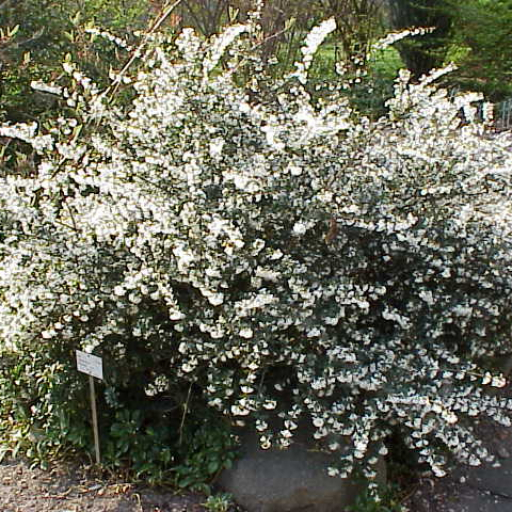
Plant Overview
Often called the "invisible perfume" of the spring garden, Osmanthus x burkwoodii is a master of disguise. This sturdy evergreen looks like a standard, polite shrub until its tiny white flowers bloom, releasing a scent so powerful and sweet it’s often mistaken for a high-end French perfume. A hybrid of two tough parents, it was bred specifically to bring intoxicating fragrance to temperate gardens.
🔍 How to Identify
- 🍃 Foliage: Features small, leathery, oval-shaped leaves that are a deep, glossy green with slightly serrated (toothed) edges.
- 🌸 Blooms: Tiny, tubular white flowers appear in clusters during mid-to-late spring, often tucked away among the dark leaves.
- 🪵 Growth Habit: A slow-growing, dense, and naturally rounded shrub that maintains its structure beautifully throughout the year.
🏡 In Your Garden
- 🌬️ Scent Placement: To get the most out of this plant, tuck it near a patio, a well-used walkway, or under a window. The "apricot-meets-jasmine" aroma is heavy enough to travel on a light breeze.
- ✂️ Versatile Grooming: Because it grows slowly and has dense branches, it is a favorite for formal hedges or topiary. It "forgives" heavy pruning, though you should wait until after it flowers so you don't cut off next year's perfume.
- ☀️ Light Nuance: While it is incredibly hardy, it thrives best in a spot with "dappled" sunlight. Too much deep shade will result in fewer flowers and a less intense scent.
⚠️ Safety & Toxicity
- ✅ Safe Status: Osmanthus x burkwoodii is generally considered non-toxic to humans, dogs, and cats.
- 👐 Garden Friendly: Unlike its cousin the Holly, the leaves of the Burkwood Osmanthus are firm but rarely sharp enough to cause skin irritation, making it a safe choice for areas where children play.
✨ Fun Fact
The name Osmanthus is derived from the Greek words osme (fragrance) and anthos (flower). This specific hybrid was created in the early 1900s by the Burkwood brothers, famous English nurserymen who wanted to combine the hardiness of one species with the incredible scent of another.

Detailed Care Instructions

Place in a bright room that is sun drenched almost all day. Or directly in a south-facing window.

The presence of a dry surface layer of soil does not indicate that the plant requires water. Instead, stick your finger 1-2" (3-5 cm) deep in the soil to feel dampness or moisture content. If the soil seems dry, it's time to water your greens. If the soil is still moist, however, it is better not to water your plant and instead wait a day or two. Overwatering or waterlogging raises the risk of root rot. So if the soil takes longer than a week to dry, check the light conditions because it's likely that the plant isn't getting enough light. It's fine if the upper layer of soil is dry between waterings, but the deeper soil layer should always have some moisture.
These plant needs regular fertilizing during growing seasons. Fertilizing your plants in dormant state during the winter, might result in scorching or browning of the leaf tips. If mature plants display signs of nutrient insufficiency, fertilizer administration is necessary to restore the plant to its previous state.
You may use All Purpose Plant Food or All Purpose Fertilizer for your Burkwood Osmanthus
Common pests of the burkwood osmanthus include Spider mites, aphids, whiteflies. Make a habit of checking your burkwood osmanthus frequently for pests so that any infestations can be caught and managed early.








