Plant Overview
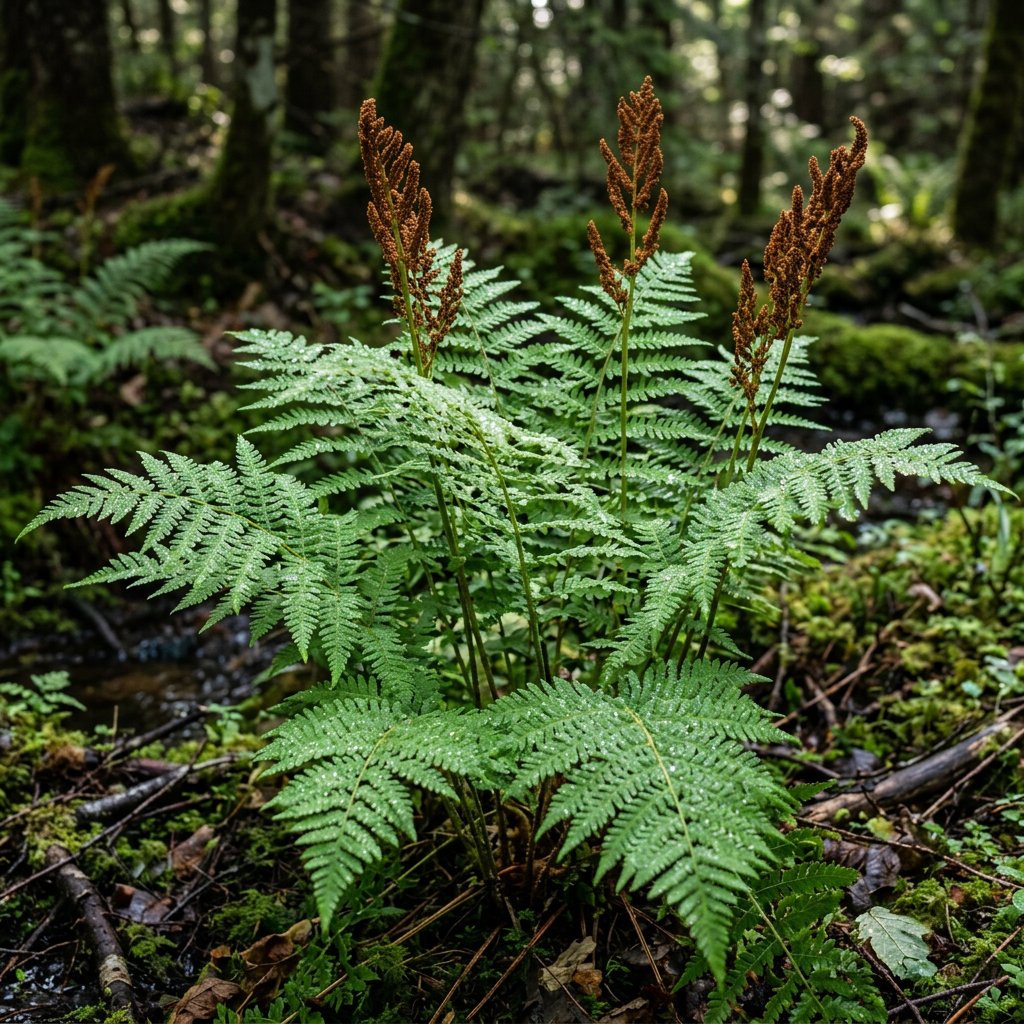
Commonly known as the "Royal Fern," Osmunda regalis is a true aristocrat of the plant world. It is one of the largest and most majestic ferns native to Europe, though it can be found in various forms across the globe. Often associated with ancient landscapes, this plant creates a primeval atmosphere in any garden, looking like something that stepped right out of a prehistoric forest where dinosaurs might have once roamed.
🔍 How to Identify
- 🌿 The Fronds: Unlike the delicate, lacy appearance of many ferns, the Royal Fern has large, bright green fronds with distinct leaflets that look more like the foliage of a locust tree.
- 🍂 "Flower" Spikes: It is often called the "Flowering Fern" because its fertile fronds turn a rusty, golden-brown at the tips, resembling clusters of dried flowers or tassels.
- 👑 Growth Habit: It grows in massive, crown-like clumps. In the right conditions, these fronds can reach an impressive height of 6 feet or more, creating a dramatic architectural "vase" shape.
🏡 In Your Garden
- 💧 The "Wet Feet" Rule: This fern is a semi-aquatic specialist. While many plants fear root rot, the Royal Fern thrives in boggy, saturated soil. It is the perfect solution for that "problem" soggy spot in your yard or the edge of a garden pond.
- ⛰️ Acidic Ambitions: It prefers "sour" or acidic soil. If your garden is naturally peaty or loamy, this fern will flourish. It is also surprisingly hardy and can handle more sun than other ferns, provided its roots never dry out.
- 🛑 Settling In: Because it grows from a thick, woody rhizome, it hates being moved. Choose its "forever home" carefully, as it may take a season or two to recover from the shock of transplanting.
⚠️ Safety & Toxicity
- ✅ Safe Status: The Royal Fern is generally considered non-toxic to humans, cats, and dogs.
- 🌬️ Spore Sensitivity: While not poisonous, the "rusty" fertile spikes release a cloud of spores in late summer. Very sensitive individuals or those with severe hay fever might experience minor respiratory irritation if they handle the plant closely during this time.
✨ Fun Fact
The Royal Fern is a "living fossil." Paleontologists have discovered fossilized remains of the Osmunda genus dating back over 180 million years to the Triassic period. The plants you see today are virtually identical to the ones that grew alongside the earliest dinosaurs!

Detailed Care Instructions
| Humidity | Normal |
| Lighting | Full Sun |
| Difficulty | Medium |
| Hibernation | Cold Period |
| Hardiness Zones | 3 - 9 |
To grow Osmunda regalis, or royal fern, follow these steps:
- Select a suitable location: Osmunda regalis thrives in partially shaded areas with moist, well-drained soil. It prefers acidic soil with a pH between 5 and 7.
- Prepare the soil: Before planting, prepare the soil by loosening it and removing any weeds or debris. If the soil is heavy or compacted, add organic matter such as compost to improve drainage.
- Planting: Dig a hole large enough to accommodate the fern's root ball. Place the root ball in the hole, making sure the crown (where the roots meet the top growth) is level with the soil surface. Backfill the hole with soil, gently pressing it around the roots.
- Watering: Ensure that the newly planted fern receives plenty of water to establish its roots. Water deeply and provide supplemental watering during dry periods. However, avoid overwatering, as Osmunda regalis prefers evenly moist soil rather than waterlogged conditions.
- Mulching: Apply a layer of mulch around the base of the plant to help conserve moisture and suppress weed growth. Use organic materials such as wood chips or leaf mulch.
- Fertilizing: Osmunda regalis generally does not require regular fertilization, as it can extract nutrients from the soil. However, if the soil is particularly poor, you can apply a slow-release fertilizer in early spring to provide some nutrients.
- Pruning: Royal ferns do not require extensive pruning. Remove any brown or damaged fronds in early spring before new growth emerges. Avoid pruning during the growing season.
- Protection: Provide protection from strong winds, as the fronds of royal ferns are delicate and may be damaged. If necessary, erect a windbreak or plant them in a sheltered location.
By following these steps, you can successfully grow Osmunda regalis and enjoy the beauty of this majestic fern in your garden.

Place in a window with dappled sun or a spot in the middle of a room. Or directly in a window facing west or east.

Watering the plant requires significant attention to the moisture level of the soil. One must ensure that the soil never dries out completely as this can lead to the death of the plant. Additionally, the plant should be watered in a manner that allows the water to penetrate deeply into the soil, rather than simply moistening the surface. It is also important to avoid overwatering the plant, as this can lead to root rot. To achieve optimal watering, one may benefit from a moisture meter or by performing a finger test to gauge the dryness of the soil.
To fertilize this fern, use a balanced, water-soluble fertilizer, such as a 10-10-10 formula. Mix the fertilizer with water according to the package instructions and apply it to the soil around the plant every two to three weeks during the growing season. Do not over-fertilize, as this can damage the plant's roots and foliage. Additionally, ensure that the plant is well-watered and that the soil has good drainage to support healthy growth.
Osmunda Regalis is a moisture-loving plant that thrives in a soil mix with a high percentage of organic matter. This plant requires a soil that is well-draining yet able to retain moisture to keep the roots moist. A soil mix containing peat moss, sphagnum moss, and sand or perlite for drainage is ideal. The soil should be slightly acidic with a pH between 5.5 and 7.5. It is also recommended to mix in some shredded bark or leaf mold to increase the organic matter content. It is important to avoid using heavy clay soil or soil that is too rich in nutrients as it can damage the plant's roots. Additionally, Osmunda Regalis prefers a cooler environment, so avoid placing it in direct sunlight.
To propagate this plant, first identify mature and healthy fronds. Using a sharp and sterile pair of scissors, carefully cut the frond close to the rhizome or base of the stem.
Prepare a growing medium that includes a well-draining soil mix and moist peat moss. Place the cut fronds in the soil mix, burying them about half their length, and water thoroughly.
Place the container in a warm and humid location, with indirect sunlight. Keep the soil mix damp but not waterlogged. New fronds should emerge within a few weeks to a few months.
Once the new fronds have grown to a sufficient size, they can be carefully separated and transplanted into individual containers or directly into the ground in a shaded and damp location.
Common pests of the royal fern include Spider mites, aphids. Make a habit of checking your royal fern frequently for pests so that any infestations can be caught and managed early.








