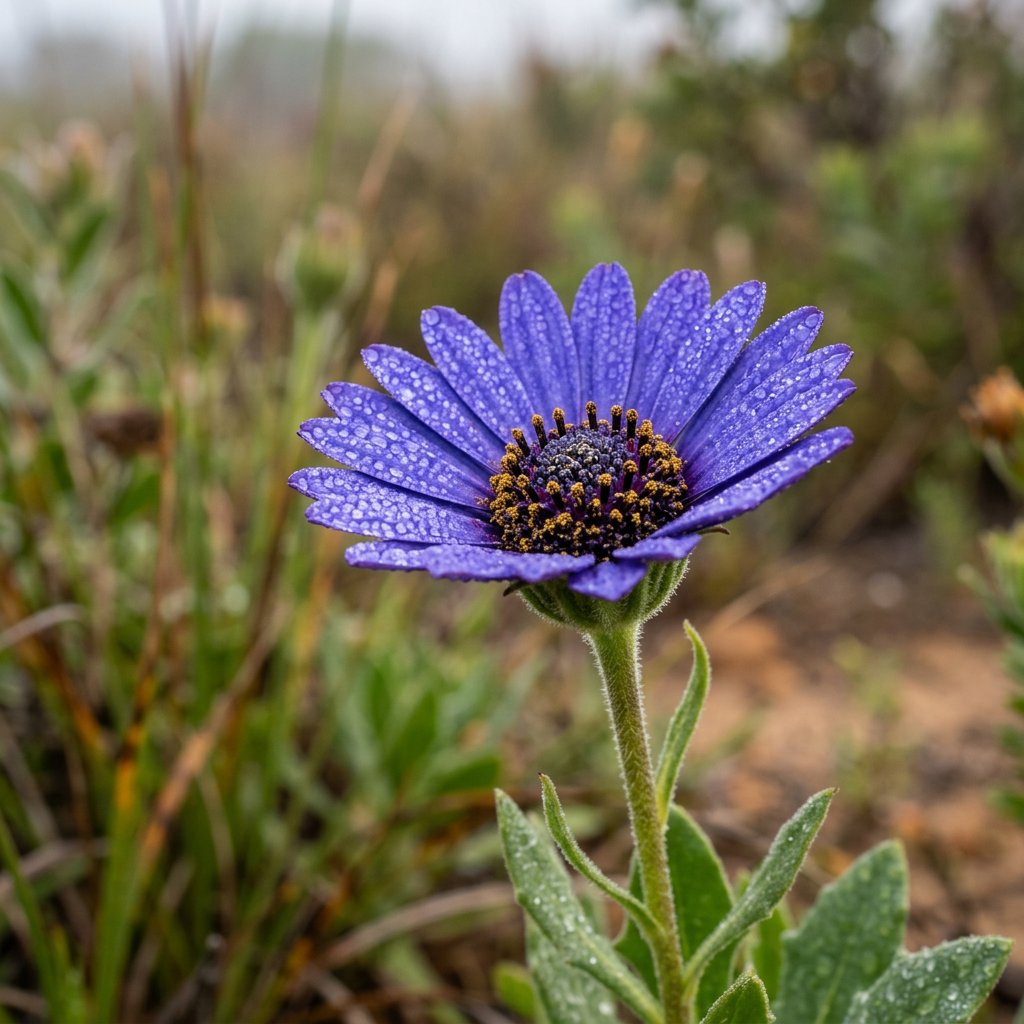
Plant Overview
Known affectionately as the Cape Daisy or Blue-eyed Beauty, this South African native brings a burst of celestial color to any sunny landscape. Unlike traditional daisies, these hardy perennials often feature striking, metallic-looking centers that look almost hand-painted. They are the "early birds" of the garden, often putting on their best show during the bright, cool days of late spring.
🔍 How to Identify
- 🌼 Petal Palette: Look for classic daisy-shaped petals in vibrant shades of white, purple, pink, or orange, often with a subtle, pearlescent shimmer.
- 🧿 The "Blue Eye": Most varieties are distinguished by a prominent dark purple or deep steel-blue central disk that provides a sharp contrast to the petals.
- 🍃 Toothed Foliage: The leaves are typically lance-shaped with slightly serrated (toothed) edges and a grayish-green, semi-succulent texture that feels slightly resinous.
🏡 In Your Garden
- ☀️ Solar Powered: These plants are true sun-worshippers. If they don't get enough direct light, the flowers will remain closed and the stems will become "leggy" as they stretch toward the sun.
- 🚿 Drainage is Vital: Originating from rocky slopes, they have a low tolerance for "wet feet." They require gritty, well-draining soil; sitting in stagnant water is the fastest way to lose this plant to root rot.
- ✂️ The Summer Siesta: Don't panic if blooming slows down during the peak heat of July or August. They often take a mid-summer break and will flush with new flowers once the temperatures drop in autumn.
⚠️ Safety & Toxicity
- ✅ Non-Toxic: Good news for pet owners and parents! Osteospermum ecklonis is generally considered non-toxic to dogs, cats, and horses according to the ASPCA.
- 🌿 Skin Sensitivity: While not poisonous, the resinous sap in the leaves can occasionally cause mild skin irritation for people with very sensitive skin. Wearing gloves while pruning is a good practice.
✨ Fun Fact
[🌙] Beauty Sleep: These flowers practice "nyctinasty," a rhythmic movement where the petals close up tightly at night or during heavy overcast weather. This behavior is thought to protect the pollen from dew and keep it dry for daytime pollinators!

Detailed Care Instructions
| Humidity | Normal |
| Lighting | Full Sun |
| Difficulty | Medium |
| Temperature | 5°C - 25°C |
| Hardiness Zones | 8A - 10B |
To grow Osteospermum Ecklonis, also known as the African daisy or Cape daisy, follow these steps:
- Choose a suitable location: Osteospermum prefers full sun exposure, although it can tolerate partial shade. Ensure the location has well-draining soil.
- Prepare the soil: Osteospermum prefers slightly acidic to neutral soil (pH 6.0-7.0). Improve the soil structure by adding compost or well-rotted organic matter before planting.
- Planting: Dig a hole slightly larger than the nursery pot. Carefully remove the plant from its pot, ensuring the root ball remains intact. Place the plant in the hole, making sure it sits at the same depth as it was in the pot. Backfill the hole with soil, gently firming it around the plant.
- Watering: Water the plant thoroughly after planting and keep the soil evenly moist until it becomes established. Once established, Osteospermum is drought-tolerant and only requires watering during prolonged dry periods.
- Fertilizing: Feed the plant with a balanced slow-release fertilizer according to the package instructions. This will provide the necessary nutrients throughout the growing season. Apply fertilizer in early spring or as recommended for your specific product.
- Pruning: Regular deadheading or removing faded flowers will promote continuous blooming. It also prevents seed production and helps the plant focus on new flower production.
- Mulching: Applying a layer of organic mulch around the plant will help conserve moisture, deter weed growth, and regulate soil temperature.
- Overwintering: In regions with cold winters, Osteospermum may not survive outdoors. Before the first frost, consider lifting the plant carefully from the ground, potting it, and bringing it indoors to a cool, well-lit location. Reduce watering during the winter and resume regular care in spring.
By following these steps, you can successfully grow Osteospermum Ecklonis and enjoy its beautiful flowers throughout the growing season.

Place in a bright room that is sun drenched almost all day. Or directly in a south-facing window.

To water this plant, you should first determine the moisture level in the soil by inserting your finger or a moisture meter into the soil. If the soil is dry, it's time to water. Water at the base of the plant and avoid getting the foliage wet, as this can lead to fungal diseases. Water deeply, allowing the water to penetrate the root system. Avoid allowing the soil to become waterlogged, as this can lead to root rot. It's important to note that this plant prefers well-draining soil and may require more frequent watering in hot, dry conditions.
To fertilize this plant, it is recommended to use a balanced fertilizer with equal parts nitrogen, phosphorus, and potassium. Fertilize every two weeks during the growing season, but reduce the frequency during winter months. Apply fertilizer to moist soil and never to dry soil to prevent root burn. Be sure to follow package instructions for appropriate dosages.
For optimal growth and health of the plant species known as Osteospermum Ecklonis, it is recommended to use a well-draining, nutrient-rich soil mixture. The soil should be composed of a mixture of loam, sand, and organic matter such as peat moss or compost. The pH level of the soil should be slightly acidic to neutral, ranging from 6.0 to 7.0.
It is important to avoid using heavy clay or compacted soil, as this can lead to poor drainage and stunt the growth of the plant. Additionally, the plant should be placed in an area with full sun exposure and kept well-watered, but not over-watered, as this can lead to root rot. By providing the optimal soil and growing conditions, the Osteospermum Ecklonis plant can thrive and produce an abundance of colorful flowers.
To propagate this plant, first select a healthy stem from the mother plant that is at least 4 inches long. Cut the stem just below a leaf node at a 45-degree angle using a sterile blade.
Remove the leaves from the lower half of the stem, leaving only a few leaves at the top.
Prepare a pot or container with well-draining soil and insert the stem cutting into the soil, making sure the bottom nodes are covered with soil.
Water the cutting lightly to moisten the soil and cover the pot with a plastic bag or plastic wrap to create a greenhouse effect.
Place the pot in a bright, indirect light location, avoiding direct sunlight, and keep the soil moist but not waterlogged.
After a few weeks, roots should start to form at the bottom nodes. Once the roots have established, remove the plastic covering and move the pot to a brighter location.
Once the plant has grown into a strong and healthy plant, it can be replanted in a permanent location.
Common pests of the cape marguerite include Spider mites, aphids, thrips. Make a habit of checking your cape marguerite frequently for pests so that any infestations can be caught and managed early.








