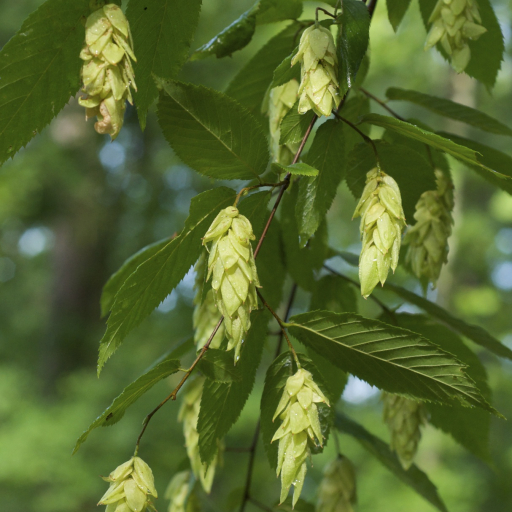
Plant Overview
Known affectionately as Ironwood or the American Hophornbeam, this understory gem is famous for its incredibly tough wood and unique fruit that looks remarkably like hops used in brewing. It is a slow-growing native of Eastern North America that adds a sense of ancient stability and texture to any woodland garden. While it is often overlooked for flashier ornamental trees, its distinctive "shreddy" bark provides a rustic charm that keeps the winter landscape visually engaging.
🔍 How to Identify
- 🪵 The Bark: As the tree matures, the bark breaks into narrow, vertical strips that peel away slightly at the ends. It is often described as looking like "shredded wheat" or a cat's favorite scratching post.
- 🍃 The Leaves: Look for simple, oval leaves with sharply double-toothed edges. They have a soft, slightly fuzzy texture on the underside and turn a subtle, warm yellow in the autumn.
- 🍺 The Fruit: The most recognizable feature is the drooping clusters of papery, bladder-like sacs. These protect the seeds and hang from the branches like light-green (later tan) hop blossoms.
🏡 In Your Garden
- 🌑 Shade Specialist: Unlike many trees that crave the spotlight, the Hophornbeam thrives in the shadows of larger canopy trees. This makes it a perfect choice for those tricky, darker corners of a yard where other trees might struggle.
- 🧱 Patience Required: This is a "slow and steady" grower. It invests its energy into creating incredibly dense, heavy wood rather than rapid height, meaning it won’t outgrow its space quickly or become brittle during heavy storms.
- 🧂 Salt Sensitivity: While it is as tough as nails regarding wind and wood strength, it is quite sensitive to road salt and heavy urban pollution. It prefers to be tucked away from busy curbsides in well-drained, organic soil.
⚠️ Safety & Toxicity
- ✅ Safe Status: The American Hophornbeam is considered non-toxic to humans, dogs, cats, and horses. It is a very "neighborly" tree for households with pets.
- 🦌 Wildlife Resource: While not a food plant for humans, the seeds are a vital winter resource for various birds, including ruffed grouse, wild turkeys, and several species of finches.
✨ Fun Fact
🪓 Nature's Steel: The wood of Ostrya virginiana is so dense and hard that it was traditionally used to make tool handles, mallets, and even levers for moving heavy stones. This incredible density is what earned it the rugged nickname "Leverwood."

Detailed Care Instructions
To grow Ostrya virginiana, commonly known as the American hophornbeam or Eastern hophornbeam, you can follow these steps:
- Obtain seeds or purchase young plants from a reputable nursery. If you choose to use seeds, collect them from mature trees in the fall.
- Choose a suitable location for planting. American hophornbeam prefers well-drained soil and can tolerate a variety of soil types, including sandy or clay soils. It can grow in full sun to partial shade.
- Prepare the planting site by removing any grass, weeds, or other vegetation. Loosen the soil and amend it with organic matter, such as compost, if necessary.
- Plant the seeds or young plants in the prepared soil. If using seeds, sow them in late fall or early winter, as they require a period of cold stratification for optimal germination. Plant them at a depth of about 1/4 inch (0.6 cm).
- Water the newly planted seeds or young plants thoroughly. Keep the soil consistently moist but not waterlogged. American hophornbeam has moderate drought tolerance once established but will benefit from regular watering during dry periods.
- Mulch around the base of the plant to conserve moisture, suppress weeds, and insulate the soil. Use organic mulch, such as wood chips or shredded bark, and spread it to a depth of 2-4 inches (5-10 cm), being careful not to pile it against the trunk.
- Prune the young trees, if necessary, to encourage a well-branched and balanced structure. Removing any dead or damaged branches is also essential for the overall health of the tree.
- Fertilize the Ostrya virginiana plant in early spring with a balanced fertilizer, following the package instructions. Repeat this process annually or as needed.
- Monitor the tree for common pests or diseases, such as aphids or leaf spot. Treat any issues promptly using appropriate organic or chemical controls.
- Provide support, such as staking, for young plants to ensure they grow straight and upright.
Remember that American hophornbeam plants are slow-growing, so be patient and give them time to establish and mature. Additionally, check with your local agricultural extension or plant nursery for any specific recommendations or considerations based on your region's climate and conditions.

Place in a bright room that is sun drenched almost all day. Or directly in a south-facing window.

Watering this particular tree species requires a regular and consistent watering schedule. It is important to keep the soil around the tree moist but not too wet, as excessive moisture can lead to root rot. Additionally, watering should be done at the base of the tree and not on the leaves or trunk. Using a drip irrigation system or a soaker hose can help to ensure that the water is delivered directly to the roots. During dry periods or hot weather, the tree may require more frequent watering. It is important to monitor the moisture levels in the soil and adjust watering accordingly.
To fertilize this plant, use a balanced fertilizer in early spring before new growth appears. Spread the fertilizer evenly around the base of the plant, being careful not to get any on the leaves. Water the plant thoroughly after fertilizing. Repeat the application every 4-6 weeks during the growing season. Avoid over-fertilizing, as this can lead to excessive growth and reduce the plant's resistance to disease and pests.
The ideal soil for Ostrya Virginiana should contain a balance of organic matter and well-draining materials. It should have a pH level between 5.5 and 7.0, which is slightly acidic to neutral. The soil should also be rich in nutrients such as nitrogen, phosphorus, and potassium, which are essential for the growth and development of the plant. In addition, Ostrya Virginiana prefers a soil that is moist, but not waterlogged, as it can suffer from root rot if the soil is too wet. The plant also requires a soil that is well-aerated, allowing air to circulate freely around the roots. Soil types that are suitable for Ostrya Virginiana include loamy soils, sandy loam soils, and clay loam soils.
There are several ways to propagate this plant. One method is to collect its seeds during the fall. Seedlings can emerge the following spring. Another way is to take softwood cuttings in the summer from new growth, dip the ends in rooting hormone, and plant them in a porous soil mixture. Provide consistent moisture and indirect light until roots develop. Hardwood cuttings can also be taken in the winter, but must be soaked in water or placed in rooting hormone before planting. A final method is to dig up and separate root suckers that have formed around the base of the parent tree, replanting them in a different location.








