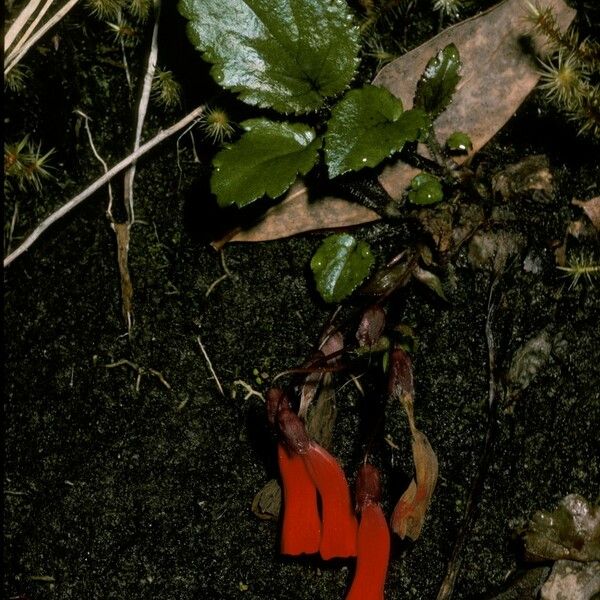
Plant Overview
Commonly known as the Creeping Foxglove, Ourisia ruellioides is a striking alpine perennial hailing from the misty, cool regions of the southern Andes in Chile and Argentina. This plant is a true mountain dweller, often found clinging to damp rock faces or thriving near the spray of waterfalls. Its brilliant scarlet, trumpet-shaped flowers provide a dramatic contrast against its lush, emerald-green foliage, making it a prized find for rock garden enthusiasts.
🔍 How to Identify
- 🍃 The Foliage: The leaves are broad, rounded, and have a distinct "quilted" or crinkled texture. They grow in a low, spreading rosette that hugs the ground.
- 🌺 The Flowers: It produces clusters of drooping, tubular flowers that are a vibrant fire-engine red. The shape is reminiscent of a miniature foxglove, which gives it its common name.
- 🌱 Growth Habit: This is a rhizomatous plant, meaning it spreads slowly via underground stems to form a dense, leafy carpet over moist soil or mossy rocks.
🏡 In Your Garden
- 💧 The "Waterfall" Rule: In its natural habitat, this plant lives on the edge of streams. In a garden setting, it demands high humidity and soil that stays consistently moist. It will quickly wilt if the soil dries out even for a short period.
- 🌡️ Cool Roots: Unlike many garden plants, Ourisia hates "hot feet." It thrives in cool, shaded spots—ideally a north-facing rockery or a woodland edge where the roots can stay chilled while the leaves enjoy dappled light.
- ⛰️ Soil Nuance: It prefers acidic to neutral soil that is rich in organic matter but still offers sharp drainage. Think of a mix of leaf mold and grit to mimic the forest floors of the Andes.
⚠️ Safety & Toxicity
- 🟢 Status: Generally considered non-toxic.
- 🐾 Details: There are no documented reports of Ourisia ruellioides being poisonous to cats, dogs, or humans. However, because it is an ornamental plant not intended for consumption, it is best kept out of reach of curious pets and toddlers to avoid minor stomach upset or choking hazards.
✨ Fun Fact
In the wild, the brilliant red color and long tubular shape of the flowers aren't just for show—they are perfectly evolved "landing strips" for hummingbirds. These tiny birds are the primary pollinators for the Creeping Foxglove in the high-altitude forests of South America!

Detailed Care Instructions

Some plants require more regular watering than others, which should be done every few days. It's critical to maintain the soil moist all of the time. The water requirements of the same plant placed in pots with varying sizes will differ. Because the water in the smaller pot evaporates faster than the water in the larger pot, it will require more watering. Regardless of pot size, the surface should constantly be maintained moist.








