Plant Overview
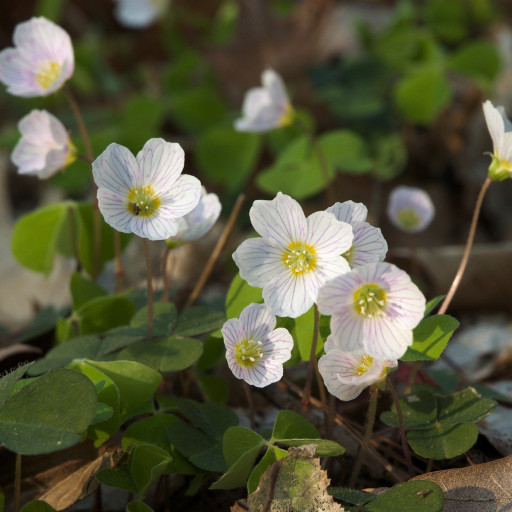
Often mistaken for a true clover, the Common Wood Sorrel (or "Wood Shamrock") is a delicate woodland gem native to Europe and parts of Asia. Ancient folklore affectionately calls it "Cuckoo’s Bread" because its emergence coincides with the first songs of the cuckoo bird in spring. This plant is a master of movement, gracefully folding its leaves like a tiny green umbrella whenever the sun sets or a storm approaches.
🔍 How to Identify
- ☘️ Heart-Shaped Foliage: Unlike common clovers, which have oval leaflets, Wood Sorrel features three perfectly heart-shaped leaflets joined at their points.
- 🌸 The Bloom: Dainty, five-petaled white flowers that appear translucent, often decorated with delicate, "penciled" lilac or violet veins leading toward a yellow center.
- 🌙 Sleep Movement: The plant exhibits nyctinasty; its leaves fold downward at night or under stress to protect its delicate surfaces from the elements.
🏡 In Your Garden
- 🌲 The Shade Specialist: Naturally found in mossy, ancient woodlands, this plant is an excellent choice for damp, shaded corners where other plants struggle. It hates the "hot seat" and will wilt quickly if exposed to direct afternoon sun.
- 🍂 Humus Lover: It thrives in acidic, leaf-mold-rich soil. Because it has a very shallow and fragile root system, it prefers to stay put—avoid transplanting it once it has settled into its mossy bed.
⚠️ Safety & Toxicity
- 🍋 Oxalic Acid: The leaves have a sharp, lemony tang due to oxalic acid. While humans sometimes use tiny amounts as a garnish, eating large quantities is discouraged as it can interfere with calcium absorption.
- 🐾 Pet Safety: Toxic to pets. Cats, dogs, and horses should not consume this plant. Ingestion can lead to drooling, tremors, or kidney stress due to the high oxalate content.
✨ Fun Fact
- 🇮🇪 Although many people today use white clover as a symbol for Ireland, some historians believe the Oxalis acetosella was the original "Shamrock" used by St. Patrick, thanks to its striking, symbolic triple-leaf structure.

Detailed Care Instructions
| Color | White |
| Soil Ph | Acidic |
| Humidity | Normal |
| Toxicity | Toxic |
| Soil Type | Loamy, Sandy, Well-Drained |
| Bloom Time | May–June |
| Difficulty | Medium |
| Plant Type | Perennial |
| Hibernation | Cold Period |
| Mature Size | 0.5–1 Ft. Tall, 1–2 Ft. Wide |
| Temperature | 20°C - 27°C |
| Sun Exposure | Full, Partial Sun |
| Hardiness Zones | 8–11 |
Growing Oxalis Acetosella, commonly known as wood sorrel or shamrock, can be done using the following steps:
- Select a suitable location: Wood sorrel prefers partial to full shade and moist, well-draining soil. Choose a spot in your garden that meets these requirements.
- Prepare the soil: Loosen the soil with a garden fork or tiller and remove any weeds or rocks. Add compost or organic matter to improve soil fertility and drainage.
- Sow or plant the seeds: Collect wood sorrel seeds from mature plants or purchase them from a reputable seed supplier. Sow the seeds directly into the prepared soil, sprinkling them evenly and lightly pressing them into the soil. Alternatively, you can purchase young wood sorrel plants from a nursery and transplant them into the prepared soil.
- Water regularly: Keep the soil consistently moist but not waterlogged. Water the plants deeply and allow the soil to dry slightly before watering again. Avoid overwatering, as it can cause root rot.
- Mulch: Apply a layer of organic mulch, such as wood chips or straw, around the base of the plants. Mulch helps retain moisture, suppresses weeds, and protects the roots from extreme temperature fluctuations.
- Fertilize sparingly: Wood sorrel does not require heavy fertilization. A light application of balanced organic fertilizer, such as a 10-10-10 formula, in the spring and mid-summer should be sufficient.
- Control weeds: Regularly remove any weeds that may compete with wood sorrel for nutrients and water. Be careful while weeding, as uprooted wood sorrel bulbs can easily re-root and spread.
- Monitor pests and diseases: Wood sorrel is generally not prone to serious pest or disease problems. However, occasional aphids or slugs may feed on the leaves. Handpick or use organic pest control methods if necessary.
- Harvest leaves: You can start harvesting wood sorrel leaves once the plants are well-established. Harvest individual leaves or cut back the entire plant to allow for regrowth. The leaves have a tangy, sour flavor and can be used in salads or as a garnish.
- Propagate: Wood sorrel can spread rapidly through bulbils that grow along its stems. To increase your plant population, carefully remove these bulbils from the stems and replant them in moist soil.
With adequate care and attention, your Oxalis Acetosella plants should thrive and provide a beautiful addition to your garden.

Place in a window with dappled sun or a spot in the middle of a room. Or directly in a window facing west or east.

Oxalis Acetosella is a perennial plant that requires frequent watering to thrive. In order to water this plant effectively, you will need to follow a few simple steps.
First, you will need to determine the best time of day to water the plant. In general, it is best to water in the early morning or late afternoon, when temperatures are cooler and the sun is not as strong. This will help to prevent the water from evaporating too quickly and also reduce the risk of fungal growth.
Next, you will need to consider the soil type and drainage of the plant. Oxalis Acetosella prefers moist soil that is well-draining. If the soil is too dry, the plant will wilt. If the soil is too wet, the roots may rot. So, you will need to water the plant enough to moisten the soil, but not so much that it becomes waterlogged.
To water the plant, you can use a watering can or a hose. Slowly and evenly apply water to the soil around the plant until the soil is moist. Be careful not to get water on the leaves or stems, as this can cause fungal growth.
Finally, you will need to monitor the plant to ensure that it is getting enough water. If the leaves start to wilt or turn yellow, this may be a sign that the plant needs more water. If the soil feels dry to the touch, you may need to water the plant more frequently. However, if the soil feels wet or waterlogged, you will need to reduce the amount of water you are giving the plant.
To fertilize this plant, use a balanced fertilizer with equal parts nitrogen, phosphorus, and potassium. Apply the fertilizer in early spring as soon as new growth appears. Repeat the fertilizer application every six weeks during the growing season. Avoid using too much fertilizer as it can harm the plant. Water the plant after applying fertilizer to ensure that the nutrients are absorbed.
The ideal soil for this plant should be light and well-drained, with a slightly acidic pH level. It should be rich in organic matter and nutrients, while also allowing for proper drainage and aeration. A mixture of peat moss, perlite, and sand can ensure these qualities in the soil, while also providing the necessary nutrients for healthy growth. It is important to avoid using heavy and compact soils, as these can lead to waterlogged conditions that are detrimental to the plant's health. Instead, a loose and friable soil mix is recommended for optimal growth and thriving.
To propagate this plant, the first step is to obtain a healthy specimen. Look for a plant that is disease-free and has thriving leaves. Next, identify the nodes on the stems. These are the points where the plant will produce roots and new growth.
Using a sharp, clean pair of scissors or a knife, cut off a stem at the node. Make sure the stem is at least a few inches long. Remove any leaves from the lower half of the stem.
Prepare a pot with well-draining soil. Moisten the soil slightly but do not make it too wet. Insert the stem into the soil so the node is covered. Firm the soil around the stem to make sure it is supported and standing straight.
Place the potted plant in a warm, sunny location. Keep the soil moist but not waterlogged. In a few weeks, check for new growth and roots. Once the plant has established roots and is growing well, it can be repotted into a larger pot or transplanted outside.








