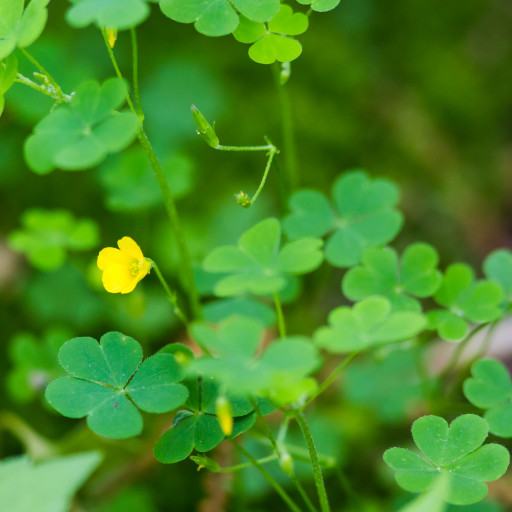
Plant Overview
Oxalis dillenii, commonly known as the Slender Yellow Woodsorrel, is a charming but persistent guest in many gardens. While its delicate heart-shaped leaves make it look like a miniature clover, it belongs to an entirely different family known for its signature tangy flavor. In folklore, these little plants are often called "Sourgrass" or "Sheep’s Sour" because of the lemony zing found in their foliage.
🔍 How to Identify
- 🌿 Heart-Shaped Leaflets: Unlike true clovers which have oval leaflets, this plant features three distinct, deeply notched heart-shaped leaflets that are a soft grayish-green.
- 🌼 Bright Yellow Blooms: It produces small, five-petaled yellow flowers that sit at the end of long, slender stalks, typically appearing in clusters of two or three.
- 📏 Upright Growth: While many sorrels creep along the ground, Oxalis dillenii tends to grow more upright or slightly leaning, often reaching about 10–15 inches in height.
🏡 In Your Garden
- 🌱 The Master of Disturbed Soil: This plant loves "pioneer" spots—areas where the soil has been recently turned or where grass is thin. It’s highly adaptable and will thrive in everything from sidewalk cracks to lush flower beds.
- 💧 Sleep Movements: If you look at the plant during a rainstorm or at night, you’ll notice the leaves "fold up" like a tiny umbrella. This behavior, called nyctinasty, is the plant's way of protecting its delicate surfaces from moisture loss and cold.
⚠️ Safety & Toxicity
- 🐾 Pet Warning: The plant contains calcium oxalates. While most animals avoid it due to the sour taste, large quantities can be toxic to dogs, cats, and horses, potentially leading to kidney issues if ingested in bulk.
- 👅 Human Moderation: The leaves are edible for humans and offer a pleasant lemony zest for salads. However, anyone prone to kidney stones or gout should avoid it, as the oxalic acid can interfere with calcium absorption.
✨ Fun Fact
🚀 The seed pods of the Slender Yellow Woodsorrel are biological "cannons." When the long, okra-shaped pods dry out, the slightest touch—from a raindrops or a passing ladybug—causes them to explode, launching seeds up to 10 feet away!

Detailed Care Instructions
To successfully grow Oxalis Dillenii, also known as Dillen's Wood Sorrel or Wild Shamrock, follow these steps:
- Climate and soil preference: Oxalis Dillenii thrives in a temperate to sub-tropical climate. It prefers well-draining soil with a slightly acidic pH (around 6.0-6.5). If your region doesn't provide the ideal conditions, consider growing it in a container so you can control the environment.
- Propagation method: Oxalis Dillenii can be propagated through seeds or dividing existing plants. If using seeds, sow them in late winter or early spring, covering them lightly with soil. Keep the soil consistently moist until germination occurs.
- Light requirements: Oxalis Dillenii prefers partial shade to full sun. If growing indoors, place it near a well-lit window or provide artificial grow lights.
- Watering: Keep the soil evenly moist but not waterlogged. Allow the top inch of soil to dry out between waterings. During periods of active growth, water more frequently, but reduce watering during winter when the plant goes dormant.
- Fertilization: Feed the plant with a balanced, water-soluble fertilizer diluted to half-strength once a month during the growing season (spring and summer). Avoid over-fertilizing to prevent burning the roots.
- Pruning: Trim away any dead or dried stems as needed to maintain a tidy appearance. Oxalis Dillenii naturally goes dormant during winter, and foliage may die back. If this happens, cut back the dead foliage but leave the rhizomes undisturbed.
- Pests and diseases: Oxalis Dillenii is generally pest and disease-free but can occasionally attract aphids or spider mites. Monitor your plant regularly and take immediate action if you notice any infestation. Use insecticidal soap solution or neem oil as organic remedies.
Remember, every plant has unique requirements, and it's essential to adjust your care based on its specific needs. Observation and adapting to the plant's response will help you provide the best conditions for its growth.

Place in a window with dappled sun or a spot in the middle of a room. Or directly in a window facing west or east.

When watering this particular species of plant, make sure to give the soil a good drenching, allowing the water to penetrate deeply into the root system. Avoid letting the soil become consistently soggy, but also make sure it never fully dries out. It is best to water the plant in the early morning or late afternoon to prevent water from evaporating too quickly in the midday sun. Pay attention to the specific watering needs of your individual plant, as factors such as potting medium, container size, and humidity levels can all affect how frequently it should be watered.
To fertilize this plant, apply a balanced, water-soluble fertilizer every two weeks during the growing season. Use a solution that is half the recommended strength to avoid over-fertilization. Water the plant thoroughly before and after applying the fertilizer to prevent root burn. Avoid fertilizing during periods of drought or extreme heat.
The best type of soil to use for the plant in question is a well-draining soil that is rich in nutrients. The soil should have a pH level in the slightly acidic to neutral range. It is important to avoid using heavy clay soils or soils that tend to retain moisture as these can lead to root rot and other problems.
A good soil mixture for the plant in question can be made by combining equal parts of peat moss, perlite, and vermiculite. This will create a soil that is porous and well-draining, allowing for proper root development and moisture retention.
Additionally, it is important to fertilize the plant regularly with a balanced fertilizer that contains equal parts of nitrogen, phosphorus, and potassium. This will ensure that the plant receives all of the nutrients it needs to grow and thrive.
Overall, it is important to provide the plant with a healthy growing environment that includes proper soil, moisture, and nutrients. With the right care and attention, the plant will grow into a beautiful and healthy addition to any garden or indoor space.
To propagate this plant, you will need to first obtain some healthy cuttings from a mature plant. Cut off a few pieces that are about 4-6 inches long and make clean cuts using sharp, sterile scissors or pruning shears. Remove any leaves that would be below the soil line, leaving only a few leaves at the top.
Next, prepare a well-draining potting mix that is rich in organic matter. Put the cuttings into the mix, keeping the bottom half of each cutting buried in the soil. Firm the soil around the base of each cutting to ensure it stays upright.
Water the cuttings gently, being careful not to over-water them. Place the pot in a warm, bright area with indirect sunlight. Keep the soil moist but not waterlogged, and mist the cuttings regularly.
In a week or two, you should see new growth emerging from the top of the cuttings. This means they have begun rooting. Continue caring for them until they are established in the pot. Once they have grown enough, you can transplant them into larger pots or directly into the ground if conditions are right.
Common pests of the common yellow wood-sorrel include Spider mites, fungus gnats, aphids, thrips. Make a habit of checking your common yellow wood-sorrel frequently for pests so that any infestations can be caught and managed early.








