Plant Overview
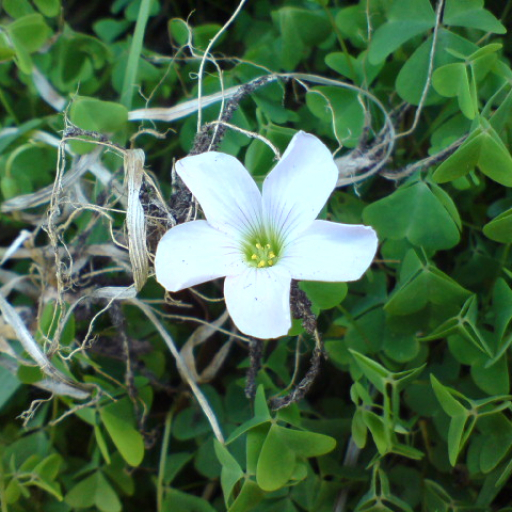
Known affectionately as the Pale Pink Sorrel, this delicate South African native is often mistaken for a common clover at first glance. Its dainty, heart-shaped leaves and soft pastel blooms make it a charming guest in rock gardens and hanging baskets. While it looks fragile, it is a resilient "friendly wanderer" that has traveled from the Cape of Good Hope to gardens across the globe.
🔍 How to Identify
- ☘️ The Foliage: Features classic "shamrock" leaves, consisting of three heart-shaped leaflets that are a bright, cheerful green.
- 🌸 The Blooms: Produces five-petaled flowers that are a very pale pink or nearly white, often featuring a contrasting buttery-yellow throat.
- 🌿 Growth Habit: Unlike upright garden plants, this species has a sprawling or trailing habit, with thin, reddish stems that creep along the ground or spill over the edges of pots.
🏡 In Your Garden
- 💤 Summer Slumber: This plant follows a Mediterranean growth cycle; it often goes dormant and "disappears" during the hot summer months, only to reappear when the weather cools and rains return.
- 🌍 The Bulb Factor: It spreads through tiny underground bulbils and stems. While this makes it easy to propagate, be mindful of where you plant it, as it can be difficult to remove once those tiny bulbs settle into your soil.
- ☁️ Lighting Nuance: It prefers "dappled" sunlight. Too much direct afternoon sun can scorch the tender leaves, while too much shade will prevent those beautiful pale flowers from opening fully.
⚠️ Safety & Toxicity
- 🐱 Pet Warning: Like most members of the Oxalis genus, this plant contains oxalic acid. While it has a bitter taste that usually deters animals, it can cause kidney stress or stomach upset if ingested in large quantities by cats or dogs.
- 👶 Human Safety: While the leaves are technically edible for humans in very small amounts (giving a sour, lemony zing), they should be avoided by anyone prone to kidney stones or gout.
✨ Fun Fact
The Pale Pink Sorrel is a "sleep mover." It exhibits a behavior called nyctinasty, where the leaves fold up tightly like tiny umbrellas at night or during heavy rain to protect the plant's delicate surfaces.

Detailed Care Instructions
| Humidity | Normal |
| Lighting | Full Sun |
| Difficulty | Medium |
| Hibernation | Cold Period |
| Temperature | 15°C - 24°C |
| Hardiness Zones | 8 - 10 |
To grow Oxalis Incarnata plants, follow these steps:
- Prepare the soil: Oxalis Incarnata thrives in well-draining soil. Use a mixture of equal parts potting soil, perlite, and sand to ensure good drainage.
- Choose the right location: Find a spot that receives partial shade or filtered sunlight. Oxalis Incarnata prefers indirect light and can be damaged by strong, direct sunlight.
- Plant the bulbs: Plant the Oxalis Incarnata bulbs about 2-3 inches deep, with the pointed end facing up. Space them at least 6 inches apart to allow room for growth.
- Water appropriately: Oxalis Incarnata plants require regular watering. Keep the soil moist but not waterlogged. Water the plants when the top inch of soil feels dry to the touch.
- Fertilize sparingly: Use a balanced, slow-release fertilizer or a liquid fertilizer diluted to half strength. Apply it monthly during the growing season, which is typically spring and summer.
- Prune if needed: If your Oxalis Incarnata becomes leggy or overgrown, you can trim back the stems to encourage bushier growth. However, be cautious not to remove all the leaves as it needs them for photosynthesis.
- Protect from frost: Oxalis Incarnata is not frost-tolerant. If you live in a colder region, bring your plants indoors or mulch around the bulbs to protect them during winter.
- Control pests and diseases: Monitor your plants for pests like aphids or spider mites. Treat infestations using organic insecticides or by removing pests manually. Watch out for diseases like fungal rots, and promptly remove and discard affected plant parts to prevent the spread.
- Propagation: Oxalis Incarnata can be propagated by dividing the bulbs in early spring or by planting the seeds. Harvest the seeds when the pods are dry and brown, and sow them in a seed-starting mixture.
With these steps, you can successfully grow Oxalis Incarnata plants and enjoy their beautiful flowers.

Place in a bright room that is sun drenched almost all day. Or directly in a south-facing window.

To water this plant, you should wait until the soil in its container becomes somewhat dry to the touch. Then, water it thoroughly, making sure that the water reaches the roots of the plant. After watering, allow any excess water to drain out of the bottom of the container before returning the plant to its normal location. It is also important to ensure that the plant is not sitting in standing water, which can lead to root rot.
To fertilize this plant, apply a balanced fertilizer with the ratio of 10-10-10 every two weeks during the growing season, which is typically from spring to early fall. Dilute the fertilizer in water and apply it to the base of the plant or spray it onto the leaves using a spray bottle. Be careful not to over-fertilize as it can cause damage to the plant. Always follow the instructions on the fertilizer package for the correct dosage and application method.
The Oxalis Incarnata plant thrives in well-draining, slightly acidic soil. A suitable soil mix for this plant would consist of a combination of peat moss, sand, and perlite or vermiculite. This will help ensure sufficient moisture retention while also allowing excess water to drain away quickly, preventing root rot. It is also important to regularly fertilize the soil with a balanced, water-soluble fertilizer to provide the plant with necessary nutrients for healthy growth. Additionally, it is advisable to repot the Oxalis Incarnata plant every 1-2 years to refresh the soil and prevent the roots from becoming overcrowded.
To propagate this plant, you will need to find a mature and healthy parent plant. Gently dig around the base of the plant to loosen the soil and expose the roots. Look for sections of the plant that have healthy leaves and roots.
Using a sharp, sterilized knife or scissors, carefully cut the section of the plant that you want to propagate. Make sure to take a piece of the plant stem and some of the roots with the leaves.
Fill a small pot with well-draining soil and make a small hole in the center. Insert the stem and roots into the hole and cover with soil, pressing lightly to secure the cutting in place.
Water the cutting thoroughly and place it in a bright, warm location, but out of direct sunlight. Keep the soil moist but not waterlogged.
Over time, the cutting will start to develop new roots and leaves, signaling that it has taken root. Once it has established itself and grown to a decent size, it can be transplanted into a larger pot or planted outdoors.








