Plant Overview
Often called the Purple Wood Sorrel or Cape Sorrel, Oxalis purpurata is a charming South African native that looks like a high-fashion version of a common clover. With its jewel-toned flowers and velvety, heart-shaped leaves, it is a favorite for windowsill gardens and rockeries alike. It is most famous for its "sleep movements," where it tidily tucks its leaves away as soon as the sun goes down, only to "wake up" and stretch when the morning light hits.
🔍 How to Identify
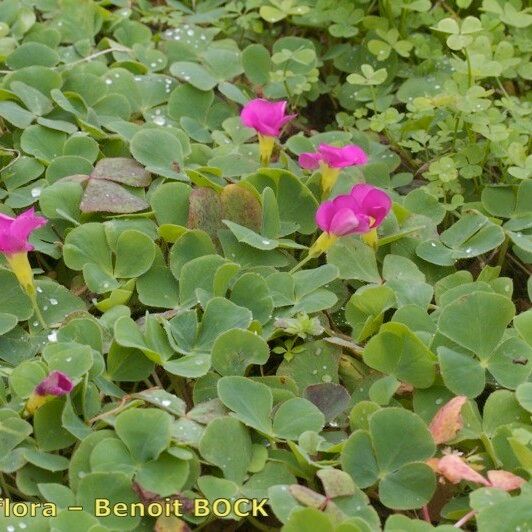
- ☘️ The Leaves: Classic trifoliate (three-part) leaves that resemble a shamrock. They are often a rich, deep green but can have a purple-tinted underside and a soft, slightly fuzzy texture.
- 🌸 The Blooms: Large, five-petaled flowers that look like satiny funnels. They typically come in shades of rose-purple or deep pink, usually featuring a bright, contrasting yellow "eye" at the center.
- 📏 Growth Habit: A low-profile, mounding plant that grows from small underground bulbs (corms), rarely reaching more than a few inches in height but spreading out beautifully.
🏡 In Your Garden
- ☀️ Sun-Sensitive: This plant is a sun-worshipper. If it doesn't get bright, direct light during the day, the flowers will refuse to open, and the stems will become "leggy" and weak as they reach for the nearest light source.
- 💤 The Dormancy Cycle: Don't panic if your plant suddenly appears to be dying! After its heavy flowering season, Oxalis needs a nap. It will lose its leaves and retreat into its bulb. Simply stop watering and let it rest in a cool, dark spot until you see new green shoots.
- 💧 Bulb Safety: Because it grows from bulbs, it is highly sensitive to "wet feet." Ensure your soil is gritty and fast-draining to prevent the bulbs from rotting during their resting period.
⚠️ Safety & Toxicity
- 🐾 Toxic to Pets: Oxalis species contain soluble calcium oxalates. If nibbled by cats or dogs, it can cause drooling, vomiting, or, in large quantities, kidney stress. Keep it on a high shelf away from curious paws.
- 👶 Kid-Safe but Sour: While not typically "poisonous" to humans in small amounts, the high oxalic acid content gives it a sharp, sour taste and can cause stomach upset if eaten by children.
- ✋ Skin Sensitivity: Most people handle the plant without issue, but the sap can occasionally cause mild irritation for those with very sensitive skin.
✨ Fun Fact
The name Oxalis is derived from the Greek word "oxys," which means "sour." This refers to the acidic, lemony punch the plant packs—a chemical defense mechanism designed to discourage insects from eating its succulent leaves!

Detailed Care Instructions
To grow Oxalis Purpurata (commonly known as purple shamrock), follow these steps:
- Choose a suitable location: Oxalis Purpurata thrives in partial shade, so find a spot that receives indirect sunlight or bright filtered light.
- Planting time: Plant the oxalis bulbs in early spring or summer when the soil temperature is around 60-70°F (15-21°C).
- Soil preparation: Ensure the soil is well-draining and rich in organic matter. You can amend the soil with compost or peat moss to improve drainage and fertility.
- Bulb planting: Dig a small hole that is about 3-4 inches deep and place the oxalis bulb in the hole with the pointed side facing up. Cover the bulb lightly with soil and water gently to settle it.
- Watering: Keep the soil evenly moist, but avoid overwatering as the bulbs may rot. Water whenever the top inch of soil feels dry, maintaining a balance to prevent waterlogging.
- Fertilization: Feed the Oxalis Purpurata every 2-4 weeks during the growing season with a balanced, water-soluble fertilizer. Follow the directions on the fertilizer package for dosage instructions.
- Mulching: Apply a layer of organic mulch around the plant to help conserve moisture and suppress weed growth. Ensure the mulch is not touching the stems directly, as it can cause rot.
- Maintenance: Remove any weeds that compete with the plant for nutrients and water. Pinch back the stems occasionally to encourage bushier growth.
- Winter care: Oxalis Purpurata is typically grown as an annual, but if you live in a suitable climate (zones 8-11), you can overwinter it by bringing the potted plant indoors or placing a thick layer of mulch over the bulbs in the soil to insulate them from freezing temperatures.
- Propagation: Oxalis Purpurata can be propagated by dividing the bulbs. During the dormant season, carefully lift the plant, separate the bulbs, and replant them at the same depth as before.
With proper care and maintenance, Oxalis Purpurata can grow into a stunning and vibrant plant, adding beauty to your garden or indoor space.

Place in a bright room that is sun drenched almost all day. Or directly in a south-facing window.

The best way to water this plant is to place it in a container with a drainage hole. Water the plant once the top inch of soil feels dry to the touch. Avoid overwatering, as this can cause the roots to rot. The plant prefers to be kept moist, but not waterlogged. When watering, make sure to saturate the soil evenly. It's also important to use room temperature water to avoid shocking the roots. Use a watering can or sprayer to water the soil directly, avoiding the leaves and stem if possible. Finally, make sure the plant is not sitting in standing water, as this can also cause root rot.
To fertilize this plant, it is recommended to use a balanced fertilizer with an NPK ratio of 10-10-10. Mix the fertilizer in water according to the manufacturer's instructions and apply it to the soil every two weeks during the growing season (spring and summer). Avoid fertilizing during the dormant season (fall and winter). Be careful not to over-fertilize, as this can cause salt buildup and damage to the roots. Water the plant thoroughly after applying fertilizer to ensure nutrients reach the roots.
Oxalis Purpurata plant prefers well-draining soil with a pH between 5.5 and 7.5. It needs soil that is rich in organic matter, such as peat moss, compost, or leaf mold. The soil should also be light and airy to allow for proper aeration and drainage. Avoid sandy or heavy clay soils as they do not hold moisture or nutrients well. Adding perlite or vermiculite to the soil mixture can help improve drainage. Fertilize the plant every four to six weeks during the growing season with a balanced fertilizer to encourage healthy growth.
To propagate this plant, take healthy stems with leaves and cut them into small pieces, making sure each piece has at least two nodes. Dip the cut ends into rooting hormone and plant them in a well-draining potting mix. Cover the pot with clear plastic to maintain humidity and keep the soil moist but not waterlogged. Place the pot in a warm, bright spot but avoid direct sunlight. After several weeks, new growth should emerge and the cuttings can be gradually acclimated to lower humidity and less frequent watering.








