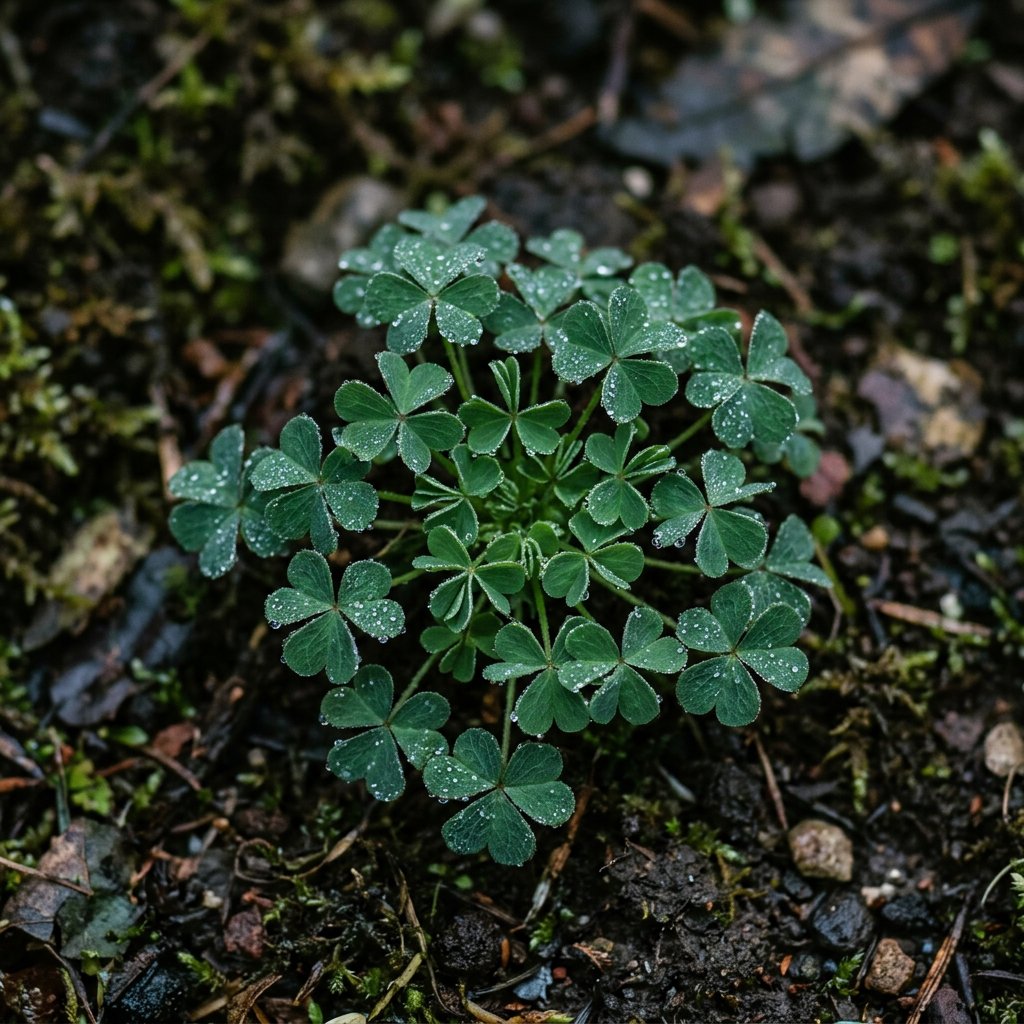
Plant Overview
Often called the Volcanic Sorrel, this vibrant plant looks like a cluster of tiny, neon hearts spilled across the ground. Unlike its more aggressive garden cousins, Oxalis spiralis is a well-behaved charmer that brings deep burgundies or bright chartreuse greens to sunny windowsills and hanging baskets. It is beloved by hobbyists for its "living" movement and its ability to carpet a container in a matter of weeks.
🔍 How to Identify
- ☘️ Leaf Structure: It features the classic "shamrock" look, consisting of three perfectly heart-shaped leaflets that meet at a central point.
- 🌈 Vibrant Foliage: Depending on the cultivar, the leaves range from a glowing lime-yellow to a deep, dramatic "Zinfandel" purple, often with contrasting reddish stems.
- 🌼 Dainty Blooms: It produces small, five-petaled bright yellow flowers that sit just above the foliage, providing a striking color contrast.
🏡 In Your Garden
- 🧺 Trailing Habit: Because of its "spilling" growth pattern, this plant is a star in hanging baskets. It doesn't climb, but it will gracefully drape over the edges of a pot like a velvet waterfall.
- 🌓 The Sleep Move: This plant exhibits "nyctinasty." At night or on very cloudy days, the leaflets fold downward against the stem to conserve moisture, appearing to "sleep" until the sun returns.
- ☀️ Light Sensitivity: While it loves bright light to keep its colors intense, too much harsh afternoon sun can "bleach" the leaves. If the plant starts looking pale, it’s likely asking for a bit of afternoon shade.
⚠️ Safety & Toxicity
- 🐾 Toxic to Pets: Like all sorrels, it contains oxalic acid. While the bitter taste usually deters animals, it is toxic to dogs, cats, and horses if ingested in significant amounts, potentially leading to kidney stress.
- 👶 Mild Irritant: For humans, eating large quantities can cause stomach upset. It is best kept on high shelves away from curious toddlers who might be attracted to the bright "shamrock" leaves.
✨ Fun Fact
The "Volcanic" in its common name isn't just for show—this species is native to the volcanic slopes of Central and South America, where it evolved to thrive in mineral-rich, well-draining soils!

Detailed Care Instructions
To grow Oxalis Spiralis plant, follow these steps:
- Choose a well-draining pot or container: Oxalis Spiralis prefers to grow in well-draining soil, so it's essential to select a pot or container with drainage holes.
- Prepare the soil: Fill the pot with a well-draining potting mix or a combination of equal parts potting soil, sand, and perlite. Mix them thoroughly to ensure good aeration and drainage.
- Plant the bulbs: Plant the bulbs of Oxalis Spiralis in the soil, making sure to bury them about 1-2 inches deep. Space the bulbs about 2-3 inches apart to allow for their spreading nature.
- Provide the right conditions: Place the pot in a location that receives bright, indirect sunlight. Oxalis Spiralis prefers bright light but can also tolerate partial shade. Avoid placing the plant in direct sunlight, as it can scorch the leaves.
- Watering: Water the plant thoroughly after planting, allowing the soil to become slightly dry between watering. Overwatering can lead to root rot, so ensure the soil dries out a bit before watering again. Oxalis Spiralis prefers slightly moist soil but not soggy conditions.
- Temperature and humidity: Oxalis Spiralis thrives in temperatures between 65-75°F (18-24°C). Maintain average room humidity levels, and avoid exposing the plant to drafts or extreme temperature fluctuations.
- Fertilization: Feed Oxalis Spiralis with a balanced, water-soluble fertilizer every two to three weeks during the growing season (spring and summer). Dilute the fertilizer to half the recommended strength to prevent fertilizer burn.
- Pruning and maintenance: Trim off any dead or damaged leaves regularly to promote healthy growth. As Oxalis Spiralis tends to spread, you may need to divide and repot it every year or so to control its size.
- Dormancy period: Oxalis Spiralis goes dormant in the winter. During this period, reduce watering and place the plant in a cool (40-50°F or 4-10°C) and dark location for about two to three months. Resume regular care once new growth emerges in spring.
- Propagation: To propagate Oxalis Spiralis, divide the bulbs in spring or early summer, ensuring each division has a few bulbs and roots. Plant the divisions in separate pots and follow the same care instructions as described above.
With proper care and conditions, your Oxalis Spiralis plant should grow and thrive, showcasing its beautiful and unique spiral leaves.

Place in a dark room with little light, like a dark bedroom or a spot far away from a window or directly in a north-facing window.

This plant should be watered regularly, aiming to keep the soil consistently moist but not waterlogged. Watering should be adjusted based on the specific environmental conditions, such as the amount of sunlight and humidity. When watering, apply water directly to the soil and try to avoid getting water on the leaves or crown of the plant. It is also important to ensure proper drainage to prevent root rot.
To properly fertilize this plant, use a balanced fertilizer with a ratio of 10-10-10. Apply the fertilizer once a month during the growing season, which is typically spring and summer. Be sure to follow the manufacturer's instructions for application rates. Avoid over-fertilization, as this can lead to excessive growth or burn the plant. Water the plant thoroughly after fertilizing to help distribute the nutrients.
The preferred soil for the plant in question should be well-draining and slightly acidic, with a pH level between 5.5 and 6.5. The soil should be rich in organic matter and have good moisture retention capacity to help the plant maintain its growth. Ensure that the soil is loose and crumbly to allow for good air circulation and root development. The use of fertilizers is recommended, with a focus on balanced nutrients that provide adequate levels of nitrogen, phosphorus and potassium. Avoid using heavy or clay-based soils as they can lead to waterlogging and root rot. Additionally, the plant benefits from mulching to reduce evaporation and to keep the soil moist.
To propagate this plant, first take a cutting from a healthy plant. Cut the stem just below a node (the point where the leaves attach to the stem). Remove any leaves from the lower portion of the stem, leaving just a few at the top.
Next, dip the cut end of the stem into rooting hormone, and then plant it in a pot filled with moist potting soil. Keep the soil damp, but not waterlogged.
Place the pot in a warm, bright location, but out of direct sunlight. In a few weeks, you should see new growth emerging from the stem. Once the new growth is established, you can transplant the plant into a larger pot or directly into the ground.
To care for your new plant, keep it in a location with bright, indirect light, and water it regularly, but do not let the soil become waterlogged. You may also want to fertilize it occasionally with a balanced fertilizer. With proper care, your propagated plant should grow into a healthy and vibrant specimen.
Common pests of the spiral sorrel include Spider mites, fungus gnats, aphids, thrips. Make a habit of checking your spiral sorrel frequently for pests so that any infestations can be caught and managed early.








