Plant Overview
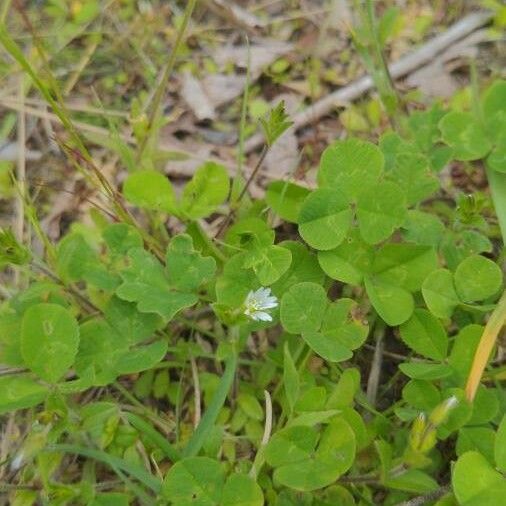
The Oxalis trilliifolia, often called the "Great Oxalis" or "Trillium-leaved Wood-sorrel," is a woodland wonder native to the damp, shaded forests of the Pacific Northwest. While it shares the clover-like appearance of its cousins, it earns its name by mimicking the three-leaf structure of the Trillium plant, often growing in the same mossy, ancient groves. In the wild, it acts as a lush, emerald carpet that thrives where other plants fear to grow—the deep, dark floor of a redwood or fir forest.
🔍 How to Identify
- ☘️ The Leaves: Features three large, heart-shaped leaflets. Unlike smaller garden weeds, these leaves are remarkably wide and have a soft, matte texture.
- 🌸 The Blooms: Dainty, bell-shaped flowers appear on long stalks. They are typically white or pale pink with delicate lavender or pink veins radiating from the center.
- 📏 Growth Habit: It grows from creeping underground rhizomes, allowing it to form dense, low-lying mats that hug the ground.
🏡 In Your Garden
- ☁️ The Shade Specialist: This plant is the perfect solution for "problem spots" in the garden that receive almost no direct sun. It craves the cool, moist environment of a north-facing wall or under the canopy of large trees.
- 💧 Moisture Consistency: Because it is a forest-dweller, it lacks a deep taproot and cannot tolerate drying out. It prefers rich, acidic soil that mimics the decaying organic matter of a forest floor.
- 🌱 Gentle Spreader: While it does spread via its root system, it is much less aggressive than the common yellow wood-sorrel found in lawns, making it a polite guest in a shade garden.
⚠️ Safety & Toxicity
- 🐱 Pet Warning: Like all members of the Oxalis genus, this plant contains oxalic acid. If ingested in significant quantities, it can cause kidney stress or digestive upset in cats and dogs.
- 👅 Human Consumption: While humans sometimes use wood-sorrel sparingly in salads for its "lemon-tart" flavor, people with kidney stones or gout should avoid it entirely due to the high oxalate content.
✨ Fun Fact
The Great Oxalis is "sleep-sensitive" (a trait called nyctinasty). When the sun goes down or a heavy rainstorm begins, the leaflets fold downward toward the stem, looking like a series of tiny, closed umbrellas until the weather improves or morning returns!

Detailed Care Instructions
To grow Oxalis Trifoliata (commonly known as wood sorrel or purple shamrock), follow these steps:
- Choose the right location: Oxalis Trifoliata prefers partial shade to full shade. Select a location that receives dappled sunlight or only a few hours of direct sunlight each day.
- Prepare the soil: Oxalis Trifoliata can thrive in a variety of soil types, but it prefers well-draining, slightly acidic soil. Amend the soil with organic matter like compost or peat moss to improve drainage and fertility.
- Planting: You can start your Oxalis Trifoliata plant from seeds or bulbs. If using seeds, sow them directly into the soil in spring or fall. If using bulbs, plant them about 2 inches deep in the prepared soil.
- Watering: Keep the soil consistently moist but not waterlogged. Water whenever the top inch of soil feels dry. Avoid overwatering, as it can lead to root rot.
- Fertilizing: Feed the plant with a balanced, slow-release fertilizer once or twice a season. Follow the instructions on the fertilizer packaging for application rates. Alternatively, you can use a diluted liquid fertilizer every 2-4 weeks during the growing season.
- Mulching: Apply a layer of organic mulch, such as wood chips or straw, around the base of the plant to conserve moisture and suppress weed growth.
- Pruning: Oxalis Trifoliata tends to grow leggy or floppy. To maintain a compact and neat appearance, pinch or trim back the stems regularly.
- Pests and diseases: Keep an eye out for common garden pests like aphids or spider mites. If infestations occur, use insecticidal soap or organic insecticides. Oxalis Trifoliata is generally not susceptible to diseases.
- Overwintering: If you live in a cold climate, provide winter protection as the plant is not frost-tolerant. Either move the potted plant indoors to a cool room or cover outdoor plants with a layer of mulch for added insulation.
By following these care guidelines, you should be able to successfully grow Oxalis Trifoliata and enjoy its beautiful purple leaves and delicate flowers.

Place in a bright room that is sun drenched almost all day. Or directly in a south-facing window.

To water this plant, you should first ensure that the soil is completely dry before watering. This can be tested by inserting a finger into the soil up to the second knuckle and feeling for moisture. If the soil is still moist, hold off on watering for a few more days.
When watering, use a watering can or hose to slowly pour water onto the soil until it begins to run out of the drainage holes at the bottom of the pot. This will ensure that water penetrates deep into the soil and reaches the roots.
Avoid getting water on the leaves, as this can cause damage or disease. If any water does get on the leaves, gently wipe it away with a clean, dry cloth.
During the winter months, when the plant is dormant, reduce watering to once every two weeks or as needed to keep the soil from completely drying out.
Overall, it is important to not overwater this plant, as it is sensitive to excess moisture and can easily become waterlogged. Stick to a consistent watering schedule and monitor the soil moisture to ensure the plant remains healthy and hydrated.
For best results, fertilize your plant during the growing season. Use a balanced, water-soluble fertilizer and dilute it to half strength. Apply this solution to your plant every 2 weeks. Be sure not to over-fertilize, as this can damage the roots. Water your plant thoroughly before and after fertilizing to prevent burning the roots.
Oxalis Trilliifolia prefers a well-draining, slightly acidic soil that is rich in organic matter. It is best to use a mixture of peat moss, perlite, and good quality potting soil to provide the ideal growing medium for this plant. The soil should be kept moist but not waterlogged, and the plant should be allowed to dry out slightly between waterings. Fertilize the plant with a balanced, water-soluble fertilizer every two weeks during the growing season. The plant prefers bright, indirect sunlight and should be placed in a location that receives at least six hours of light per day.
To propagate this plant, one needs to take a stem cutting that is approximately 5-6 inches in length. The cutting should be taken from a healthy and mature plant, and it should be at least six months old. The stem should be cut just below a leaf node.
The cutting should then be allowed to dry out for a few hours, and then it should be dipped in a rooting hormone. The cutting should be planted in a pot filled with well-draining soil, and it should be watered thoroughly. It is essential to keep the soil moist but not waterlogged.
The planted cutting should be kept in a bright location but not in direct sunlight. The cutting should be covered with a plastic bag or placed in a greenhouse to create a humid environment. After a few weeks, new growth should begin to appear, indicating that the cutting has successfully rooted.
The plant should be maintained by providing it with regular watering and fertilization. Once the plant has established its roots, it can be transplanted into a larger pot or planted in the garden.








