Plant Overview
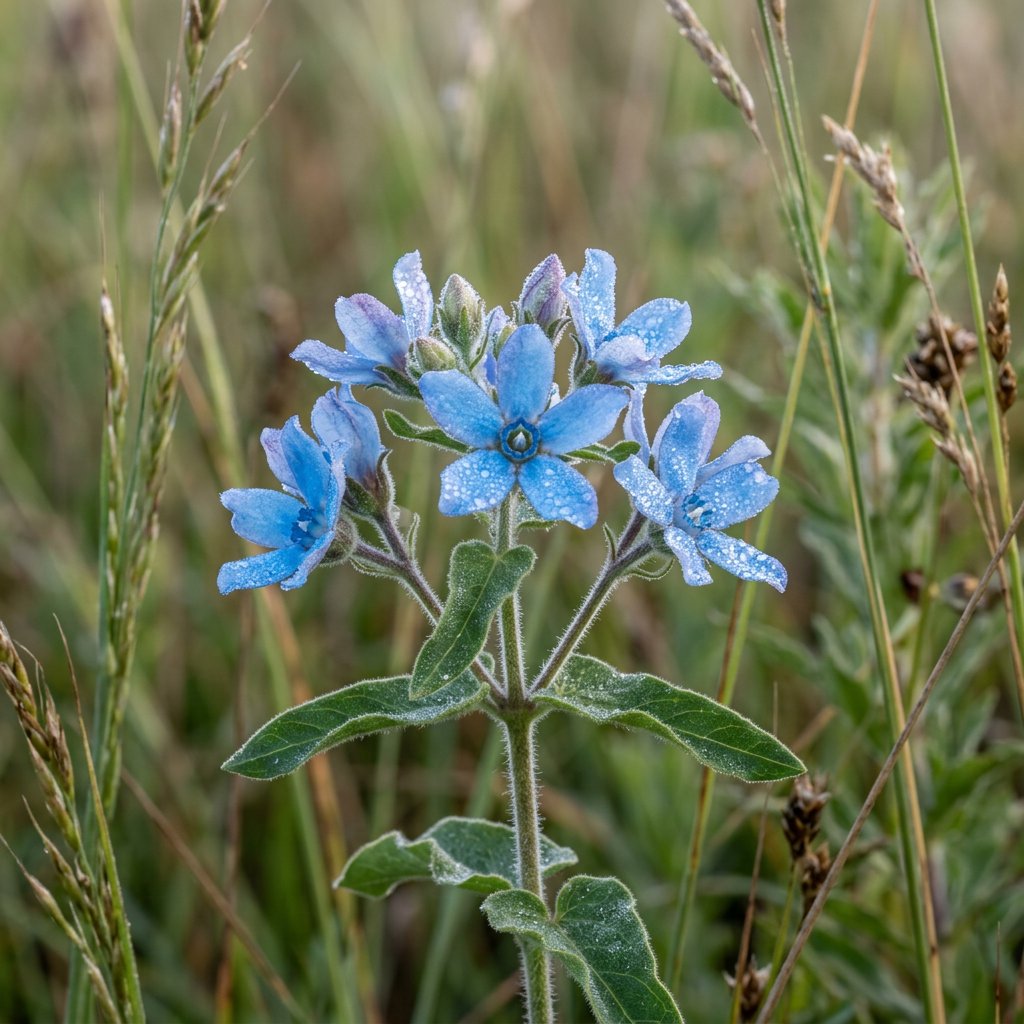
Commonly known as the Blue Star or Tweedia, Oxypetalum caeruleum is one of the rare gems of the botanical world that produces a truly vibrant, sky-blue flower. Hailing from the grasslands of Uruguay and Brazil, this charming "scrambler" is beloved by florists and cottage gardeners alike for its nostalgic, soft-textured foliage and ethereal star-shaped blooms. While it belongs to the milkweed family, it behaves more like a delicate vine, seeking to weave itself through its neighbors or up a small trellis.
🔍 How to Identify
- 🌟 The Flowers: Small, five-petaled stars that emerge as a brilliant turquoise or sky blue, gradually fading to a soft lilac-purple as they age.
- ☁️ The Foliage: Heart-shaped or arrow-shaped leaves that are covered in fine, downy hairs, giving the plant a soft, felt-like gray-green appearance.
- 🌿 The Growth Habit: A "scrambling" subshrub that is neither a full shrub nor a heavy vine; it produces long, thin stems that tend to sprawl or lean on nearby structures.
- 💧 The Sap: If a leaf or stem is broken, the plant exudes a thick, white milky latex, a classic characteristic of the Apocynaceae (Milkweed) family.
🏡 In Your Garden
- 🌱 Root Sensitivity: Tweedia is notorious for having a sensitive root system; it dislikes being moved once established, so choose its permanent "forever home" carefully to avoid transplant shock.
- 🦋 Pollinator Magnet: Just like its cousin the Monarch Milkweed, Oxypetalum is a beacon for butterflies and bees, serving as both a nectar source and an occasional host for certain butterfly larvae.
- ✂️ Maintenance: To prevent it from looking leggy or "floppy," regular pinching of the growing tips is essential to encourage a bushier, more flower-heavy shape.
⚠️ Safety & Toxicity
- 🧴 Skin Irritant: The milky white sap can cause contact dermatitis or skin irritation in sensitive individuals. It is highly recommended to wear gloves when pruning or taking cuttings.
- 🐾 Pet Safety: Like most milkweeds, this plant contains cardiac glycosides. If ingested in large quantities, it can be toxic to cats, dogs, and horses, leading to digestive upset or more serious heart issues.
- 👶 Child Safety: Keep away from curious toddlers who might be tempted to pick the flowers, as the sap is bitter and can irritate the eyes and mouth.
✨ Fun Fact
The Oxypetalum caeruleum is a "shape-shifter" in the vase—not only do the flowers change from blue to purple over several days, but it is one of the few flowers used in bridal bouquets that can maintain its stunning, true-blue pigment without the use of dyes!

Detailed Care Instructions
To grow an Oxypetalum Caeruleum plant, also known as the Morning Glory, follow these steps:
- Choose the right location: Morning Glory plants require full sun, at least 6-8 hours of direct sunlight each day. Select a spot in your garden or on your balcony that receives ample sunlight.
- Prepare the soil: Morning Glories prefer well-drained soil enriched with organic matter. Ensure the soil is loose and fertile. If needed, amend the soil with compost or well-rotted manure to improve its quality.
- Sow the seeds: Morning Glory plants can be grown from seeds. Start by soaking the seeds in water for a few hours before planting. This helps to soften the seed coat and promote germination. Then, plant the seeds about 1/4 to 1/2 inch deep in the prepared soil. If you prefer, you can also start the seeds indoors in seed trays or pots and then transplant them later.
- Watering: Initially, keep the soil evenly moist until the seeds germinate. After that, reduce watering and let the soil dry out slightly between watering sessions. Overly wet soil can lead to root rot. Water in the morning or early afternoon, avoiding wetting the foliage to prevent diseases.
- Provide support: As Morning Glory plants grow, they will require a support structure to climb on. Install trellises, fences, or other vertical structures near the plants for them to twine around and climb.
- Fertilizing: Use a balanced, slow-release fertilizer once a month during the growing season. This will provide essential nutrients to promote healthy growth and vibrant flowers.
- Pruning: Morning Glory plants can become quite bushy. To keep them in check, prune them regularly by pinching off the top growth or trimming back excessive foliage. This will help maintain a neat appearance and encourage more flower production.
- Deal with pests and diseases: While Morning Glories are generally resilient, keep an eye out for pests like aphids and caterpillars. Handpick or use organic insecticides to control them. Monitor for fungal diseases like powdery mildew, and treat accordingly with appropriate fungicides if necessary.
- Harvesting seeds: Towards the end of the growing season, allow some flowers to mature and dry on the vine. Collect the dried seed pods before they burst open and scatter the seeds. Store the seeds in a cool, dry place for planting the following year.
By following these steps, you should be able to successfully grow Oxypetalum Caeruleum plants and enjoy their beautiful flowers.
To water this plant, you should first observe the soil moisture level. Stick your finger into the soil up to your first knuckle and if the soil feels dry, it's time to water. Use room temperature water and pour it slowly onto the soil until water starts to come out of the drainage holes. Be sure to avoid getting water on the leaves, as this can damage them. Watering frequency will depend on factors such as the plant's size, temperature, humidity, and amount of sunlight it receives. It's generally recommended to water when the top inch of soil feels dry.
- Prepare a well-draining soil mixture that is rich in organic matter.
- Choose a location with partial to full sunlight exposure.
- Water the plant deeply but infrequently, allowing the soil to dry out slightly between watering sessions.
- Provide the plant with a balanced fertilizer every 2-3 weeks during the active growing season (spring and summer), following the instructions on the packaging for dilution and application rates.
- Consider supplementing with a phosphorus-rich fertilizer during the flowering stage to promote blooming.
- Reduce fertilization in the fall and winter when the plant is less active.
Oxypetalum caeruleum prefers well-draining soil that is rich in organic matter and has a slightly acidic to neutral pH level. A mix of peat moss, perlite, vermiculite, and coarse sand can provide the ideal growing medium for this plant. It is important to avoid soil that is too heavy or dense as it can lead to root rot. Additionally, regular fertilization with a balanced fertilizer can help provide the necessary nutrients for healthy growth.
To propagate this plant, you will need to take stem cuttings. Look for a healthy stem with multiple leaves on it, and use a clean, sharp pair of scissors or pruning shears to cut off a portion of the stem. Make sure the cutting is at least 3-4 inches long.
Next, remove the lower leaves from the stem so that you have a clean stem with a few leaves on the top. You can also cut the remaining leaves in half to reduce water loss.
Dip the cut end of the stem into rooting hormone, which will help the cutting develop roots faster. Next, plant the cutting in a small container filled with well-draining soil such as a mix of coco peat and perlite. Water the cutting well and cover the container with a clear plastic bag to create a mini greenhouse.
Place the container in a warm, bright location but out of direct sunlight. The cutting will take several weeks to develop roots. After about 4-6 weeks, you can check to see if the cutting has rooted by gently tugging on the stem. If you feel resistance, roots have formed.
Once the roots have developed, you can transplant the cutting into a larger container or into the ground in a protected area. Keep the new plant in a bright location but out of direct sunlight until it has become established.







