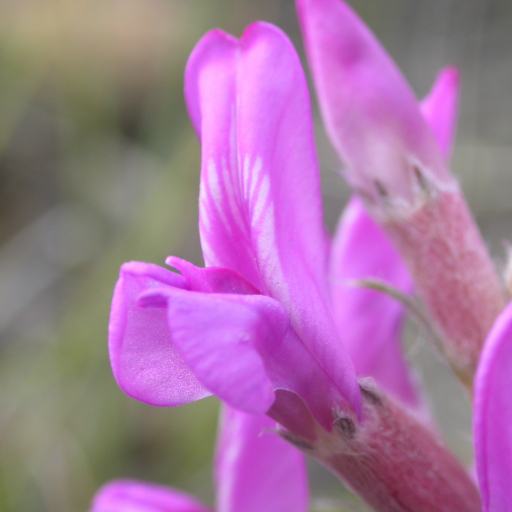
Plant Overview
Commonly known as Purple Locoweed, this striking wildflower is a legend of the American West. While its vibrant magenta spikes are a beauty to behold across the Great Plains and Rocky Mountains, its name hints at a dark history involving the "crazy" behavior it induces in livestock. It is a resilient survivor, often found thriving in dry, rocky soils where other plants struggle to grow.
🔍 How to Identify
- 🌸 The Flowers: Look for brilliant purple to reddish-pink blossoms shaped like pea flowers. They grow in dense, upright clusters on leafless stalks that rise above the foliage.
- 🌿 Silvery Foliage: The leaves are divided into many small leaflets and are covered in fine, silky hairs. This gives the plant a distinct silvery or "woolly" sheen that helps it reflect intense sunlight.
- 🌱 Growth Habit: This is a "stemless" plant, meaning the leaves and flower stalks emerge directly from a woody base at ground level, rather than from a central upright stem.
🏡 In Your Garden
- 🏜️ Tough as Nails: If you find this in the wild or a native garden, notice its preference for "lean" soil. It has a massive taproot that can dive deep for water, making it nearly impossible to transplant once it has settled in.
- 🧬 Soil Builder: As a member of the legume family, it works with soil bacteria to "fix" nitrogen. It actually enriches the ground it grows in, acting as a natural fertilizer for the surrounding prairie grasses.
⚠️ Safety & Toxicity
- 🚫 Status: Highly Toxic to Livestock.
- 🐎 Details: The plant contains swainsonine, a potent alkaloid. While it isn't typically a skin irritant for humans, it is famous for causing "Locoism" in horses, cattle, and sheep. Animals that graze on it can become addicted, eventually suffering from neurological damage, erratic behavior, and weight loss.
✨ Fun Fact
The name "Locoweed" comes from the Spanish word loco, meaning crazy. Early settlers gave it this name after watching their cattle lose coordination and act strangely after eating the plant during dry seasons when other grass was scarce.

Detailed Care Instructions
To help grow Oxytropis Lambertii plants, also known as Lambert's locoweed, follow these steps:
- Obtain seeds or plants: You can either collect seeds from wild plants or find local nurseries or seed suppliers that sell Oxytropis Lambertii seeds or young plants.
- Choose the right location: Lambert's locoweed prefers dry, sandy or gravelly soil and full sun. Make sure the area has good drainage as the plant does not tolerate wet conditions.
- Prepare the soil: If the soil is rich in organic matter, amend it with sand or gravel to improve drainage. Remove any weeds or competing vegetation from the planting area.
- Sow seeds or transplant plants: If using seeds, plant them directly in the prepared soil according to the recommended depth on the seed packet. Space the seeds 12-18 inches apart. For transplants, dig holes large enough to accommodate the root ball and gently place the plants in the holes, firming the soil around them.
- Water regularly: Keep the soil consistently moist but not waterlogged until the plants establish themselves. Once established, reduce water frequency and allow the top layer of soil to dry out before watering. Oxytropis Lambertii is relatively drought-tolerant, so avoid overwatering.
- Mulch and weed control: Apply a layer of organic mulch around the plants to conserve moisture, suppress weeds, and moderate soil temperature. Regularly check for and remove any weeds that may compete with the plants.
- Fertilization: Oxytropis Lambertii generally does not require heavy fertilization. If the soil is poor, you can apply a balanced slow-release fertilizer once or twice during the growing season according to package instructions.
- Pruning: Lambert's locoweed does not require regular pruning. However, you can remove any dead or damaged foliage to maintain a tidy appearance.
- Protect from pests and diseases: Keep an eye out for common pests like aphids, spider mites, or grasshoppers, as well as any signs of disease. If pest or disease issues arise, consult with your local garden center or extension service for appropriate control measures.
- Monitor and enjoy: Watch your Oxytropis Lambertii plants grow and thrive. Be patient as they can take a few years to reach full maturity and produce flowers.
Remember to always follow any specific care instructions provided with the seeds or plants you obtain, as different varieties and sources may have special requirements.

Place in a bright room that is sun drenched almost all day. Or directly in a south-facing window.

To water this plant, it is important to take into consideration the specific conditions of its native environment, such as the amount of rainfall, soil type, and temperature. The frequency and amount of watering required will vary based on these factors, as well as the age and size of the plant. It is recommended to water deeply, allowing the soil to become saturated, but avoid overwatering which can lead to root rot. It is also important to ensure proper drainage, as this plant prefers well-draining soil. Watering should be adjusted during different seasons and weather conditions to prevent water stress or waterlogging.
To properly fertilize the Oxytropis Lambertii plant, follow these instructions:
- Use a balanced, water-soluble fertilizer formulated for flowering plants or perennials. Check the label to ensure it contains a balanced ratio of nutrients (such as nitrogen, phosphorus, and potassium).
- Dilute the fertilizer according to the manufacturer's instructions. It is crucial not to exceed the recommended dosage, as excessive fertilization can harm the plant.
- Apply the diluted fertilizer to the soil around the base of the plant, avoiding direct contact with the foliage. A slow and steady pour is ideal to allow the soil to absorb the nutrients effectively.
- Water the plant thoroughly after fertilizing to help the roots absorb the nutrients. Ensure the water reaches deep into the soil.
- Fertilize the Oxytropis Lambertii plant every four to six weeks during the growing season. However, it is essential to decrease or stop fertilization during winter when the plant enters a dormant phase.
Remember that plants have specific nutrient requirements and preferences, so it is always advisable to conduct a soil test or consult a local gardening expert for specific fertilization recommendations tailored to your Oxytropis Lambertii plant's needs.
The best type of soil to use with this plant would be a well-draining mixture that is made up of sand, loam, and peat. It is important that the soil is not too dense or compact, as this could inhibit root growth and cause drainage problems. The pH level of the soil should be slightly acidic, around 6.0-6.5. Additionally, it is recommended to add some organic matter such as compost or leaf litter to the soil to provide nutrients for the plant. It is also important to ensure that the soil is kept moist, but not waterlogged, as this could lead to root rot.
To propagate Oxytropis Lambertii plant, follow these steps:
- First, gather the necessary plant propagation materials, including clean pruning shears or a sharp knife, clean planting pots, a well-draining propagation medium (such as a mixture of perlite and sand), and a clear plastic bag or propagation dome.
- Select a healthy and mature Oxytropis Lambertii plant from which to take cuttings. Look for vigorous growth, with no signs of disease or pests. It's important to choose a plant that is at least a year old to ensure successful propagation.
- Prepare the planting pots by filling them with the well-draining propagation medium. Moisten the medium but avoid making it too wet, as excessive moisture can result in rot.
- Take cuttings from the selected Oxytropis Lambertii plant. A cutting should be approximately 4 to 6 inches long and feature several nodes, which are areas on the stem where new roots will form. Make a clean cut just below a node using the pruning shears or sharp knife.
- Remove the lower leaves from the cutting, leaving only a few leaves at the top. This helps redirect energy towards root development. Gently scrape the outer layer of the stem's bottom inch to expose the cambium layer, which encourages faster rooting.
- Dip the cut end of the Oxytropis Lambertii cutting into a rooting hormone powder or gel. This substance stimulates root growth and increases the chances of successful propagation. Shake off any excess hormone to prevent over-application.
- Make small holes in the prepared plant pots using a pencil or a dibber. Insert the cut end of each Oxytropis Lambertii cutting into a hole, ensuring that at least two nodes are buried in the propagation medium. Firmly press the medium around the cutting to hold it in place.
- Mist the cuttings with water to provide moisture and create a humid environment for root development. Cover the planting pots with a clear plastic bag or place them inside a propagation dome to create a mini greenhouse effect.
- Place the pots in a warm and bright location, away from direct sunlight. Aim to maintain a temperature between 70-75°F (21-24°C), which is ideal for root growth. Check on the moisture levels regularly and mist the cuttings if needed, ensuring they remain moist but not waterlogged.
- After a couple of weeks, gently tug on the cuttings to check for resistance, indicating root development. Once rooted, remove the plastic bag or dome and gradually acclimate the young plants to normal growing conditions.
- Transplant the rooted Oxytropis Lambertii plants into individual pots or a prepared garden bed, following the same care guidelines as for mature plants.
Remember to exercise patience throughout the propagation process, as it may take several weeks for the Oxytropis Lambertii cuttings to root successfully.








