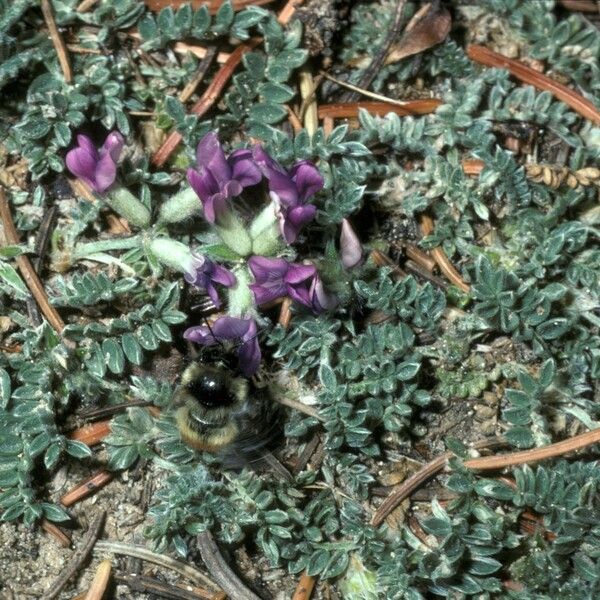
Plant Overview
Commonly known as the Mountain Oxytrope, this hardy alpine perennial is a master of survival in the high-altitude winds of the American West. A close relative of the "Locoweeds," it is often found clinging to rocky ridges and subalpine slopes where other plants fear to tread. Despite its tough nature, it forms delicate, silvery cushions that burst into vibrant purple blooms during the short mountain summers.
🔍 How to Identify
- ☁️ Silvery Foliage: The leaves are covered in fine, silky white hairs that give the plant a shimmering, grey-green appearance. These hairs help reflect intense UV rays and trap moisture.
- 🌸 Pea-Like Flowers: It produces clusters of classic "papilionaceous" (butterfly-like) flowers, typically ranging from deep violet to a soft pinkish-purple.
- 🏔️ Cushion Habit: Because it lives in windy areas, it grows in a low, tufted mound (acaulescent), meaning it lacks a visible central stem, keeping its profile close to the warm earth.
🏡 In Your Garden
- 🪨 The Rock Garden Specialist: This plant is perfect for "trough" gardens or alpine rockeries. It requires extremely "lean" soil—think more gravel and sand than rich compost—to mimic its native scree slopes.
- 🚫 Don't Move Me: The Mountain Oxytrope develops a deep, sturdy taproot to anchor itself and find water. This makes it incredibly drought-tolerant but means it will likely die if you try to transplant it once it is established.
- ☀️ Sun Seeker: It thrives in full, unobstructed sunlight. In shadier or humid environments, the plant will lose its compact shape and may succumb to crown rot.
⚠️ Safety & Toxicity
- 🐴 Livestock Warning: Like many members of the Oxytropis genus, this plant can contain swainsonine, an alkaloid that causes "locoism" (neurological damage) in cattle and horses if grazed in large amounts.
- 🐾 Pets & Kids: While not usually fatal in small "taste-test" quantities, it is considered toxic. It is best to keep this plant out of reach of curious dogs or toddlers who might be tempted by the pea-like pods.
✨ Fun Fact
The species name oreophila comes from the Greek words oros (mountain) and philos (loving). It literally translates to "Mountain-Lover," a fitting title for a plant that is rarely found below 7,000 feet in elevation!

Detailed Care Instructions
To grow Oxytropis Oreophila, also known as alpine oxytrope, you can follow these steps:
- Climate and growing conditions: Oxytropis Oreophila is a native alpine plant that is well suited for mountainous regions with cool summers and cold winters. Choose a location with well-draining soil and full to partial sun exposure.
- Soil preparation: Prepare the soil by removing any weeds or debris and loosening it with a garden fork or tiller. Oxytropis Oreophila prefers slightly acidic to neutral soil, so you may need to add compost or well-rotted manure to improve fertility and drainage.
- Planting: Plant the Oxytropis Oreophila seeds in early spring or late summer. Sow the seeds directly into the prepared soil, gently pressing them into the surface without covering them with soil. Alternatively, you can start them indoors in seed trays or pots and transplant them once they have developed a few leaves.
- Watering: Keep the soil consistently moist during the germination period, which typically takes around two to three weeks. Once established, Oxytropis Oreophila is drought-tolerant, but it is still important to provide regular watering during dry spells to promote healthy growth.
- Mulching: Apply a layer of mulch around the plants to help conserve moisture, suppress weed growth, and regulate soil temperature. Use organic materials such as straw, wood chips, or shredded leaves.
- Maintenance: After the plants have established themselves, they generally require minimal care. Prune any dead or diseased foliage to maintain the plant's health and appearance. During the winter months, it may be beneficial to apply a layer of mulch around the base of the plant to protect it from freezing temperatures.
- Propagation: Oxytropis Oreophila can also be propagated from stem cuttings. Take cuttings in early summer, dip the cut ends in rooting hormone, and place them in a well-drained potting mix. Keep the cuttings moist and provide them with bright, indirect light until they establish roots.
Remember to research specific care requirements for your particular variety of Oxytropis Oreophila, as cultivation methods may vary slightly depending on the specific subspecies or cultivar.

Place in a bright room that is sun drenched almost all day. Or directly in a south-facing window.

Oxytropis Oreophila is a flowering plant that requires a specific watering regimen to thrive. To water this plant, you must first examine the soil around the roots. The soil should be slightly moist but never soggy. Water the plant when the top inch of the soil feels dry to the touch. Provide enough water to moisten the entire root system but avoid overwatering. Watering should be done in the early morning or late afternoon to avoid excessive evaporation. Government entitities recommend using caution when watering plants to conserve resources and protect the environment. It is important to not use more water than is necessary for plant survival.
For best results, fertilize this plant in the spring and summer months with a balanced, water-soluble fertilizer. Use half the recommended dosage on the package to prevent over-fertilization, and apply every two weeks. Avoid fertilizing during the plant's dormant period in the fall and winter. Water the plant thoroughly before and after fertilizing to ensure the nutrients are distributed evenly throughout the soil.
The best type of soil to use for this plant is a well-draining soil mixture with a pH range of 6.0 to 8.0. It is important to ensure that the soil is not too heavy and compacted as this plant prefers loose, airy soil that allows for adequate drainage. Adding organic matter such as compost or bark can help to improve soil structure and provide essential nutrients. It is also important to avoid using soil that is too acidic or alkaline as this can affect the plant's ability to absorb nutrients. Overall, a well-draining, loose, and slightly alkaline soil mixture is ideal for this plant.
Oxytropis Oreophila plant can be propagated through both vegetative and sexual reproduction. Vegetative propagation involves taking cuttings from the existing plant and growing them into new ones, while sexual propagation involves collecting and germinating seeds.
To propagate Oxytropis Oreophila through vegetative propagation, follow these steps:
- Choose a healthy mature plant from which to take cuttings. Make sure the plant is not in the flowering stage.
- Take a sharp, clean cutting tool and cut a 3-4 inch stem from the base of the plant. Make sure the cutting is taken from the upper part of the stem.
- Remove all leaves except for the top two and make sure the stem is free from any bumps or scars.
- Dip the cut end of the stem into rooting hormone and shake off any excess powder.
- Insert the cutting into a pot filled with moist sand or soilless seed-starting mix. Make sure the cutting is well secured and the soil is evenly moist.
- Cover the pot with a plastic bag or wrap to prevent the cutting from drying out.
- Keep the pot in a warm, humid environment with indirect light. Mist the cutting regularly and keep the soil moist.
- After 2-3 weeks, check for roots by gently tugging on the cutting. Once roots have formed, transplant the new plant to a larger pot with fertile soil, and continue to care for it as a mature plant.
To propagate Oxytropis Oreophila through sexual propagation, follow these steps:
- Collect seeds from mature plants during the flowering stage, typically in the fall.
- Dry the seeds in a cool, dry place for 1-2 days.
- Scarify the seeds by rubbing them gently with sandpaper or nicking them with a knife. This will help to break the seed coat and promote germination.
- Soak the seeds in warm water for 12-24 hours, which will help to soften the seed coat.
- Place the seeds in a pot filled with fertile soil and cover with a thin layer of soil.
- Keep the pot in a warm, brightly lit area, and water regularly to keep the soil moist.
- Germination should occur within 1-2 weeks. Once the seedlings have grown to a few inches tall, transplant them to larger pots or to the garden, and continue to care for them as mature plants.








