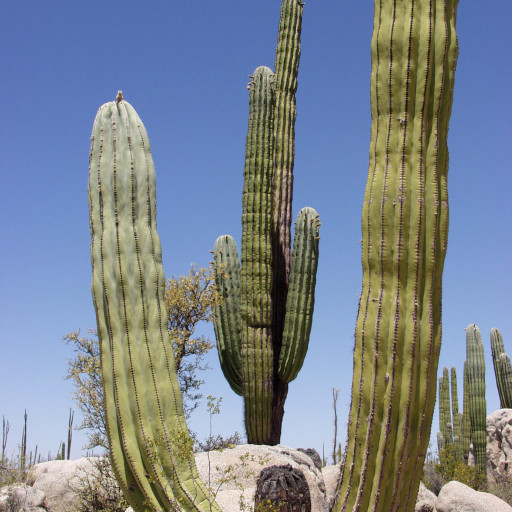
Plant Overview
Meet the Mexican Giant Cardon, the undisputed titan of the cactus world. Often mistaken for the famous Saguaro, this desert monarch is actually the tallest cactus on Earth, capable of reaching heights that rival a four-story building. In its native Baja California, these ancient giants stand like silent sentinels, sometimes living for over 200 years and forming the backbone of the desert ecosystem.
🔍 How to Identify
- 🌵 The Stem: Features a massive, columnar trunk that starts as a single pillar and branches out into a candelabra shape as it matures. The skin is a beautiful waxy, blue-green that fades to a "dusty" grey-green with age.
- 📏 Ribbed Texture: The body is divided by 10 to 15 deep vertical ribs, which allow the cactus to expand like an accordion when it soaks up rare desert rainfall.
- 🦔 Spines & Areoles: Young plants are covered in clusters of stiff, greyish-white spines. As the cactus grows into a massive tree, the lower parts of the trunk often become "corked" (woody) and lose their spines, resembling the wrinkled skin of an elephant.
🏡 In Your Garden
- 🧱 The Taproot Foundation: This cactus develops a powerful, deep taproot system designed to anchor its massive weight. Because of this, it resents being moved once established. If growing in a container, use a heavy, stable pot to prevent it from tipping over as it becomes top-heavy.
- ☀️ Light & Drainage: It is a sun-worshipper that requires the brightest light possible. While it is incredibly drought-tolerant, it thrives with "soak and dry" watering during the hot summer months. However, it must have gritty, fast-draining soil; sitting in damp earth will cause the base to rot rapidly.
⚠️ Safety & Toxicity
- 🌵 Physical Hazard: While not chemically toxic to humans, cats, or dogs, its spines are formidable. They are stiff and can cause deep puncture wounds or skin irritation if handled without thick, specialized gloves.
- 🐾 Pet Safety: It is generally considered non-toxic if a curious pet nibbles it, but the physical barrier of the spines usually keeps animals at a safe distance.
✨ Fun Fact
The Cardon has a "superpower" for survival: it forms a symbiotic relationship with bacteria that live in its roots. These bacteria can actually dissolve solid rock, turning minerals into usable nutrients and allowing the cactus to grow in places where no soil exists!

Detailed Care Instructions
| Lighting | Full Sun |
| Hardiness Zones | Min 9A |
To successfully grow a Pachycereus Pringlei plant, also known as the Mexican giant cardon cactus, you will need to follow these steps:
- Climate: Check if your climate is suitable for the Pachycereus Pringlei plant. It thrives in USDA hardiness zones 9b-11, which means it needs a warm and dry climate. If you live in a colder region, consider growing it in a greenhouse or as a potted indoor plant.
- Location: Choose a sunny spot for your cactus where it will receive at least 6-8 hours of direct sunlight each day. Pachycereus Pringlei plants prefer full sun.
- Soil: Use a well-draining soil mix specifically designed for cacti and succulents. Amend the soil with coarse sand or perlite to improve drainage.
- Planting: If you are starting from seeds, sow them in a seed tray in a warm and well-lit location. Once the seedlings are big enough to handle, transplant them into individual pots. If you are starting with a small potted plant, gently remove it from the nursery container and plant it in a slightly larger pot.
- Watering: Water your Pachycereus Pringlei moderately and allow the soil to dry out completely between watering sessions. Be careful not to overwater as this can lead to root rot.
- Fertilizer: During the growing season, which is typically spring and summer, you can feed your cactus with a diluted cactus fertilizer. Follow the manufacturer's instructions for dosage and frequency as excessive fertilization can harm the plant.
- Pruning: Pachycereus Pringlei generally doesn't require much pruning. However, you can prune any dead or diseased branches to improve the plant's appearance and health.
- Care and Maintenance: Protect your cactus from extremely cold temperatures by covering it or moving it indoors during frosty periods. Regularly inspect your plant for pests such as mealybugs or scale insects and take appropriate measures if infestation occurs. Also, be cautious of the cactus spines, as they can cause injury.
Remember that Pachycereus Pringlei is a slow-growing plant, and it may take several years to reach its mature size. Be patient and provide the necessary care for its optimal growth.

Place in a bright room that is sun drenched almost all day. Or directly in a south-facing window.

To water this type of plant, first, check the soil moisture by sticking your finger about an inch into the soil. If it feels dry, it's time to water. Use a watering can or hose with a gentle flow to water around the base of the plant until water begins to drain out of the bottom of the pot or container. Avoid getting water on the leaves or stem of the plant, as this can cause damage or disease. Water deeply but infrequently, allowing the top inch or so of soil to dry out before watering again. In the winter months or during periods of dormancy, reduce watering to once a month or less. Be sure to monitor the plant for signs of overwatering, such as yellowed or drooping leaves.
To fertilize this plant, begin by selecting a fertilizer with a low nitrogen content, as excess nitrogen can harm the growth of the plant. During the growing season, fertilize once a month by diluting the fertilizer according to the package instructions and applying it to the soil around the base of the plant. Be sure to water thoroughly afterward. Do not fertilize during the plant's dormant period in late fall and winter.
Pachycereus Pringlei plant requires well-draining soil that is sandy and rocky, with enough organic matter to support its growth. The soil should consist of coarse sand, rocks, gravel, and perlite, which aid in drainage. It should be slightly acidic with a pH range of 6.0 to 7.0. The plant prefers a soil that is not too fertile, so avoid using rich soils or over-fertilizing. The soil should be able to retain moisture but not stay wet for too long, as this may cause root rot. It is recommended to use a cactus or succulent soil mix, which is specifically formulated to meet the requirements of these types of plants.
To propagate this plant, you will need to take a cutting from a mature plant. Choose a stem that is healthy and has no signs of disease or damage. Using a sharp, clean cutting tool, make a cut at a 45-degree angle just below a node.
Allow the cutting to dry and callus over for a few days. Once it has callused over, dip the cut end in rooting hormone powder and plant it in a well-draining soil mix.
Water the cutting lightly and keep it in a warm, bright spot out of direct sunlight. After a few weeks, roots should start to form and the cutting will begin to sprout new growth.
Once the new plant has become established, you can transplant it to a larger pot or into the ground. Water it regularly and make sure it gets plenty of bright, indirect sunlight.
Common pests of the elephant cactus include Scale insect, mealybugs, spider mites. Make a habit of checking your elephant cactus frequently for pests so that any infestations can be caught and managed early.








