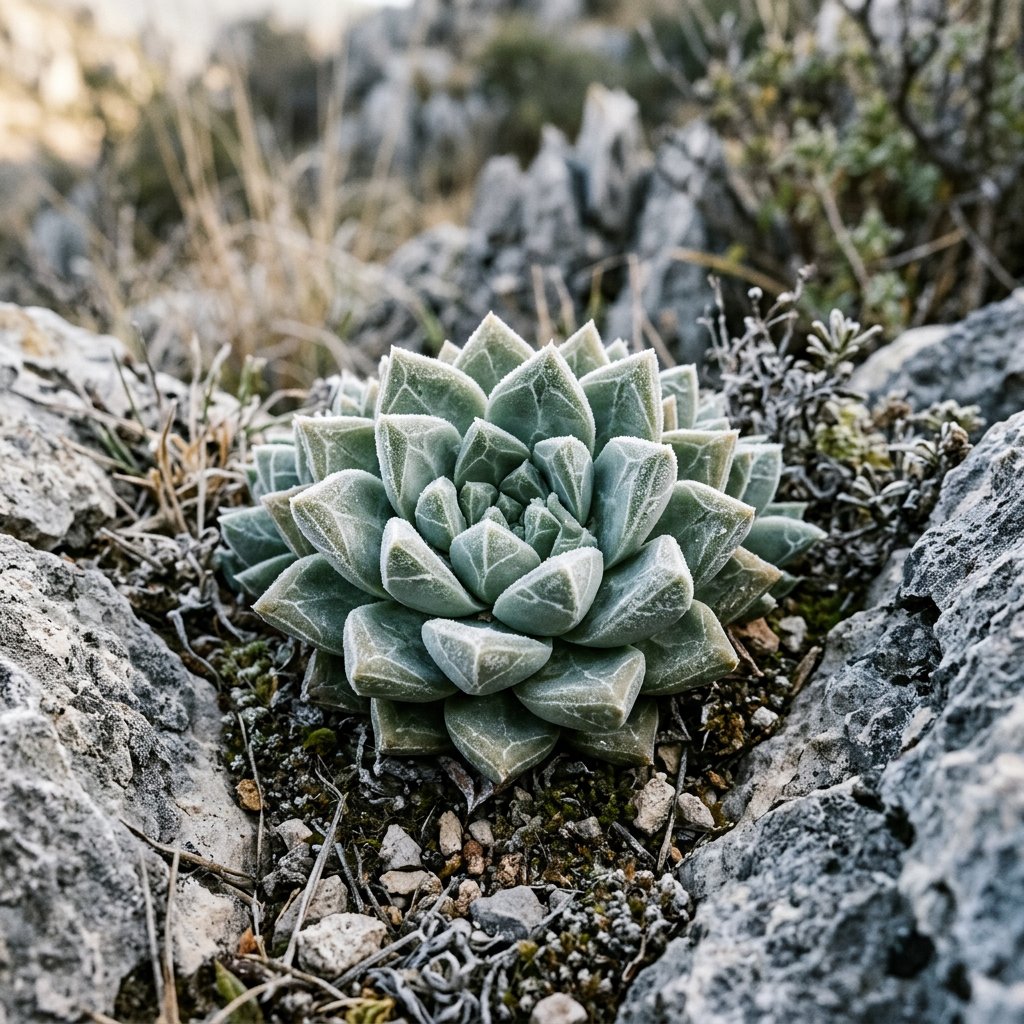
Plant Overview
Often called the "Little Jewel," Pachyphytum compactum looks less like a living organism and more like a collection of expertly polished stones. Native to the rocky cliffs of Mexico, this succulent is a master of disguise, blending into its volcanic habitat with leaves that mimic the sharp angles of gemstones. It is a slow-growing architectural marvel that adds a touch of "living jewelry" to any windowsill.
🔍 How to Identify
- 💎 Faceted Leaves: The most striking feature is the "veining" or faceted lines on the plump leaves, which resemble the surface of a cut diamond or quartz crystal.
- 🌬️ Farina Coating: The foliage is covered in a thick, powdery wax called farina. This gives the plant a matte, frosted appearance and acts as a natural raincoat and sunblock.
- 🎨 Color Transitions: While usually a dusty grayish-green, the leaf tips can blush with shades of violet, pink, or deep red when exposed to bright sun or cool evening temperatures.
🏡 In Your Garden
- 🚫 Hands Off Policy: Resist the urge to pet the leaves! The white powdery farina is very delicate and does not grow back once smudged; fingerprints will leave permanent dark marks on the foliage.
- 🏜️ The "Thirst" Logic: Because the leaves are so thick and store immense amounts of water, this plant is incredibly drought-tolerant. It is far more likely to die from a single overwatering than from a month of neglect.
- ☀️ Light for Definition: Without enough sunlight, the "Little Jewel" will lose its compact shape and stretch toward the light (etiolation), causing the beautiful geometric facets to smooth out and disappear.
⚠️ Safety & Toxicity
- ✅ Safe for All: This succulent is considered non-toxic to cats, dogs, and humans, making it a worry-free addition to households with curious pets.
- 🍃 Fragility Warning: While not poisonous, the leaves are quite heavy and brittle. They can snap off with the slightest bump, so place it in a low-traffic area where it won't be brushed against.
✨ Fun Fact
The name Pachyphytum literally translates from Greek as "thick plant." It is a close cousin to the Echeveria, but it has evolved much chubbier leaves to survive the intense heat and vertical cliffside environments of its native home.

Detailed Care Instructions
| Soil Ph | 6.4 - 6.8 |
| Humidity | Normal |
| Lighting | Part Sun |
| Toxicity | Non-Toxic |
| Soil Type | Well-Draining Sand Or Potting Soil |
| Bloom Time | Blooms Appear In Winter And Early Spring |
| Difficulty | Easy |
| Plant Type | Perennial |
| Mature Size | Up To 4 Inches Tall, And 12 Or More Inches Wide |
| Native Area | Cliffs Of Central Mexico |
| Temperature | 15°C - 30°C |
| Sun Exposure | Full Or Partial Sunlight |
| Hardiness Zones | 10 - 11 |
To grow Pachyphytum Compactum plant, also known as the Little Jewel Plant or the Little Jewel Stonecrop, you can follow these steps:
- Choose a suitable pot: Select a small, well-draining pot that has drainage holes to prevent waterlogging.
- Soil and planting: Use a well-draining cactus or succulent potting mix. Plant the Pachyphytum Compactum in the pot, making sure the roots are covered and gently firm the soil around it.
- Light: Provide bright, indirect sunlight or partial shade. Pachyphytum Compactum prefers bright light without direct exposure to intense sunlight, especially during hotter parts of the day.
- Watering: Water the plant when the top inch of soil feels dry. Overwatering can lead to root rot, so it's crucial to ensure the soil is completely dry before watering again. Water deeply, and allow excess water to drain out of the pot.
- Temperature and humidity: Pachyphytum Compactum prefers average to warm temperatures between 60-80°F (15-27°C). It thrives in low humidity environments, making it suitable for indoor cultivation.
- Fertilizer: Apply a balanced houseplant fertilizer diluted to half strength once a month during the growing season (spring and summer). Avoid fertilizer use during winter.
- Propagation: Pachyphytum Compactum can be propagated through leaf or stem cuttings. Simply remove a healthy leaf or stem, allow it to dry for a few days, and then place it into well-draining soil. Keep the soil lightly moist until roots develop, after which you can treat it like a mature plant.
- Pruning and maintenance: Pachyphytum Compactum grows slowly and does not require frequent pruning. However, remove any dead leaves or stems as needed to maintain aesthetic appeal and prevent any potential pest or disease issues.
Remember that each plant may have its specific needs and preferences, so it's essential to monitor your Pachyphytum Compactum and cater to its requirements accordingly.

Place in a bright room that is sun drenched almost all day. Or directly in a south-facing window.

To water this plant, ensure that the soil is completely dry before watering it. This can be determined by inserting your finger into the soil and feeling the moisture level. When watering, do so slowly and allow the water to penetrate deep into the soil. Avoid getting water on the leaves and only water the soil around the plant. During the winter months, reduce watering to once every three weeks.
To fertilize this plant, first, prepare a balanced fertilizer that is diluted to half its recommended strength. Then, choose a time when the soil is already moist and apply the diluted fertilizer directly to the soil around the base of the plant. Be careful not to let the fertilizer touch the leaves or stem, as this may cause damage. Depending on the type of fertilizer used, you may need to repeat this process every four to six weeks during the growing season, but always follow the instructions on the package to avoid over-fertilizing.
The Pachyphytum Compactum plant requires a well-draining soil that is loose and porous. A soil mix that is composed of coarse sand, perlite, and peat moss would be ideal. It is important that the soil is not too compact, as this can lead to root rot and other issues with the plant's health. The soil should also be slightly acidic, with a pH between 5.5 and 6.5. Additionally, it is important to avoid over-watering the plant, as this can also lead to root rot. The soil should be allowed to dry out between waterings, and care should be taken not to get water on the leaves or stem of the plant. Regular fertilization with a balanced fertilizer can help to keep the plant healthy and promote growth.
To propagate this plant, you will need to take stem cuttings. Select a healthy stem with several leaves, and use a sharp, clean knife to make a cutting about 4-6 inches long. Remove the bottom leaves, leaving only a few at the top, and let the cutting dry out for a day or two.
Once the cut end has calloused over, plant the cutting in a well-draining soil mix in a small pot. Water sparingly and keep the soil moist but not too wet. Place the pot in a bright area out of direct sunlight.
After a few weeks, the cutting should begin to root and you may see new growth. Be patient and continue to care for the new plant as it establishes itself. Once it has matured, you can repot it into a larger container.
Common pests of the little jewel include Mealybugs. Make a habit of checking your little jewel frequently for pests so that any infestations can be caught and managed early.








