Plant Overview
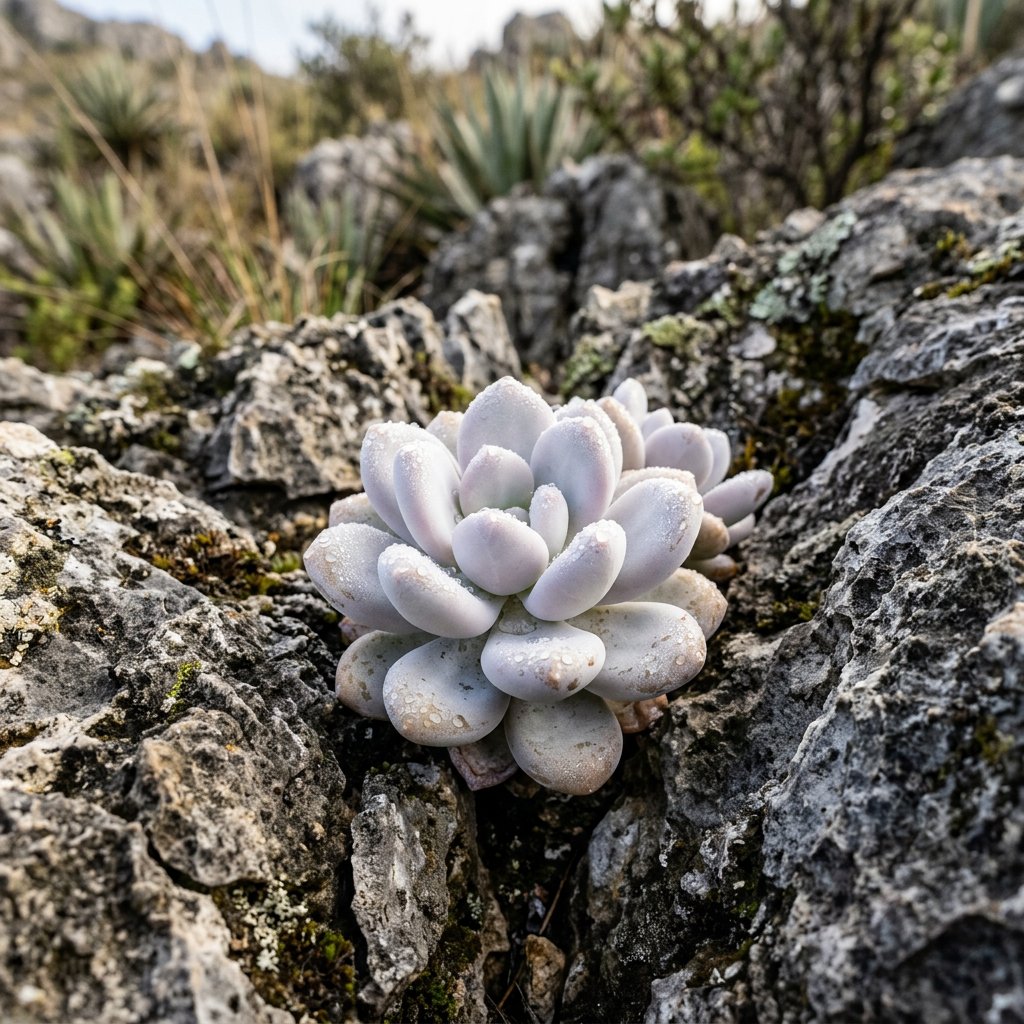
Known affectionately as the Moonstone plant or the Sugaralmond Plant, this Mexican succulent looks more like a collection of polished river stones than a living organism. Its species name, oviferum, literally translates to "egg-bearing," perfectly describing its plump, ovoid leaves that seem to glow with a soft, otherworldly light. It is a favorite among collectors for its "chibi" aesthetic and its incredibly soothing, pastel color palette.
🔍 How to Identify
- 🥚 The Leaves: Extremely thick, rounded, and succulent. They lack the flat surface seen in many other succulents, appearing more like smooth pebbles or almonds.
- ❄️ The Farina: The plant is covered in a heavy layer of "epicuticular wax," a powdery coating that gives it a matte, frosted appearance in shades of silver-blue, pale lavender, or soft pink.
- 🌸 The Flowers: In winter or early spring, it sends out a dark red or greenish-yellow flower stalk with bell-shaped blossoms that peek out from underneath fleshy bracts.
🏡 In Your Garden
- 🚫 Hands Off: One of the most important care tips is to avoid touching the leaves. The beautiful white powder (farina) acts as a natural sunscreen and water repellent; once rubbed off by fingers, it never grows back on that specific leaf, leaving permanent "fingerprint" smudges.
- 💧 Water Storage: Because the leaves are so dense and water-filled, this plant is a champion of drought resistance. It prefers "neglect" over doting care; wait until the leaves feel slightly soft to the touch before watering, as the roots are highly susceptible to rot in damp soil.
- ☀️ Light Stress: To achieve those sought-after pink and purple "blush" tones, the plant needs bright light. In lower light, it will remain a pale blue-green and may begin to stretch out (etiolate), losing its compact, pebble-like charm.
⚠️ Safety & Toxicity
- 🛡️ Status: Non-Toxic.
- 🐾 Details: Pachyphytum oviferum is generally considered safe for households with curious cats, dogs, and children. However, the leaves are very fragile and can snap off easily if bumped, so it is best kept on a high shelf where it won't be disturbed.
✨ Fun Fact
The Moonstone plant belongs to the same family as Echeveria, and the two are often bred together to create a hybrid genus called x Pachyveria. These hybrids combine the chunky, stone-like leaves of the Moonstone with the elegant, pointed rose-shape of the Echeveria!

Detailed Care Instructions
| Color | Red-Orange Flowers, Various Shades Of Blue, Blue-Green, Or Purple Foliage |
| Soil Ph | 6.4 - 6.8 |
| Humidity | Dry |
| Lighting | Part Sun |
| Soil Type | Well-Draining Sand Or Potting Soil |
| Bloom Time | Blooms Appear In Winter And Early Spring |
| Difficulty | Easy |
| Plant Type | Perennial |
| Hibernation | Cold Period |
| Mature Size | Up To 4 Inches Tall, And 12 Or More Inches Wide |
| Native Area | Cliffs Of Central Mexico |
| Temperature | 15°C - 30°C |
| Sun Exposure | Full Or Partial Sunlight |
| Hardiness Zones | 10 - 11 |
To grow Pachyphytum Oviferum, also known as Moonstones or Sugar Almonds, follow these steps:
- Choose a pot or container: Select a pot with drainage holes at the bottom to prevent waterlogged roots. Make sure the pot is the appropriate size for the plant, with enough room for the roots to spread.
- Soil: Use a well-draining succulent soil mix or create your own by combining regular potting soil with sand or perlite to improve drainage.
- Planting: Gently place the Pachyphytum Oviferum in the pot, making sure the roots are covered with soil. Pat the soil lightly to anchor the plant.
- Light: Provide bright but indirect sunlight to your plant. Place it near a window where it can receive filtered or partial sunlight throughout the day. Avoid placing it in direct sunlight, as this can scorch the leaves.
- Watering: Pachyphytum Oviferum is a succulent plant, so it requires watering only when the soil has fully dried out. Water deeply and then allow the soil to dry between waterings. Avoid overwatering, as this can lead to root rot.
- Temperature and humidity: This plant thrives in average room temperatures of around 65-75°F (18-24°C). It can tolerate slightly cooler temperatures but should be protected from frost. Pachyphytum Oviferum prefers moderate humidity levels, so no additional humidity is necessary.
- Fertilizer: Feed the plant with a diluted succulent fertilizer during the growing season, typically from spring to early fall. Follow the instructions on the fertilizer package and apply it every 4-6 weeks.
- Propagation: Pachyphytum Oviferum can be propagated through leaf or stem cuttings. Allow the cuttings to dry for a few days, then place them in a well-draining soil mix. Mist the soil lightly until roots establish, and then gradually reduce watering.
- Pruning: If necessary, you can trim off any dead or damaged leaves to promote healthy growth and maintain the plant's shape.
- Pests and diseases: Monitor your plant for common succulent pests such as mealybugs or spider mites. Treat any infestations promptly with insecticidal soap or neem oil. Protect your plant from excess moisture and cold temperatures to prevent root rot or fungal diseases.
Remember to observe your Pachyphytum Oviferum regularly, adjusting watering and care as needed. With proper attention, it will slowly grow, producing adorable, round leaves in shades of blue-green and pinkish hues.

Place in a bright room that is sun drenched almost all day. Or directly in a south-facing window.

To water this plant, it is important to use a well-draining soil mix and a container with drainage holes. The frequency of watering will depend on the temperature and humidity levels in the plant's environment, as well as the season. Generally, it is best to allow the soil to dry out partially before watering again. When watering, do so thoroughly but avoid getting water on the leaves or in the center of the rosette. It is also important to avoid overwatering, as this can lead to root rot.
To fertilize this plant, use a balanced fertilizer with equal amounts of nitrogen, phosphorus, and potassium. Apply the fertilizer every three months during the growing season. Dilute the fertilizer to half strength and apply it to the soil. Ensure that the soil is moist before and after fertilizing. Stop fertilizing during the dormant season.
When planting Pachyphytum Oviferum, it is recommended to use a well-draining soil mixture that contains a good balance of organic matter, such as peat moss or coconut coir, and inorganic material, such as perlite or sand. Avoid using heavy soils or those that retain too much moisture, as this can lead to root rot and other problems. A pH range of 6.0-7.5 is suitable for this plant, and a regular fertilization schedule should be followed using a balanced fertilizer. Additionally, it is important to ensure that the container used for this plant has adequate drainage holes and that the soil is able to dry out completely between watering sessions.
Pachyphytum Oviferum can be propagated through leaf cuttings. Start by selecting a healthy leaf from the plant and gently removing it from the stem. Allow the leaf to callous over for a day or two before potting it in a well-draining soil mixture. Water the cutting sparingly to avoid over-watering and rotting. Roots should begin to form in about two to three weeks and new growth should start to appear soon after.
Common pests of the moonstones include Mealybugs. Make a habit of checking your moonstones frequently for pests so that any infestations can be caught and managed early.








