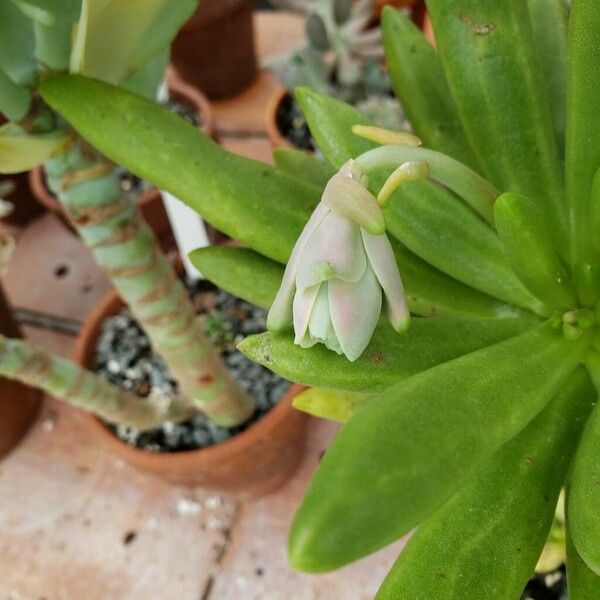
Plant Overview
The Pachyphytum viride, often affectionately called "Green Moonstones," is a structural masterpiece originating from the rocky cliffs of Mexico. Unlike its pale, powdery cousins, this succulent boasts deep, jewel-toned green leaves that look like polished jade pebbles. It is a slow-growing favorite for minimalist collectors who appreciate plants that look more like ancient stones than living greenery.
🔍 How to Identify
- 🍃 Leaf Shape: Features exceptionally thick, spindle-shaped or cylindrical leaves that grow in a loose rosette or along a lengthening stem.
- 🟢 Coloration: A rich, glossy dark green. Unlike many other succulents, it lacks a heavy waxy coating (farina), giving it a shiny, "wet" appearance.
- 🌸 Blooms: During winter or early spring, it sends out a long, arching stalk bearing nodding, bell-shaped flowers that are usually dark red or greenish-pink.
🏡 In Your Garden
- ☀️ Light Nuance: Because it lacks the thick white "sunscreen" powder found on other Pachyphytum species, it is slightly more sensitive to intense, direct midday sun. It prefers bright, filtered light to prevent leaf scorch.
- 💧 Watering Logic: Its leaves are incredibly efficient water tanks. If you overwater, the leaves will literally burst or turn to "jelly." Wait for the leaves to look slightly wrinkled before offering a deep soak.
- 🪴 Handling Care: The leaves are "brittle" and can snap off with the slightest bump. Place it in a low-traffic area where it won't be brushed against by passersby or curious pets.
⚠️ Safety & Toxicity
- ✅ Safe for All: Pachyphytum viride is generally considered non-toxic to cats, dogs, and humans.
- 🧤 Skin Sensitivity: While not poisonous, the sap can occasionally cause mild irritation for those with very sensitive skin. It is always best to wash your hands after pruning or propagating.
✨ Fun Fact
The name Pachyphytum comes from the Greek words pachys (thick) and phyton (plant), perfectly describing its plump, water-filled leaves that allow it to survive months of drought in the Mexican wilderness!

Detailed Care Instructions

Place in a bright room that is sun drenched almost all day. Or directly in a south-facing window.

When the top few inches of soil dry out, water your plants. If the top few inches of soil are still moist, do not water your plant. Wait a few days, then poke your finger into the soil to see if anything has changed. Overwatering poses a disease risk, such as the development of fungal diseases in the roots. These plants have adaptations in there leaves that allow them to survive in low water supply.
These plants can thrive without taking help from any fertilizer. However, if the medium of growth is something other than soil for instance sand then you may need to add little fertilizer. The best way to know if your plants need fertilizer or not is to check for yellowing of leaves. If the leaves start to turn yellow it’s fertilizing time.
You may use Cactus Fertilizer for your Pachyphytum Viride
Common pests of the pachyphytum viride include Mealybugs. Make a habit of checking your pachyphytum viride frequently for pests so that any infestations can be caught and managed early.







