Plant Overview
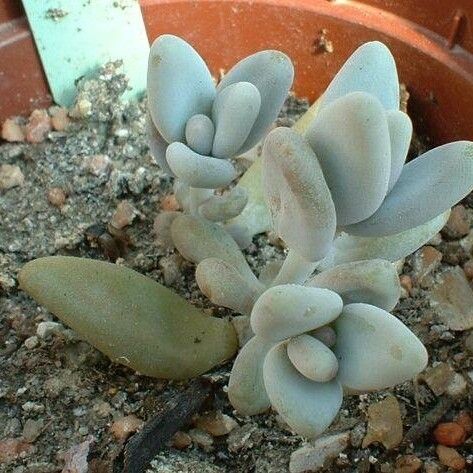
Known for its incredibly plump, pastel-colored leaves, Pachyphytum werdermannii is a hidden gemstone from the rocky landscapes of Tamaulipas, Mexico. This succulent is a close relative of the famous "Moonstones," looking less like a living plant and more like a collection of soft, frosted river stones. It is beloved by collectors for its architectural shape and its ability to change colors based on the sunlight it receives.
🔍 How to Identify
- ☁️ Glaucous Leaves: The leaves are thick, club-shaped, and covered in a heavy "farina"—a white, powdery wax that gives the plant a ghostly, matte appearance.
- 🎨 Pastel Palette: While naturally a soft mint or silver-green, the leaf tips often blush with shades of lavender, pink, or apricot when the plant is "stressed" by cool temperatures or bright sun.
- 🔔 Bell-Shaped Blooms: In early spring, it sends up a long, arching stalk bearing small, nodding flowers that are typically coral or deep red on the inside.
🏡 In Your Garden
- 🖐️ The Hands-Off Rule: The thick white powder on the leaves acts as a natural sunscreen and raincoat. Avoid touching the leaves, as your finger oils will rub the coating off, leaving permanent smudges and making the plant vulnerable to sunburn.
- 💧 Drought Specialist: Because the leaves are so dense with stored water, this plant prefers a "soak and dry" method. It hates transplanting and wet "feet," so always prioritize terracotta pots and gritty, cactus-focused soil to ensure the roots can breathe.
⚠️ Safety & Toxicity
- ✅ Non-Toxic: Pachyphytum werdermannii is generally considered safe and non-toxic for curious cats, dogs, and humans.
- 🌱 Physical Fragility: While not chemically dangerous, the leaves are "deciduous," meaning they pop off the stem very easily if bumped. Keep it in a low-traffic area where it won't be nudged by passing pets or children.
✨ Fun Fact
The genus name Pachyphytum comes from the Greek words pachys (thick) and phyton (plant). It is one of the most honest names in botany—few plants on Earth have leaves as thick and water-heavy as these!

Detailed Care Instructions
To grow Pachyphytum Werdermannii, also known as the 'Little Jewel', you can follow these steps:
- Lighting: Place the plant in a location with bright, indirect light. Pachyphytums prefer at least 4-6 hours of sunlight per day. If growing indoors, a south or east-facing window is ideal.
- Temperature: Maintain a temperature range between 60-80°F (15-26°C). Pachyphytum Werdermannii can tolerate slightly cooler temperatures during the winter months.
- Soil: Use a well-draining cactus or succulent potting mix. These types of soil allow excess water to drain quickly, preventing root rot. You can also make your own mix by combining regular potting soil with sand or perlite in a 1:1 ratio.
- Watering: Allow the soil to dry out completely between waterings. Overwatering can lead to root rot and other issues. Water the plant thoroughly and then let it dry out before watering again. The frequency of watering will depend on the environmental conditions and the size of the pot.
- Humidity: Pachyphytum Werdermannii prefers low humidity levels, similar to the environment of its native habitat. You do not need to provide additional humidity for this plant.
- Fertilizer: Feed the plant once a month during the active growing season (spring and summer) with a balanced liquid fertilizer diluted to half the recommended strength. Avoid fertilizing during the winter months when the plant is dormant.
- Repotting: Pachyphytum Werdermannii doesn't require frequent repotting. You can repot the plant every 2-3 years or when the pot becomes overcrowded. Choose a slightly larger pot and use fresh potting soil.
- Propagation: Pachyphytum Werdermannii can be propagated by leaf or stem cuttings. Allow the cuttings to callus for a few days, then plant them in well-draining soil. Keep the soil slightly moist until new roots and plants form.
Follow these care tips, and your Pachyphytum Werdermannii should thrive and grow into a beautiful succulent specimen.

Place in a window with dappled sun or a spot in the middle of a room. Or directly in a window facing west or east.

Pachyphytum Werdermannii is a succulent plant that requires specific watering techniques to ensure its health and growth. Here are some guidelines for watering this plant:
1. Understand the watering needs: Pachyphytum Werdermannii is a drought-tolerant succulent and is adapted to arid conditions. It has unique water storage capabilities in its leaves to sustain itself during dry periods. Therefore, it is important not to overwater the plant.
2. Observe the soil moisture: Before watering, examine the soil moisture level. Insert your finger about 1-2 inches deep into the soil near the plant's base. If the soil feels dry, it's an indication that watering is needed. However, if it is still moist, hold off on watering.
3. Watering methods: When it's time to water, use a gentle and targeted approach. Avoid soaking the entire soil surface but instead focus on watering the root zone directly. Pour water slowly and evenly around the base of the plant until it's moist.
4. Watering frequency: Pachyphytum Werdermannii doesn't require frequent watering. In general, provide water only when the soil has completely dried out. This plant is relatively drought-tolerant and prefers a more infrequent watering schedule.
5. Consider the climate and season: Adjust the frequency of watering according to the environment. During the hotter and sunnier months, the plant may require more frequent watering. In cooler seasons, reduce the watering frequency as the plant's growth slows down.
6. Proper drainage is key: Ensure that the plant is in a well-draining potting mix or soil. Excess water should be able to flow out easily, preventing the roots from sitting in water and rotting.
7. Consider the container size: The size of the container also affects the watering needs. Smaller pots dry out more quickly, so they may require more frequent watering compared to larger pots.
8. Focus on quality watering: When watering, aim for a deep soak rather than a shallow sprinkle. This allows the water to reach the root system and encourages healthier growth.
Remember, it's crucial to avoid overwatering Pachyphytum Werdermannii as it can lead to root rot and other issues. Regularly monitoring the soil moisture and adjusting the watering schedule accordingly will help maintain the plant's overall health.
To fertilize a Pachyphytum Werdermannii plant, use a balanced liquid fertilizer diluted to half the recommended strength. Apply this fertilizer every two to four weeks during the plant's active growing season, which typically occurs from spring to fall. Ensure that the soil is moist before fertilizing, and avoid applying the fertilizer to dry soil to prevent potential root burn. Be cautious not to over-fertilize, as this can harm the plant. Additionally, follow the manufacturer's instructions on the fertilizer label for specific guidance on application rates and timing.
Pachyphytum Werdermannii is a type of succulent plant that requires a specific type of soil to thrive. This plant prefers a well-draining soil that does not retain excess moisture. It is important to use a soil mix that allows water to pass through easily, preventing the roots from becoming waterlogged.
A suitable soil mix for Pachyphytum Werdermannii should consist of a combination of organic matter, mineral components, and inorganic materials. It is recommended to use a 50-50 mix of a well-draining commercial cactus or succulent soil and mineral components such as perlite or pumice. This combination ensures proper drainage and aeration of the roots.
Organic matter, such as compost or coconut coir, can also be added to the soil mix to provide some nutrient content and improve moisture retention. However, it is crucial not to overdo it with organic matter, as Pachyphytum Werdermannii is sensitive to excess moisture.
When preparing the soil mix, it is important to ensure that the particles are fine but not compacted. The soil should be loose enough to allow moisture to drain away while retaining enough moisture to sustain the plant between waterings. It is recommended to sieve the soil mix to remove any large particles and ensure an even texture throughout.
In summary, Pachyphytum Werdermannii requires a well-draining soil mix, consisting of a commercial cactus or succulent soil, mineral components like perlite or pumice, and a moderate amount of organic matter. This type of soil will prevent waterlogging and promote healthy root growth and overall plant vigor.
Pachyphytum Werdermannii is a succulent plant that can be propagated through various methods. Here are the steps to propagate this plant:
- Select a healthy and mature Pachyphytum Werdermannii plant to propagate from. Look for plants with well-developed leaves and a firm stem.
- Choose a suitable propagation method such as leaf cuttings or stem cuttings.
- For leaf cuttings, carefully remove a healthy leaf from the plant. Gently twist the leaf from the stem to ensure a clean break, leaving a small portion of the leaf attached to the stem.
- Allow the cuttings to callus over by placing them in a cool, dry location for a few days. This helps to prevent rotting when planted.
- Prepare a well-draining propagation mix. Opt for a mix specifically formulated for succulents or create one by combining equal parts of coarse sand, perlite, and well-draining potting soil.
- Place the calloused end of the leaf cutting into the propagation mix, ensuring that the end is slightly buried but not completely covered. You can use a toothpick or small stick to hold the leaf upright.
- Water the cutting sparingly, preferably using a spray bottle to mist it. Succulents are susceptible to overwatering, so it is crucial to maintain a careful balance of moisture.
- Keep the cutting in a warm, bright location but protect it from direct sunlight. A partially shaded spot with indirect light is ideal.
- Mist the cutting occasionally to maintain humidity around the plant, but do not let the soil become overly wet. Allow the soil to dry out between watering sessions.
- Over time, the leaf cutting will develop roots and small plantlets known as offsets. These offsets can be separated from the parent leaf once they have developed sufficient roots.
- If propagating using stem cuttings, follow similar steps as leaf cuttings but ensure that the stem is healthy and has a few sets of leaves. Cut the stem below a leaf node and repeat the steps from 4 to 10.
- Once the propagated plantlets or stem cuttings have established roots, they can be transplanted into separate containers filled with a well-draining succulent mix.
Remember to provide proper care and maintenance, including adequate sunlight, regular watering, and appropriate fertilization, to ensure the healthy growth of your propagated Pachyphytum Werdermannii plants.
Common pests of the pachyphytum werdermannii include Mealybugs. Make a habit of checking your pachyphytum werdermannii frequently for pests so that any infestations can be caught and managed early.








