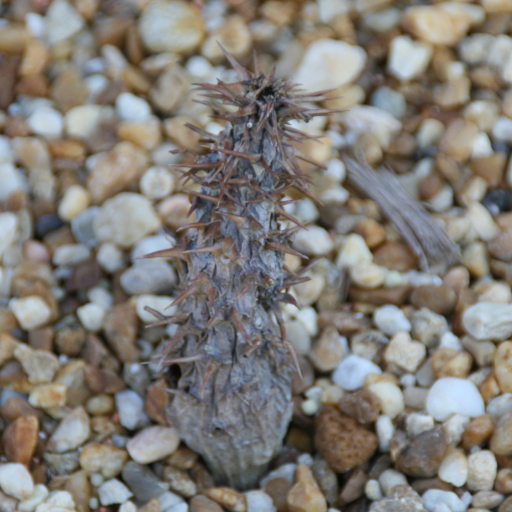
Plant Overview
The Pachypodium ambongense is a rare, silver-barked treasure from the limestone plateaus of Madagascar. Often called the "Ambongense," it is highly prized by succulent collectors for its elegant, bottle-shaped trunk and its status as one of the rarest species in its genus. In the wild, it clings to the dramatic limestone "tsingy" formations, looking like a prehistoric sculpture emerging from the rock.
🔍 How to Identify
- 🐘 The Caudex: It features a smooth, silver-grey trunk that swells at the base (pachycaul), giving it a distinct bottle-like silhouette that stores water for droughts.
- 🌿 Leaf Rosettes: Glossy, bright green leaves grow in a tight spiral or rosette at the tips of the branches, typically appearing only during the active growing season.
- 🌸 Pure White Blooms: Unlike many of its cousins that have yellow flowers, this species produces large, star-shaped white flowers with a small yellow throat.
- 🌵 Paired Spines: It has short, conical spines that usually appear in pairs along the stem, though they become less prominent as the plant matures.
🏡 In Your Garden
- 🪨 Limestone Lover: In its natural habitat, it grows directly on limestone. When potting at home, it demands a very gritty, alkaline-leaning mineral mix; organic soil can lead to quick root rot.
- ☀️ Light & Warmth: This is a sun-worshipper that craves heat. However, because it grows slowly, it is sensitive to "wet feet" during the winter months when it enters a deep dormancy and drops its leaves.
- 💧 Strategic Watering: It requires a strict wet-dry cycle. Only water when the trunk feels slightly less firm to the touch, and stop almost entirely once the leaves fall off in autumn.
⚠️ Safety & Toxicity
- 🚫 Toxic Sap: Like all members of the Apocynaceae family, the milky sap contains cardiac glycosides. If the skin is broken or the plant is cut, the sap can cause severe irritation.
- 🐾 Pet & Child Safety: Keep this plant out of reach of curious pets and children. Ingestion of any part of the plant is dangerous and can affect heart rhythm. The sharp spines also pose a physical puncture risk.
✨ Fun Fact
The Pachypodium ambongense is so rare that for a long time, it was known from only a single isolated population in the Namoroka National Park in Madagascar. It is considered a "Critically Endangered" species in the wild due to its extremely limited range.

Detailed Care Instructions
To grow a Pachypodium ambongense plant, follow these steps:
- Light: Place the plant in a location with bright, indirect sunlight. Pachypodium ambongense loves lots of light, so a south-facing window or a position near a bright window would be ideal.
- Temperature: Keep the plant in a warm environment, where the temperatures range between 70-85°F (21-29°C) during the day and not dropping below 50°F (10°C) at night.
- Soil: Use a well-draining potting mix that consists of equal parts sand, perlite, and regular potting soil. This will help prevent the roots from becoming waterlogged.
- Potting: Choose a pot with drainage holes at the bottom to allow excess water to escape. Pachypodium ambongense prefers a slightly crowded pot, so choose a pot only slightly larger than the current root ball.
- Watering: Water the plant thoroughly and deeply, allowing the excess water to drain completely. Be careful not to overwater as Pachypodium ambongense prefers drier conditions. Water only when the soil has dried out completely, which might be around once every 2-3 weeks.
- Humidity: This plant doesn't require high humidity levels, so no additional steps are needed in this regard.
- Fertilizer: Feed the plant with a balanced, slow-release fertilizer during the growing season (spring and summer). Follow the instructions on the fertilizer package for the appropriate dosage.
- Pruning: Prune any dead or damaged leaves or branches to maintain the plant's health and shape. Pachypodium ambongense should naturally develop a single trunk topped with clusters of leaves.
- Repotting: Repot the plant into a slightly larger pot, if necessary, every 2-3 years or when the plant has become root-bound.
- Propagation: Pachypodium ambongense can be propagated through seeds or stem cuttings. However, propagation can be challenging, so it's recommended to obtain new plants from reputable nurseries or online sellers.
Remember to wear gloves while handling Pachypodium ambongense as the plant has sharp thorns on its stems. Also, avoid overwatering, as this can lead to root rot. With proper care and attention, your Pachypodium ambongense plant will thrive and grow.
To water Pachypodium ambongense effectively, it's important to follow these guidelines:
- Assess the soil moisture: Before watering, check the moisture level of the soil. Insert your finger about an inch deep into the soil to feel for moisture. If it feels dry, it's time to water the plant.
- Choose the right watering method: Pachypodium ambongense prefers a drench and soak watering technique. This means thoroughly wetting the soil until water runs out of the drainage holes. This method ensures deep hydration and encourages healthy root growth.
- Frequency of watering: The watering frequency may vary depending on the climate, temperature, and humidity. As a general rule, water the plant when the top two inches of soil dry out completely. Overwatering should be avoided as it can lead to root rot.
- Watering during the growing season: During the active growing season, typically spring and summer, Pachypodium ambongense requires more frequent watering. Aim to water the plant every 7-10 days, or whenever the soil has dried out.
- Watering during the dormant season: As the plant enters its dormant phase during fall and winter, it requires less water. Reduce the watering frequency to once every 3-4 weeks, allowing the soil to dry out thoroughly between each watering.
- Water quality: Pachypodium ambongense prefers slightly acidic water with a pH level between 5.5 and 6.5. Avoid using hard water or water treated with chemicals, as it can negatively affect the plant's health.
- Avoid standing water: Ensure proper drainage by using a well-draining soil mix and a pot with drainage holes. Remove any excess water from the saucer or tray beneath the pot to prevent waterlogged roots.
- Observation and adjustment: Keep a close eye on the plant's overall health and appearance. If the leaves start to droop or turn yellow, it might indicate overwatering. Conversely, if the leaves become wrinkled or wilted, it could be a sign of underwatering. Adjust the watering routine accordingly based on these observations.
Remember, every plant's watering needs can slightly differ based on its unique growing conditions, so always monitor your Pachypodium ambongense closely to determine the most suitable watering schedule.
To promote healthy growth and flowering of the Pachypodium Ambongense plant, here are fertilizing instructions:
- Choose a balanced fertilizer: Select a slow-release, balanced fertilizer with an N-P-K ratio of approximately 10-10-10 or similar. This balance ensures that the plant receives a good amount of nitrogen (N), phosphorus (P), and potassium (K), which are essential macronutrients.
- Dilute the fertilizer: Follow the manufacturer's instructions to dilute the fertilizer properly before application. Many fertilizers are concentrated and should not be used at full strength.
- Apply during the growing season: Apply the fertilizer during the plant's active growth period, typically from spring to summer. Avoid fertilizing during winter as the plant enters a dormant phase.
- Water before fertilizing: It is recommended to water the plant thoroughly before applying the fertilizer. This ensures that the roots are adequately hydrated and reduces the risk of burning the plant.
- Apply fertilizer evenly: Sprinkle the diluted fertilizer evenly around the base of the Pachypodium Ambongense plant, avoiding direct contact with the stems or leaves. A gentle hand or use of a small gardening trowel can help distribute the fertilizer smoothly.
- Avoid excessive fertilizer application: Over-fertilizing can harm the plant, so be sure to follow the instructions on the packaging. Too much fertilizer may cause salts to accumulate in the soil, leading to root burn and other problems.
- Rinse the foliage: After applying the fertilizer, gently rinse any fertilizer residue off the leaves with water to prevent burn or damage.
- Monitor the plant's response: Observe the plant for any signs of nutrient deficiency or excessive fertilization. Adjust the fertilizer application accordingly to meet the plant's needs. Yellowing leaves or stunted growth may indicate a need for more nutrients, while fertilizer burn can appear as burnt or brown leaf edges.
- Repeat fertilization as per instructions: Follow the manufacturer's recommendations regarding frequency of fertilization. Some slow-release fertilizers only require one application per growing season, while others may require multiple applications spaced over the season.
Remember to always read and follow the guidelines provided by the specific fertilizer you choose, as different products may have slightly different instructions. Regular fertilization, combined with appropriate watering and light conditions, can help maintain the health and vigor of your Pachypodium Ambongense plant.
Pachypodium Ambongense, also known by its common names, is a plant species that requires specific soil conditions to thrive. It is important to provide the plant with a well-draining soil mix that replicates its natural habitat. Here are some details about the soil requirements for Pachypodium Ambongense:
- Soil Composition: The ideal soil mix for Pachypodium Ambongense is a combination of gritty and well-draining materials. It should be light, airy, and not retain excessive moisture. Avoid using heavy organic mixes or soils that tend to compact easily.
- pH Level: Pachypodium Ambongense prefers slightly acidic to neutral soil conditions. A pH range between 6.0 and 7.0 is generally suitable for this plant species.
- Drainage: Good drainage is crucial for Pachypodium Ambongense as it prevents the roots from sitting in water and rotting. Choose a soil mix that allows excess water to flow through freely. Adding perlite, sand, or pumice to the soil can improve its drainage capacity.
- Nutrient Content: Pachypodium Ambongense does not have high nutrient requirements. It is adapted to grow in poor soil conditions. Therefore, using a soil mix with low to medium nutrient content will suffice. Too much organic matter or fertilizer can lead to excessive vegetative growth, making the plant more prone to diseases.
- Aeration: The soil should be well-aerated to provide oxygen to the roots. This can be achieved by using materials like perlite or coarse sand in the soil mix. A loose and airy soil structure also promotes healthy root development.
- Water Holding Capacity: While good drainage is essential, the soil should still have the ability to retain some moisture. This will help the plant sustain itself between watering sessions. Strike a balance by incorporating materials like coconut coir or peat moss into the mix, which retain some water while allowing excess to drain.
It is worth noting that these details are general guidelines and can be adjusted based on your specific conditions, such as climate and local soil properties. It is always recommended to observe the plant closely and adjust the soil composition accordingly to ensure its optimal growth and health.
Pachypodium ambongense is a succulent plant species that can be propagated through various methods to create new plants. Here are the details on how to propagate this plant:
- Seeds: This is the most common method of propagating Pachypodium ambongense. Collect mature seeds from the plant or purchase them from a reputable source. Sow the seeds in a well-draining potting mix formulated for succulent plants. Press the seeds gently into the soil without covering them as they require light for germination. Maintain a consistently warm temperature of around 70-80°F (21-27°C) and provide indirect sunlight. Keep the soil slightly moist but not overly wet. Germination can take several weeks to a few months. Once the seedlings have grown a few true leaves, they can be transplanted into individual pots.
- Stem cuttings: Select a healthy, mature stem with no signs of disease or damage. Using a clean, sharp knife or shears, cut a section of the stem about 4-6 inches (10-15 cm) long. Remove the lower leaves, leaving only a few at the top. Allow the cuttings to callous over for a few days to prevent rotting. Plant the cut end of the stem in a well-draining succulent mix or pure perlite. Place the cutting in a warm, bright location but avoid direct sunlight. Water sparingly, allowing the soil to dry out between watering. Roots should form in a few weeks to a couple of months, and once established, the new plant can be potted separately.
- Grafting: Grafting is another method used for propagating Pachypodium ambongense, especially if you want to combine the desirable traits of this species with the vigorous rootstock of another Pachypodium species. The process involves attaching a scion (a small piece of Pachypodium ambongense stem with one or two leaf nodes) onto the rootstock of another compatible Pachypodium species. The two parts are secured together using grafting tape or similar materials until they join and heal. Grafting is a skill that may require some experience and knowledge, so it is advisable to seek guidance from experienced grafters or horticultural experts.
It is important to note that Pachypodium ambongense, like other succulents, typically requires well-draining soil and infrequent watering to prevent root rot. Additionally, providing ample sunlight and a warm environment is crucial for the successful propagation of this plant.








