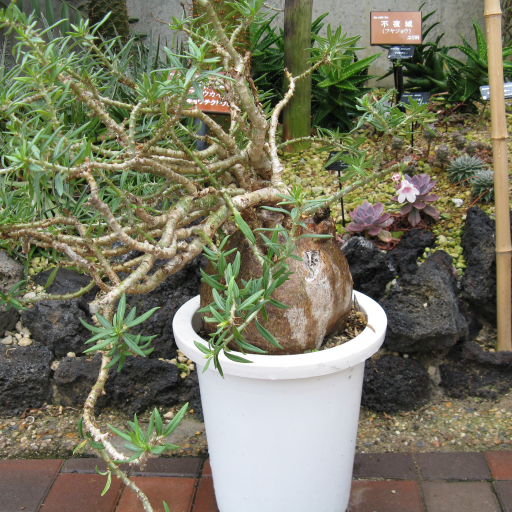
Plant Overview
Often called the "Twin-spined Thick-foot," Pachypodium bispinosum is a sculptural masterpiece from the arid Eastern Cape of South Africa. It looks like a prehistoric survivor, featuring a massive, water-storing woody base that typically hides underground in the wild to escape the sun. Succulent collectors often "lift" this base into the light, transforming the plant into a natural piece of living art that resembles a miniature, gnarled tree.
🔍 How to Identify
- 🌿 The Caudex: A large, tuberous, swollen stem that acts as a water reservoir. In pots, it is usually raised above the soil to showcase its textured, "potato-like" appearance.
- 🌵 Spiny Branches: Thin, wiry grey-green branches emerge from the top of the base. These are armed with pairs of straight, sharp spines (hence the name bispinosum, meaning "two spines").
- 🌸 The Blooms: Stunning bell-shaped flowers that range from pale pink to vibrant purple. These often appear in late winter or early spring, providing a delicate contrast to the plant's rugged, thorny frame.
🏡 In Your Garden
- ☀️ The Sun Seekers: This plant thrives on "tough love" and intense light. To keep the branches compact and prevent them from reaching (etiolating), place it in the sunniest spot available. High light also encourages more frequent blooming.
- 💧 Winter Rest: Because it stores so much water in its swollen base, it is highly susceptible to rot. It needs regular watering during the heat of summer but should be kept almost entirely dry during its winter dormancy to protect the roots.
⚠️ Safety & Toxicity
- 🚫 Toxic Latex: Like many members of the Oleander family, this plant produces a milky sap that contains cardiac glycosides. It is toxic if swallowed and can cause significant stomach upset.
- 🩹 Skin & Eye Irritant: The sap can cause skin rashes or eye irritation upon contact. Always wear gloves when pruning and keep the plant away from curious pets or children who might be tempted by the flowers.
✨ Fun Fact
- 🌡️ The Cold Exception: While most Pachypodium species (like the famous Madagascar Palm) are tropical and will drop dead at the first sign of a chill, P. bispinosum is a "tough nut" that can tolerate light frosts, making it one of the hardiest species in the entire genus!

Detailed Care Instructions
To grow a Pachypodium Bispinosum plant, you can follow these steps:
- Choose a suitable location: Pachypodium Bispinosum prefers bright indirect sunlight or partial shade. Avoid placing it in direct sunlight, especially during the hottest part of the day.
- Select the right soil: Use well-draining soil, such as a cactus mix, to ensure that excess water doesn't sit around the roots. Adding perlite or sand can further improve drainage.
- Watering: Allow the soil to dry out between waterings. Pachypodium Bispinosum prefers a drier environment, so be careful not to overwater. Water the plant thoroughly but infrequently.
- Temperature and humidity: Pachypodium Bispinosum thrives in warm temperatures ranging from 65-85°F (18-29°C). It prefers low humidity levels, so avoid placing it in a very damp or humid area.
- Fertilizer: Feed the plant with a balanced fertilizer specifically designed for cacti or succulents during the growing season (spring and summer). Follow the instructions on the fertilizer package for the recommended dosage and frequency.
- Repotting: Pachypodium Bispinosum generally prefers to be slightly root-bound, so you won't need to repot it frequently. Repot only when the plant has outgrown its container or if you notice poor drainage.
- Pruning: Trim back any dead, damaged, or overgrown branches to maintain the plant's shape and promote healthy growth. Be careful when handling the plant, as its spines can be sharp.
- Propagation: Pachypodium Bispinosum can be propagated from stem cuttings. Let the cuttings dry for a few days before planting them in well-draining soil. Keep the soil slightly moist until the roots develop.
Remember to research and understand the specific needs of Pachypodium Bispinosum to ensure successful growth and care.

Place in a bright room that is sun drenched almost all day. Or directly in a south-facing window.

The best way to water this plant is by thoroughly drenching the soil until water runs out of the drainage holes at the bottom of the pot. It is important to allow the soil to dry out slightly before watering again, as overwatering can lead to root rot. During the winter months, the plant should be watered less frequently to mimic its natural dormancy period. It is also important to avoid getting water on the leaves or stem, as this can cause damage or rot. Instead, water directly at the base of the plant or use a drip irrigation system.
To fertilize this plant, use a balanced, water-soluble fertilizer with equal amounts of nitrogen, phosphorus, and potassium. Apply the fertilizer every four weeks during the growing season. Avoid applying fertilizer during the plant's dormant period. Dilute the fertilizer according to the manufacturer's instructions and water thoroughly after application. It is also recommended to use a fertilizer that has micronutrients such as iron, zinc, and manganese.
For optimum growth of this plant, it is recommended to use well-draining soil that is sandy or rocky in texture. The soil should have a slightly acidic to neutral pH level ranging from 6.0-7.0. Adding perlite or coarse sand to the soil mix can improve drainage and prevent the roots from becoming waterlogged. The plant prefers soil that is slightly fertile with moderate nutrient content, but excess fertilization should be avoided as it can lead to leaf drop and stunted growth. It is important to ensure that the soil is not compacted or heavy, as it can lead to root rot and other fungal diseases. Regular watering should be done, allowing the soil to dry out between watering sessions.
To propagate the plant, select a healthy and mature stem from the parent plant. Use a sharp, sterilized knife to make a clean cut at an angle below a node. Allow the cutting to dry for several days until a callus forms over the wound.
Prepare a well-draining potting mix of equal parts sand and perlite. Plant the cutting about one-third of its length into the soil. Water sparingly to avoid rotting, and place in a bright, warm location with indirect sunlight.
Roots should appear after several weeks. Once the cutting has established itself, gradually increase the amount of water and move it to a brighter location. After a few months, the new plant can be potted into a larger container with fresh soil and grown as a mature plant.
Common pests of the pachypodium bispinosum include Scale insect, mealybugs, spider mites, thrips. Make a habit of checking your pachypodium bispinosum frequently for pests so that any infestations can be caught and managed early.








