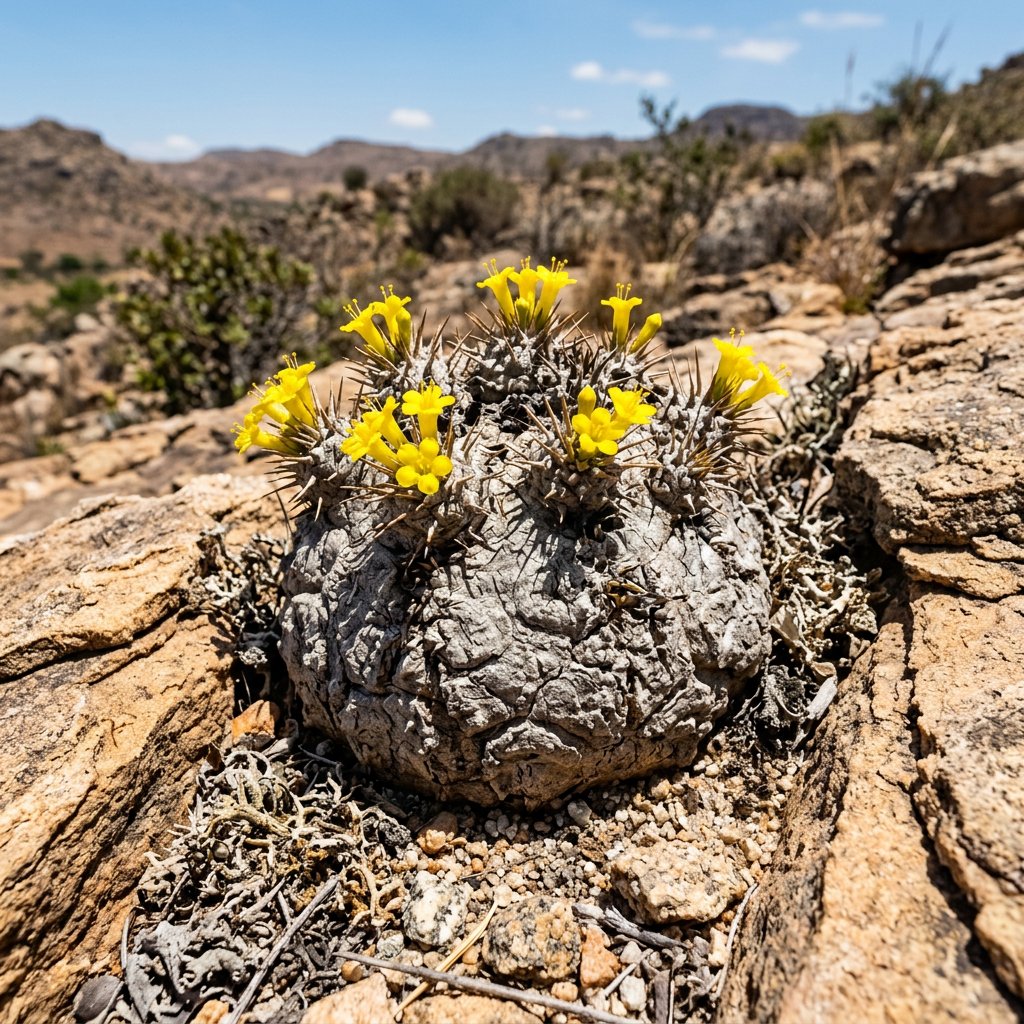
Plant Overview
Commonly known as the "Living Stone" or the "Potato Cactus," Pachypodium brevicaule is nature’s ultimate master of disguise. Hailing from the high-altitude sandstone regions of Madagascar, this plant has evolved to look exactly like the grey, lichen-covered rocks it sits upon. It is a slow-growing masterpiece that captures the rugged, alien beauty of the Malagasy wilderness, appearing as a prehistoric lump until it bursts into a surprisingly delicate floral display.
🔍 How to Identify
- 🗿 The Caudex: The plant features a low, compressed, and tuberous trunk (caudex) that looks like a flattened grey rock or a cluster of ginger roots.
- 🍃 Foliage: During the growing season, small, thin, oval green leaves sprout in rosettes directly from the lumpy, silver-grey stems.
- 🌼 The Bloom: It produces bright, lemon-yellow trumpet-shaped flowers that sit on short stalks, looking almost as if they were pinned onto a stone.
- 🌵 Spines: The body is covered in short, conical spines that are grouped in pairs, though they often become less prominent as the plant matures and the "rock" expands.
🏡 In Your Garden
- ⛰️ Substrate Sensitivity: In the wild, these plants grow in acidic sandstone crevices. They have a very fragile root system that hates "wet feet," so they require a highly porous, mineral-rich gritty mix rather than standard potting soil.
- 💤 Dormancy Logic: This plant is a "summer grower." When the leaves turn yellow and drop in the autumn, it is entering a strict dormancy. You must significantly reduce watering during this time, as the plant is highly prone to rot if kept damp while sleeping.
- ☀️ Sun Worship: To maintain its signature flat, "pancake" shape, it requires intense light. If grown in shade, it will "stretch" toward the sun, losing its unique rock-like appearance.
⚠️ Safety & Toxicity
- 🚫 Toxic Sap: Like most members of the Apocynaceae family, this plant contains a milky white latex (sap) that is toxic if ingested and can cause skin irritation.
- 🐾 Pets & Children: The combination of sharp spines and toxic sap makes this a "look but don't touch" plant. It should be kept on a high shelf away from curious pets or children who might be tempted by the bright flowers.
✨ Fun Fact
- 🐢 Ancient Pace: Pachypodium brevicaule is one of the slowest-growing succulents in existence. A specimen that is only 10 inches wide might be over 80 years old, having survived decades of harsh mountain sun and seasonal droughts in its native Madagascar.

Detailed Care Instructions
Growing Pachypodium brevicaule, a unique and relatively rare succulent, can be a rewarding endeavor if you follow specific care guidelines. Here are the steps and tips to help you successfully grow this plant:
1. Choose the Right Location
- Light: Pachypodium brevicaule requires plenty of bright, indirect light. If you are growing it indoors, place it near a south-facing window to receive enough sunlight. If outdoors, partial shade to full sun works best, depending on your climate.
- Temperature: This plant prefers warm temperatures ranging from 65°F to 85°F (18°C to 29°C). It can tolerate cooler temperatures down to around 50°F (10°C) but should be protected from frost.
2. Soil Requirements
- Type: Use a well-draining soil mix, as Pachypodium brevicaule is prone to root rot if left in soggy conditions. A cactus or succulent soil mix is ideal. You may also create your own mix by combining regular potting soil with sand, perlite, or pumice for better drainage.
3. Watering
- Frequency: Water moderately during the growing season, typically spring and summer. Allow the soil to dry out completely between waterings. During the dormant period in fall and winter, reduce watering significantly.
- Method: Ensure thorough watering until water drains out of the bottom of the pot, but never let the plant stand in water.
4. Humidity
- This plant does not require high humidity levels. Average room humidity typically works fine.
5. Fertilization
- Type: Use a balanced, water-soluble fertilizer diluted to half-strength.
- Frequency: Fertilize once a month during the growing season, from spring through early fall. Do not fertilize during the dormant period in winter.
6. Potting and Repotting
- Frequency: Repot when the plant outgrows its current container or every 2-3 years.
- Size: Choose a pot that is slightly larger than the current one, with good drainage holes.
7. Pruning
- Generally, Pachypodium brevicaule does not require much pruning. Remove any dead or damaged leaves and stems to maintain appearance and health.
8. Pests and Diseases
- Common Issues: Watch out for common pests like mealybugs, aphids, and spider mites. Use insecticidal soap or neem oil to treat infestations.
- Prevention: Avoid overwatering to prevent root rot. Ensure good air circulation around the plant.
9. Propagation
- Seeds: Pachypodium brevicaule can be propagated from seeds, though this process is slow. Sow seeds in a well-draining cactus mix, keep them warm (70-85°F or 21-29°C), and maintain moisture until germination.
- Cuttings: This method is challenging and less commonly used for Pachypodium brevicaule compared to seeds.
10. Observation and Attention
- Regularly check your plant for signs of distress, such as yellowing leaves, which can indicate overwatering or pest issues. Adjust care accordingly.
By following these guidelines, you can cultivate a healthy and thriving Pachypodium brevicaule plant. Patience and attention to detail are key for its successful growth.

Place in a window with dappled sun or a spot in the middle of a room. Or directly in a window facing west or east.

In order to properly water this plant, it is important to take into consideration its natural habitat and watering needs. This plant is native to a specific region and climate, which may determine the amount and frequency of water it requires.
One important factor to consider is the soil. The soil should be well-draining so that water does not pool around the roots, which can lead to rot. It is important to water thoroughly, allowing the water to soak into the soil and reach the roots.
It is recommended to water this plant sparingly, only when the soil has completely dried out. Overwatering can be just as harmful as underwatering, so it is important to find a balance. During the plant's active growing season, it may require more frequent watering, while during the winter dormant period, it may require less.
One way to check if the plant needs water is by touching the soil with your finger. If it feels dry to the touch, it may be time to water. Another way is to check the weight of the plant. If it feels exceptionally light, it may be due for a watering.
Overall, it is important to monitor the soil moisture and adjust watering frequency based on the plant's individual needs.
Sure, here are fertilizing instructions for Pachypodium brevicaule:
- Type of Fertilizer: Use a balanced, water-soluble fertilizer with an NPK ratio of around 10-10-10 or 20-20-20. You can also opt for a fertilizer specifically designed for cacti and succulents.
- Dilution: Dilute the fertilizer to half the recommended strength. Pachypodium brevicaule is sensitive to over-fertilization, so it's better to err on the side of caution.
- Frequency: Fertilize during the growing season, which typically runs from spring to early autumn. Apply the diluted fertilizer once a month during this period.
- Watering: Ensure the soil is moist before applying the fertilizer to prevent root burn. If the soil is dry, water the plant first and then apply the fertilizer solution.
- Dormant Period: Do not fertilize during the plant's dormant period in late autumn and winter. During this time, the plant requires less water and nutrients.
- Application Method: Pour the diluted fertilizer solution directly onto the soil, avoiding contact with the plant's leaves and stem.
Remember to always monitor your plant's response to fertilization and adjust as necessary. Over-fertilizing can lead to nutrient burn or other issues, so less is often more with Pachypodium brevicaule.
The ideal soil for Pachypodium Brevicaule plant is well-draining and sandy with a slightly acidic pH level. It is important to ensure that the soil is not waterlogged, as this can cause root rot and harm the plant. The addition of perlite or gravel can help to improve drainage. The soil should also be enriched with organic matter, such as compost or peat moss, to improve its nutrient content. Avoid using heavy clay or compacted soils, as they can cause poor drainage and hinder the plant's growth.
Propagating Pachypodium brevicaule, a unique species of succulent native to Madagascar, can be intriguing but challenging due to its specific growth requirements and slower growth rate. Here’s a detailed guide on how to propagate this plant:
Seed Propagation
The most common and reliable method for propagating Pachypodium brevicaule is through seeds.
1. Seed Collection
- Source: Obtain seeds from a reputable supplier or collect them from an existing plant. Note that blooming and seed production typically require a mature, well-cared-for plant.
- Timing: Seeds are usually harvested from mature pods that are allowed to dry on the plant.
2. Seed Preparation
- Cleaning: Clean the seeds by removing any remaining pod material.
- Soaking (optional): Soak the seeds in water for several hours or overnight to enhance germination.
3. Soil Preparation
- Soil Mix: Use a well-draining cactus or succulent mix. You can make your own by combining regular potting soil with an equal part of perlite or sand.
- Sterilization: To minimize the risk of fungal infections, sterilize the soil by baking it in an oven at low temperature (around 180°F or 82°C) for 30 minutes.
4. Sowing the Seeds
- Container: Choose a shallow tray or small pots with drainage holes.
- Planting: Place the seeds on the surface of the prepared soil and cover them lightly with a thin layer of soil mix or coarse sand.
- Spacing: Ensure seeds are spaced appropriately to allow for air circulation and reduce the risk of fungal diseases.
5. Care After Sowing
- Watering: Mist the soil lightly with water to keep it moist but not waterlogged. Use a fine spray to avoid displacing the seeds.
- Covering: Optional but beneficial, cover the tray with a clear plastic lid or plastic wrap to maintain humidity.
- Light & Temperature: Place the tray in a bright, warm location with indirect sunlight. Ideal temperatures for germination are around 70-80°F (21-27°C).
6. Germination & Seedling Care
- Timeframe: Germination can take several weeks to a month.
- Post-Germination: Once seedlings appear, gradually remove the cover to acclimate them to lower humidity and increase air circulation.
- Transplanting: When seedlings are large enough to handle and have at least a couple of true leaves, transplant them into individual pots with a similar well-draining soil mix.
Tip Cuttings (Less Common)
While seed propagation is the norm, propagation through tip cuttings is less common and more challenging for this species. Here’s a brief guide if you wish to try:
1. Selection
- Cutting: Choose a healthy, mature branch. Using a sterilized knife or scissors, cut a section with at least a few inches in length.
2. Healing
- Drying: Allow the cutting to dry and callous over for several days in a warm, dry place to prevent rot.
3. Planting
- Soil Mix: Use a well-draining cactus or succulent mix.
- Container: Plant the calloused cutting in a small pot, just deep enough for it to stand upright.
4. Aftercare
- Watering: Water sparingly at first, allowing the soil to dry out between waterings.
- Light & Temperature: Place in a bright area with indirect sunlight and maintain moderate temperatures.
General Care Tips
- Watering: Allow the soil to dry out between deep waterings. Overwatering can lead to root rot.
- Light: Provide bright, indirect sunlight. Too much direct sunlight can cause sunburn on the leaves.
- Temperature: Keep in a warm environment, away from frost and freezing temperatures.
- Feeding: During the growing season (spring and summer), feed with a diluted cactus or succulent fertilizer.
Propagation of Pachypodium brevicaule requires patience and careful attention to environmental conditions, but with diligence, you can successfully cultivate and expand your collection.
Common pests of the zemasis tukvis include Scale insect, mealybugs, spider mites, thrips. Make a habit of checking your zemasis tukvis frequently for pests so that any infestations can be caught and managed early.








