Plant Overview
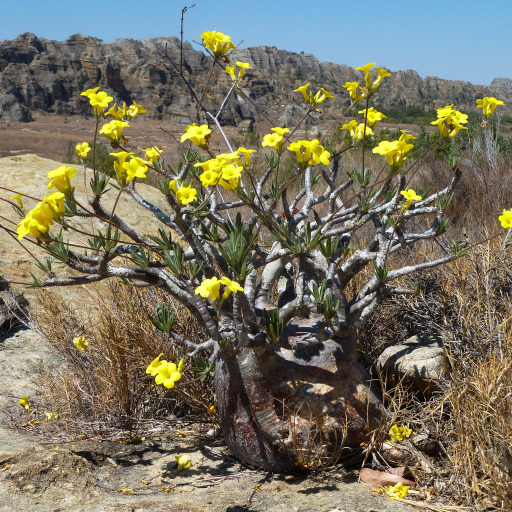
Often called the "Elephant's Foot" or "Bottle Plant," this Malagasy native is a true living sculpture for the home collector. It looks like a miniature, spiny baobab tree, perfectly adapted to the harsh, dry rock faces of Madagascar. In the spring, its rugged, prehistoric form is softened by a crowning glory of bright, trumpet-shaped yellow flowers that seem to defy its thorny exterior.
🔍 How to Identify
- 🐘 The Caudex: Features a thick, silver-grey swollen base (caudex) that stores water, giving the plant a sturdy, "elephant-like" appearance.
- 🌵 Spiny Armor: The branches are densely covered in pairs of conical spines that help catch moisture from fog and deter thirsty animals in the wild.
- 🌼 Vibrant Blooms: It produces striking, vivid yellow flowers on long stalks (peduncles) that rise high above the foliage to catch the eye of pollinators.
🏡 In Your Garden
- 🏜️ Water Storage Strategy: Because the caudex acts as a massive internal reservoir, this plant is a master drought-survivor. It is highly sensitive to "wet feet," meaning it will rot quickly if the soil stays damp for too long.
- 💤 Winter Dormancy: Don't panic if your plant drops every single leaf in late autumn! It is a deciduous succulent that enters a deep sleep in winter to conserve energy; during this time, it requires almost no water at all.
⚠️ Safety & Toxicity
- 🚫 Toxic Sap: Like many members of the Dogbane family, it contains a milky latex sap that is irritating to the skin and eyes and toxic if swallowed.
- 🐾 Physical & Chemical Risk: Keep this plant away from curious pets and children. While the sharp thorns provide a physical "keep away" signal, the internal sap can cause digestive or cardiac distress if ingested.
✨ Fun Fact
✨ Rock Dweller: In its native Madagascar, Pachypodium rosulatum is a "lithophyte," meaning it is often found growing directly on bare sandstone outcrops where it survives by wedging its roots into tiny, mineral-rich crevices.

Detailed Care Instructions
To help your Pachypodium rosulatum plant grow, follow these tips:
- Light: Place the plant in an area that receives bright, indirect sunlight. Pachypodium rosulatum prefers a lot of light but avoid exposing it to intense, direct sunlight as it can lead to sunburn.
- Temperature: This plant thrives in warm temperatures, ideally between 65-85°F (18-29°C). Protect it from extreme cold temperatures and drafts.
- Watering: Allow the top inch of the soil to dry out between waterings. Pachypodium rosulatum prefers well-draining soil, so be cautious not to overwater. During the growing season, water deeply but make sure the excess water drains out. Reduce watering during cooler months.
- Humidity: Pachypodium rosulatum prefers low humidity, so normal indoor household humidity levels are suitable.
- Soil: Use a well-draining cactus or succulent potting mix. You can also create your own mix by combining cactus soil with perlite or pumice to enhance drainage.
- Fertilizer: Feed your plant with a balanced liquid fertilizer once a month during the growing season. Follow the label instructions for dilution and application rates.
- Repotting: Pachypodium rosulatum does best when slightly root-bound. Repot only when necessary, typically every 2-3 years, using a slightly larger pot and fresh potting mix.
- Pruning: Prune sparingly to remove dead or damaged growth or to shape the plant. Wear protective gloves as the plant has thorns.
- Pests: Monitor for common succulent pests such as mealybugs, scale insects, or spider mites. Treat any infestations promptly using an appropriate insecticide or by physically removing the pests.
- Dormancy: Pachypodium rosulatum goes through a period of dormancy during winter. Reduce watering and allow the plant to rest in cooler temperatures (around 55-60°F or 13-15°C) during this time. Limit fertilization or stop it completely until the growing season resumes.
By providing these conditions and care, your Pachypodium rosulatum plant should thrive and grow successfully.

Place in a window with dappled sun or a spot in the middle of a room. Or directly in a window facing west or east.

To water this plant, it is important to take into consideration the soil preferences and drainage needs. This plant prefers well-draining soil and does not tolerate waterlogged soil. It is recommended to water deeply but infrequently, allowing the soil to dry out between waterings. When watering, it is important to avoid getting water on the leaves or stem, as this can lead to rot and damage to the plant. It is also important to avoid watering during the dormancy period, as this plant requires a dry rest period.
For optimal growth and development, fertilize this plant during the growing season (spring and summer) with a balanced fertilizer that contains equal amounts of nitrogen, phosphorus, and potassium. Use a diluted mixture of fertilizer and water to avoid over-fertilization which can harm the plant. Apply the fertilizer every two weeks, following the manufacturer's instructions. During the winter months, reduce fertilization to every four to six weeks or stop altogether as the plant enters a dormant state. Always water the plant before applying fertilizer to prevent root burn.
Pachypodium Rosulatum plant prefers well-draining soil with slightly acidic to neutral pH. The soil should be sandy and mix with some organic matter to enhance drainage and aeration. Additionally, the soil should have a gritty texture to provide stability as the plant grows in pots or in a garden. The soil should be kept slightly moist but never waterlogged. It's best to avoid heavy or clay soils as they retain too much water, leading to root rot and other problems. In summary, sandy, well-draining, and slightly acidic to neutral soil mixed with organic matter and gritty material is ideal for Pachypodium Rosulatum plant.
Propagation of this particular plant can be done through various methods, including seed propagation and vegetative propagation. Seed propagation involves collecting and planting mature seeds. To propagate through vegetative means, stem cuttings can be taken from the parent plant. The cuttings should be left to dry out for a few days before planting in a well-draining soil mix. Care should be taken to avoid overwatering the newly planted cuttings as this can cause rot. Rooting hormone can also be used to increase the chances of successful rooting.








