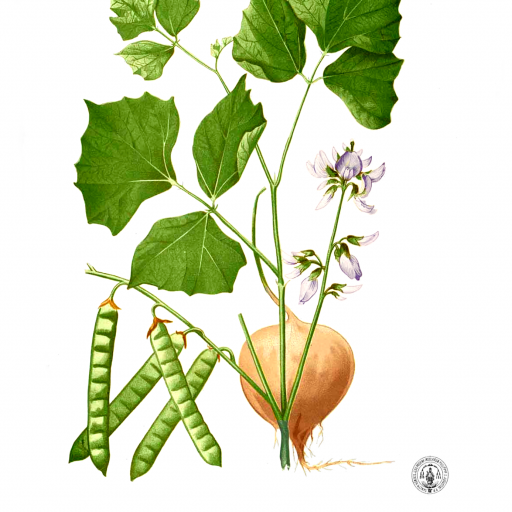
Plant Overview
Often called the "Mexican Turnip" or "Yam Bean," Jicama is a tropical climbing vine famous for its crunchy, refreshing tuber. While it looks like a humble cousin of the potato, it is actually a member of the legume family. In its native Mexico, Jicama is the ultimate street snack, traditionally served sliced thin and seasoned with a squeeze of lime and a dash of chili powder.
🔍 How to Identify
- 🌿 The Foliage: It features large, heart-shaped green leaves that grow in sets of three (trifoliate) along vigorous, slightly hairy vines that can reach up to 15 feet.
- 🌸 The Blooms: The plant produces beautiful, upright clusters of pea-like flowers in shades of violet, blue, or creamy white.
- 🥔 The Tuber: Beneath the soil lies a turnip-shaped root with thin, papery brown skin and a crisp, watery white interior that smells faintly of apple.
🏡 In Your Garden
- ☀️ The Long Game: Jicama is a sun-worshiper that requires a very long, frost-free growing season (often 6 to 9 months) to develop a large root. If you live in a cooler climate, you’ll need to start seeds indoors early.
- ✂️ Focusing Energy: To get the biggest "crunch" for your buck, gardeners usually pinch off the flowers as soon as they appear. This prevents the plant from wasting energy on seed production and redirects it into swelling the underground tuber.
- 🌱 Well-Drained Soil: It hates "wet feet." Ensure your soil is sandy and loose so the root can expand without being constricted or rotting in standing water.
⚠️ Safety & Toxicity
- 🚫 Root Only: This is a plant of extremes. While the tuber is safe and nutritious, every other part of the plant is highly toxic.
- 💊 Rotenone Warning: The leaves, stems, and especially the seed pods contain rotenone, a natural insecticide. It should never be consumed by humans, and you should keep pets away from the foliage to prevent accidental poisoning.
✨ Fun Fact
The seeds of the Jicama plant are so potent that they have historically been crushed and used as a natural fish poison! Indigenous groups would toss the powdered seeds into still water to stun fish, allowing them to be gathered easily by hand.

Detailed Care Instructions
| Humidity | Normal |
| Difficulty | Medium |
| Hibernation | Cold Period |
| Temperature | 18°C - 28°C |
| Hardiness Zones | 8 - 11 |
To successfully grow Pachyrhizus erosus, also known as jicama or Mexican yam bean, you can follow these steps:
- Climate requirements: Jicama plants prefer warm tropical or subtropical climates with temperatures ranging from 75-86°F (24-30°C). They cannot tolerate frost or temperatures below 50°F (10°C).
- Soil preparation: Choose a well-draining soil with a pH level around 6.0-7.0. Jicama prefers sandy loam or loamy soil. Remove any weeds or debris from the planting area.
- Planting time: Plant jicama seeds or tubers during the warmest months of the year, when the average temperature remains consistently high. This is typically in spring or early summer.
- Seed or tuber selection: You have two options for planting jicama, either from seeds or tubers. If using seeds, soak them overnight in water to promote germination. If using tubers, select healthy-looking ones without any disease.
- Planting seeds or tubers: Create shallow furrows in the prepared soil, about 1 inch deep. Plant the seeds or tubers about 8-12 inches apart, spacing the rows around 15-24 inches apart.
- Watering: Jicama plants require consistent moisture, so water them regularly, especially during dry spells. Avoid overwatering to prevent root rot.
- Sunlight: Jicama plants need full sun or at least 6-8 hours of direct sunlight daily for optimum growth and tuber development.
- Trellising (optional): If you're growing jicama vertically, provide a trellis or support system for the vines to climb. This helps minimize disease risks and makes harvesting easier.
- Fertilization: Apply a balanced slow-release or organic fertilizer once every 4-6 weeks to provide essential nutrients. Follow the package instructions for recommended application rates.
- Weed control: Regularly remove any weeds that compete with the jicama plants for nutrients and water.
- Pest and disease management: Monitor the plants for pests like aphids, whiteflies, and beetles. Treat them with organic pesticides or insecticidal soap if necessary. Additionally, be watchful for common diseases like root rot or fungal infections and take appropriate measures to address them.
- Harvesting: Jicama plants take around 5-6 months from planting to maturity. The tubers are ready for harvest when they reach a size of 3-5 inches in diameter. Gently dig around the roots and lift them from the ground, being careful not to damage them. Remove any attached foliage and store the tubers in a cool, dry place for up to several weeks.
By following these steps, you can successfully grow Pachyrhizus erosus plants and enjoy their tasty and crunchy tubers.

Place in a bright room that is sun drenched almost all day. Or directly in a south-facing window.

The Pachyrhizus Erosus plant should be watered regularly, but not excessively. It is important to allow the soil to become slightly dry between waterings, as overwatering can lead to root rot. The best way to water the plant is to pour water slowly over the soil until it begins to drain out of the bottom of the pot. It is important to avoid getting water on the leaves, as this can lead to problems with mold and other issues. In addition to watering, it is important to provide the plant with proper drainage, as sitting in standing water can also lead to problems with root rot.
To fertilize this plant, apply a balanced, water-soluble fertilizer once per month during the growing season. Mix the fertilizer according to the instructions on the package and apply it to the soil around the base of the plant. Avoid getting fertilizer on the foliage or stems as it can cause damage. Water the plant immediately after fertilizing to help distribute the nutrients evenly throughout the root zone.
For optimal growth and development of this plant, it is recommended to use a well-draining soil that is rich in organic matter. The soil should have a pH level between 6.0 and 7.0 and should be kept moist but not waterlogged. Adding a slow-release fertilizer to the soil can also aid in the plant's growth. It is important to avoid using soils that are overly sandy or contain high levels of clay as these can cause drainage problems and hinder the plant's ability to absorb nutrients.
Here are the steps for propagating Pachyrhizus Erosus:
- Select a healthy mature plant from which to take cuttings.
- Using a sterilized cutting tool, take cuttings from the plant. Cuttings should be about 4-6 inches long.
- Dip the cut end of each cutting in rooting hormone powder.
- Fill a container with well-draining potting soil and make small holes in the soil with a pencil.
- Place the cuttings into the holes in the soil, ensuring that at least one node is buried under the soil.
- Water the cuttings lightly and cover the container with a plastic bag to create a humid environment.
- Place the container in a bright, indirect light and keep the soil moist but not waterlogged.
- After a few weeks, new growth should appear and the cuttings can be slowly acclimated to normal growing conditions.
It's important to note that Pachyrhizus Erosus prefers warm temperatures and high humidity, so maintaining appropriate growing conditions is key to successful propagation.
Common pests of the yam-bean include Spider mites, aphids, thrips. Make a habit of checking your yam-bean frequently for pests so that any infestations can be caught and managed early.








