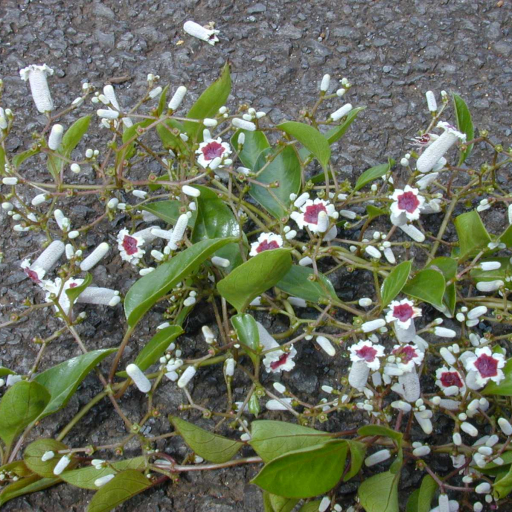
Plant Overview
Often called the "Skunkvine" or "Stinkvine," Paederia foetida is a plant that literally lives up to its name. While it might look like a charming, delicate climber at first glance, its true nature is revealed the moment a leaf is bruised, releasing a pungent sulfurous odor reminiscent of rotten eggs. Native to Asia, it has become a notorious "green monster" in parts of North America due to its aggressive climbing habits.
🔍 How to Identify
- 🍃 The Leaves: Long, oval to lance-shaped leaves that grow in opposite pairs along the stem. They often have a slightly grayish-green hue.
- 🌸 The Flowers: Small, creamy-white, bell-shaped blossoms with a distinct dark purple or lilac center. The exterior of the flower is covered in fine, fuzzy hairs.
- 👃 The Scent: The most reliable identifier; crushing any part of the plant produces a strong, unpleasant smell caused by dimethyl disulfide.
🏡 In Your Garden
- 🧗 Growth Habit: This is a vigorous woody vine that uses its stems to twine tightly around trees, fences, and other plants. It lacks tendrils, so it physically wraps its entire "body" around its host, often choking it.
- 🛑 Invasive Alert: In many regions, particularly the Southern United States, it is considered a Category I invasive species. It can create "vine curtains" that block sunlight from reaching native trees, eventually killing the canopy through shade and weight.
- 🌱 Control Challenges: It is incredibly difficult to eradicate because it can regrow from tiny root fragments left in the soil, and its seeds are widely dispersed by birds.
⚠️ Safety & Toxicity
- 🐾 General Safety: Paederia foetida is generally not considered highly toxic to humans or pets if touched. Its primary defense mechanism is its repulsive smell, which usually prevents accidental ingestion.
- ⚠️ Environmental Hazard: The "danger" here is ecological. If you find this in your garden outside of its native range, it is best to remove it before it produces fruit, as it can quickly smother your desired landscaping and local biodiversity.
✨ Fun Fact
Despite its "stinky" reputation, the leaves are actually used in traditional Asian medicine and even in certain culinary dishes (like "Banh Khuc" in Vietnam). The cooking process helps to neutralize the sulfurous odor, turning the "skunk" into a savory ingredient!

Detailed Care Instructions
To grow a Paederia Foetida plant, also known as the stink vine or skunk vine, you can follow these steps:
- Obtain seeds or cuttings: You can find Paederia Foetida seeds or obtain cuttings from an existing plant. Cuttings are generally easier to propagate.
- Prepare a pot and soil: Choose a pot with drainage holes and fill it with well-draining potting soil mixed with organic matter such as compost or perlite. Make sure the pot is large enough for the plant to grow.
- Plant the seeds or cuttings: If using seeds, sow them on the soil surface, lightly cover them with soil, and keep the soil moist until they germinate. For cuttings, dip the lower end in a rooting hormone, make a hole in the soil, and gently place the cutting in it. Firmly press the soil around the cutting to ensure good contact.
- Provide the right conditions: Place the pot in a location that receives partial sun or filtered light. Paederia Foetida prefers a warm and humid environment with temperatures between 20-30°C (68-86°F). Keep the soil consistently moist but not waterlogged.
- Maintain humidity: Since Paederia Foetida enjoys high humidity, mist the plant with water regularly or place a tray of water nearby to increase humidity levels.
- Watering and fertilization: Water the plant when the top inch of soil feels dry. Do not overwater, as it can lead to root rot. Fertilize the plant every 2-4 weeks during the growing season with a balanced liquid fertilizer diluted to half the recommended strength.
- Pruning: As the plant grows, prune it regularly to encourage bushiness and prevent it from becoming too leggy. Pruning also helps control its invasive growth.
- Pests and diseases: Monitor the plant for any pests such as aphids or scale insects. Treat infestations with insecticidal soap or neem oil. Paederia Foetida is generally resistant to diseases.
By following these steps and providing the right conditions, you can successfully grow a Paederia Foetida plant.

Place in a bright room that is sun drenched almost all day. Or directly in a south-facing window.

The best way to water this plant is to first check the soil moisture level by inserting your finger about two inches into the soil. If the soil feels dry, it is time to water. When watering, pour water slowly and evenly around the base of the plant until water starts to come out of the drainage holes. Allow the excess water to drain out completely and never let the plant sit in standing water. The frequency of watering depends on factors such as the size of the plant, the humidity level in the environment, and the season, but typically watering once a week is sufficient. Make sure to use room temperature water and avoid getting water on the leaves to prevent damage or disease.
To fertilize Paederia Foetida plant, use a balanced fertilizer with equal amounts of nitrogen, phosphorus, and potassium. Use a liquid fertilizer and dilute it to half strength. Apply the fertilizer every two weeks during the growing season. Avoid over-fertilizing, as it can cause the leaves to become yellow and fall off. Water the plant thoroughly after fertilization.
The ideal soil to use with this plant should be a well-draining soil mix that is rich in organic matter. It is best to use a soil mix that is light and fluffy, with good moisture retention capacity but does not get waterlogged easily. The pH of the soil should be slightly acidic, around 6.0 to 6.5, as this plant prefers slightly acidic soil conditions. The soil mix should contain a mixture of sand, perlite, and peat moss or coir to promote good drainage and aeration. It is also essential to ensure that the soil is free from any contaminants and pests that may harm the plant. A good quality potting mix or soil mix specifically formulated for flowering plants can be used for this plant.
To propagate this plant, you will first need to obtain a healthy specimen of the desired size and age. Once you have the plant, you can take stem cuttings from it by using a sharp pair of scissors or garden pruners. Make sure to take cuttings that are at least 5 inches long and have several healthy leaves on them.
Once you have your cuttings, you will need to prepare them for rooting. Remove any leaves from the bottom 2-3 inches of the stem, and dip the cut end of the cutting into rooting hormone powder. This will help the cutting develop roots more easily.
Next, you will need to plant the cuttings in a well-draining potting mix or soilless medium. Insert the cuttings about 2 inches deep into the soil, and water them thoroughly. Cover the pot with plastic to create a humid environment and keep the soil moist.
Place the pot in a bright, indirect light location, and check the cuttings regularly for signs of new growth. It may take several weeks for the cuttings to develop roots and begin to grow, but with proper care, they should eventually become healthy, mature plants.








