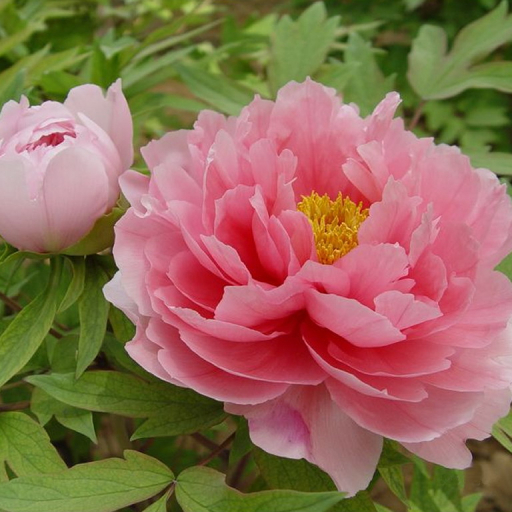
Plant Overview
Known as the "King of Flowers" in its native China, the Paeonia Moutan (Tree Peony) is the regal, woody-stemmed cousin of the common garden peony. Unlike herbaceous peonies that die back to the ground each winter, this majestic shrub maintains a permanent structure of gnarled, architectural branches. It has been a symbol of prosperity, honor, and feminine beauty in Eastern art and poetry for over a millennium.
🔍 How to Identify
- 🌸 Grand Blooms: It produces massive, papery flowers that can reach the size of a dinner plate, featuring a central "boss" of golden stamens and often a darker "flare" at the base of the petals.
- 🪵 Woody Framework: It grows on a permanent, woody trunk rather than soft green stems, eventually reaching 4 to 7 feet in height depending on the variety.
- 🍃 Divided Foliage: The leaves are matte, bluish-green, and deeply lobed, offering a much more delicate and "ferny" texture than the rounded leaves of common peonies.
🏡 In Your Garden
- ⏳ The Virtue of Patience: These plants are notoriously slow-growing and may take several seasons to settle in before producing their first world-class bloom, but they are exceptionally long-lived—some specimens thrive for over 50 years.
- 🚫 The "No-Move" Rule: Tree Peonies possess deep, brittle taproots and absolutely despise being transplanted. It is vital to choose their "forever home" carefully to avoid killing the plant during a move.
- 🌬️ Air and Shelter: Because the flowers are so heavy and delicate, they should be planted in a spot sheltered from harsh winds, but with enough air circulation to prevent fungal spots on the leaves.
⚠️ Safety & Toxicity
- 🐾 Mildly Toxic: The plant contains the chemical compound paeonol, which is concentrated mostly in the bark and roots.
- 🤢 Symptoms: If ingested by curious cats, dogs, or horses, it can cause digestive distress, including vomiting or diarrhea. It is generally safe to handle, though sensitive individuals may experience minor skin irritation.
✨ Fun Fact
🎨 Imperial Status: During the Tang Dynasty in China, Tree Peonies were so highly prized that they were grown exclusively in the imperial gardens. At the height of "Peony Fever," a single rare cultivar could be traded for the price of a small estate!

Detailed Care Instructions
To successfully grow Paeonia Moutan, also known as Tree Peony or Moutan Peony, follow these steps:
- Select the right location: Tree Peonies prefer a sunny location with at least 6-8 hours of direct sunlight each day. Ensure the soil is well-draining to prevent waterlogging.
- Prepare the soil: Before planting, amend the soil with organic matter, such as compost or well-rotted manure, to improve its fertility and drainage. The ideal pH for Paeonia Moutan is slightly acidic to neutral (around 6.5-7.5).
- Planting: Dig a hole that is wide and deep enough to accommodate the root ball of the plant. Place the plant in the hole, ensuring it sits at the same depth as it was in the pot or slightly higher to prevent crown rot. Backfill the hole with soil, gently firming it around the roots.
- Watering: Water the plant thoroughly after planting to settle the soil around the roots. Tree Peonies require regular watering, particularly during dry spells. Water deeply but avoid overwatering, as excessive moisture can lead to root rot. The soil should remain evenly moist, but not saturated.
- Mulching: Apply a layer of organic mulch, such as bark chips or shredded leaves, around the base of the plant. Mulch helps retain moisture, suppresses weeds, and protects the roots from extreme temperatures.
- Fertilizing: Fertilize the plant in spring using a balanced slow-release fertilizer or a granular organic fertilizer. Avoid applying fertilizer too close to the stem to prevent burning the plant. Follow the package instructions for the appropriate application rate.
- Pruning: Prune Tree Peonies lightly to maintain their shape and remove dead or damaged wood. Prune them immediately after flowering or in early spring before new growth emerges.
- Support: Some Tree Peonies may require staking to support their heavy flowers. Install stakes or trellises early in the growing season and tie the stems gently to them using soft twine or plant ties.
- Winter care: Paeonia Moutan is cold-hardy, but in areas with severe winters, protect the plant by covering it with a layer of mulch or straw. This will insulate the roots from extreme cold temperatures.
- Pest and disease control: Monitor the plant for any signs of pests, such as aphids or powdery mildew, and promptly treat them with appropriate organic or chemical controls as needed.
By following these steps, you can successfully grow a beautiful Paeonia Moutan plant.

Place in a bright room that is sun drenched almost all day. Or directly in a south-facing window.

When watering this plant, it is important to keep the soil consistently moist but not saturated. This can be achieved by watering deeply once or twice a week, depending on the climate and soil type. It is also important to avoid getting water on the leaves and flowers as this can cause damage and disease. To ensure proper drainage and prevent overwatering, make sure the pot or planting area has adequate drainage holes and remove any excess water that collects in the saucer or surrounding soil.
For optimal growth, apply a balanced fertilizer in the early spring before the new growth appears. A slow-release granular fertilizer works well, or you can use a liquid fertilizer diluted in water. Be careful not to over-fertilize, as this can lead to weak stems and reduced flower production. During the growing season, you can supplement with a liquid fertilizer every 2-4 weeks to encourage healthy growth. In the fall, add a high-phosphorus fertilizer to encourage root development for the next season. Always follow the instructions on the fertilizer packaging for proper application rates and safety precautions.
The ideal soil for the Paeonia Moutan plant should be well-draining and slightly acidic with a pH range between 5.5 to 6.5. It should be rich in organic matter and should have good water-holding capacity to keep the soil moist without being waterlogged. The soil should be loose and airy to promote root growth and prevent waterlogging.
A suitable soil mix for this plant could include a 50:50 mixture of loam and peat moss, along with some perlite or sand for better drainage. Adding compost or well-rotted manure to the soil can also help improve its nutrient content and texture.
It's important to note that this plant is sensitive to high salinity levels in the soil, so avoid using fertilizer that has high salt content. Instead, use a balanced and slow-release fertilizer that is low in salts, applied in early spring or late fall. Also, avoid overwatering the plant as it can lead to root rot and damage.
To propagate this plant, you can take softwood cuttings in the early summer, just as new growth is starting to form. Choose a healthy stem that has leaves and is about 4-6 inches long. Cut the stem just below the leaf node and remove the lower two-thirds of the leaves. Dip the cut end in rooting hormone and plant it in a pot filled with a well-draining potting mix. Keep the soil moist and place the pot in a warm, brightly lit spot, but out of direct sunlight. In about 6-8 weeks, roots should have formed and the cutting can be transplanted into a larger pot or straight into the ground.
Common pests of the paeonia moutan include Spider mites, aphids, thrips, larvae, snails. Make a habit of checking your paeonia moutan frequently for pests so that any infestations can be caught and managed early.








