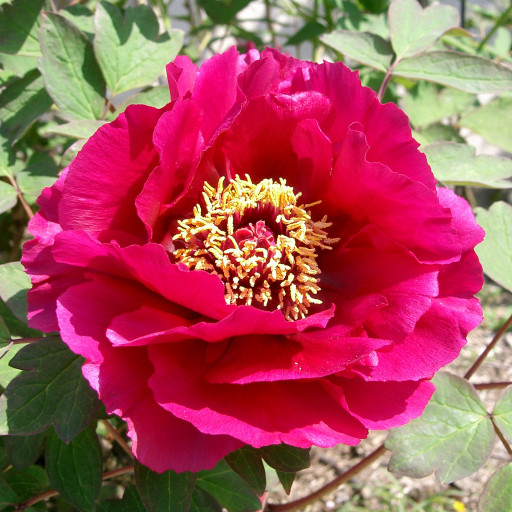
Plant Overview
Known as the "King of Flowers" in its native China, the Tree Peony (Paeonia suffruticosa) is a symbol of prosperity, honor, and feminine beauty. Unlike common herbaceous peonies that die back to the ground each winter, this regal shrub maintains a permanent woody structure, acting as a living monument in the garden for decades. Its blooms are often described as "silken masterpieces" due to their incredible size and delicate, ruffled texture.
🔍 How to Identify
- 🌸 Dinner-Plate Blooms: The flowers are exceptionally large, sometimes reaching 10 inches in diameter, featuring crinkled, tissue-paper petals and a prominent cluster of golden stamens at the center.
- 🌳 Woody Stems: Unlike standard garden peonies, this variety grows on a permanent, branched woody trunk that does not disappear in the winter.
- 🍃 Deeply Lobed Foliage: The leaves are large, compound, and often have a matte, bluish-green finish, providing a lush, fern-like appearance even when the plant isn't in bloom.
🏡 In Your Garden
- 🏺 The "Stay Put" Rule: Tree Peonies develop thick, brittle taproots that reach deep into the earth. They absolutely despise being moved once established; transplanting an adult plant often results in several years of "sulking" without any flowers.
- ❄️ Winter’s Necessity: While they look tropical, these plants are incredibly hardy and actually require a cold winter dormancy to set their flower buds. However, they appreciate a spot sheltered from harsh winds, which can snap their heavy, bloom-laden branches.
⚠️ Safety & Toxicity
- 🐾 Moderate Toxicity: The plant contains the compound paeonol, which is concentrated in the bark and roots.
- 🤢 Risk to Pets: It is toxic to dogs, cats, and horses. Ingestion can lead to vomiting, diarrhea, and lethargy. It is best planted in a location where pets aren't tempted to dig or chew.
✨ Fun Fact
- 📜 Tree Peonies are legendary for their longevity. In some Chinese temple gardens, there are documented specimens that have been blooming annually for over 200 years, surviving through multiple dynasties!

Detailed Care Instructions
| Color | White, Red, Pink, Purple, Yellow |
| Soil Ph | 6.8 To 7.5 |
| Humidity | Normal |
| Lighting | Full Sun |
| Toxicity | Poisonous |
| Soil Type | Fertile Loam |
| Bloom Time | Spring |
| Difficulty | Medium |
| Plant Type | Deciduous Shrub |
| Hibernation | Cold Period |
| Mature Size | 3 To 5 Feet Tall And 3 To 4 Feet Wide |
| Native Area | China, Bhutan |
| Sun Exposure | Full Sun To Part Shade |
| Hardiness Zones | 4 To 8 |
To grow Paeonia suffruticosa (Tree Peony), you can follow these steps:
- Select a suitable location: Tree peonies prefer a sunny spot with well-draining soil. However, they can tolerate some shade.
- Prepare the soil: Tree peonies prefer slightly acidic soil with a pH range of 6.5-7.5. Amend the soil with organic matter such as compost or well-rotted manure to improve drainage and fertility.
- Planting: Dig a hole twice as wide and deep as the plant's container or rootball. Place the plant in the hole and backfill with amended soil. Ensure the crown of the plant is at the same level as or slightly above the soil surface.
- Watering: Water the newly planted tree peony thoroughly to settle the soil. As they have shallow roots, they require regular watering, especially during dry spells. However, avoid over-watering, as soggy soil may cause root rot.
- Mulching: Apply a layer of organic mulch around the base of the plant, such as bark chips or straw. Mulch helps retain moisture, suppresses weeds, and regulates soil temperature.
- Pruning: After the blooming season, prune any dead or damaged branches to maintain the plant's shape and promote airflow. Avoid heavy pruning, as tree peonies do not respond well to drastic cuts.
- Fertilizing: Feed your tree peony with a balanced fertilizer in early spring before new growth emerges. Follow the manufacturer's instructions for application rates.
- Pests and diseases: Tree peonies are relatively resistant to pests and diseases. However, you may occasionally encounter issues like powdery mildew or spider mites. Monitor your plants regularly and treat any problems promptly.
- Support: Tree peonies may benefit from some support, especially when heavy blooms are present. Install stakes or peony rings around the plants to prevent them from falling over or breaking.
- Winter care: In colder regions, protect the plants during winter by mulching around the base and covering them with burlap or frost blankets. Remove the coverings in spring when the threat of frost has passed.
By following these steps and providing appropriate care, you can successfully grow Paeonia suffruticosa plants and enjoy their stunning flowers.

Place in a bright room that is sun drenched almost all day. Or directly in a south-facing window.

To water this plant, you should give it a deep watering once a week or as needed, ensuring the moisture is able to reach the root system. It is recommended to water in the morning to allow the excess water to evaporate during the daylight hours, which will prevent fungal issues from developing. When watering, avoid getting the leaves wet to minimize the possibility of disease. Additionally, it is important to ensure the plant receives proper drainage to prevent standing water around the roots.
To fertilize this plant, apply a balanced fertilizer with a ratio of approximately 10-10-10 in early spring, before new growth begins. Apply at a rate of 1/2 to 3/4 cup per plant, and water thoroughly afterwards. Repeat the application once or twice during the growing season, at 4-6 week intervals. Avoid over-fertilizing, as this can lead to weak growth and reduced flowering. Always follow the manufacturer's instructions for application rates and frequency.
In general, it is recommended to use well-draining soil with good aeration for this plant. It should also have a slightly acidic to neutral pH level, ideally between 6.0 and 7.0. The soil should be rich in organic matter and nutrients to promote healthy growth and blooming. It is important to avoid compacted soil or heavy clay, as this can lead to waterlogging and root rot. Adding a layer of mulch around the plant can also help to retain moisture and suppress weed growth.
To propagate this plant, start by collecting ripe seeds and storing them in a dry, cool place until ready to sow. Fill a pot or seed tray with well-draining soil and sprinkle the seeds evenly on top. Cover with a thin layer of soil and water lightly.
Alternatively, take softwood cuttings from the plant in early summer. Cut a stem with several leaves about 6 inches long and remove the lower leaves. Dip the end in rooting hormone, and then insert it into a pot filled with moist soil. Keep the pot in a warm, bright area and water regularly.
Finally, this plant can also be propagated by division. In spring, dig up a mature plant and carefully separate the roots into sections, making sure each section has viable buds. Replant the sections in well-draining soil and water regularly.
Common pests of the tree peony include Spider mites, aphids, thrips, larvae, snails. Make a habit of checking your tree peony frequently for pests so that any infestations can be caught and managed early.








