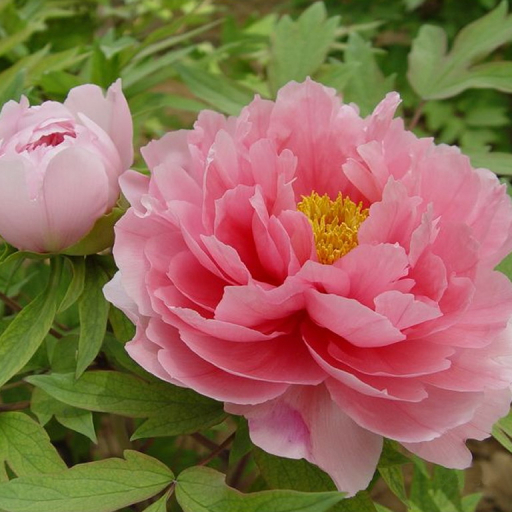
Plant Overview
Known as the "King of Flowers" in its native China, the Tree Peony (Paeonia × suffruticosa) is a majestic woody shrub that has been a symbol of prosperity, honor, and feminine beauty for millennia. Unlike its herbaceous cousins that die back to the ground in winter, this "tree" variety maintains a permanent woody structure, eventually growing into a stunning focal point. Its blooms are legendary for their sheer size and delicate, crepe-paper texture, often appearing as if they were painted by a master artist.
🔍 How to Identify
- 🌸 The Blooms: Features massive, bowl-shaped flowers that can reach up to 10 inches in diameter. They come in a breathtaking array of colors, from snowy whites and soft pinks to deep maroons and vibrant yellows.
- 🌿 The Foliage: Leaves are typically larger and more deeply lobed (pinnate) than herbaceous peonies, maintaining a matte, bluish-green hue throughout the summer.
- 🪵 The Structure: Unlike standard peonies, this plant has a permanent, woody framework of stems that do not die back in the winter, giving it a shrub-like appearance even when dormant.
🏡 In Your Garden
- 🌱 Root Stability: Tree Peonies are notoriously "homebodies" and resent being moved. They possess a deep taproot and a sensitive root system, so it is vital to choose their forever home carefully—somewhere with excellent drainage and protection from harsh winds.
- ⏳ A Lesson in Patience: These plants are slow growers and may take a few years to establish before they produce their first spectacular bloom. However, once settled, they are incredibly long-lived, often outliving the gardeners who planted them.
- ❄️ Winter Chills: To produce flowers, they require a period of cold dormancy. While they are hardy, they appreciate a layer of mulch around the base to protect their root zone from extreme temperature fluctuations.
⚠️ Safety & Toxicity
- 🐾 Mildly Toxic: The Tree Peony contains a compound called paeonol, which is concentrated in the bark and roots.
- 🐱 Pet & Child Safety: If ingested in large quantities, it can cause gastrointestinal upset (vomiting or diarrhea) in cats, dogs, and horses. It is best to plant them in areas where curious pets won't be tempted to chew on the woody stems.
✨ Fun Fact
In the Tang Dynasty of China, Tree Peonies were so highly prized that they were grown exclusively in the imperial gardens. Some ancient specimens in Chinese temple gardens are rumored to be over 200 years old and still blooming today!

Detailed Care Instructions
To grow Paeonia X Suffruticosa, also known as tree peony, you can follow these steps:
- Choose a suitable location: Tree peonies prefer a location with full sun to partial shade. They also require well-drained soil that is slightly acidic with a pH level of around 6.5 to 7.5. Ensure that the location has good air circulation.
- Prepare the soil: Prior to planting, amend the soil with organic matter such as compost or well-rotted manure. This will improve drainage and fertility.
- Planting: Dig a hole that is wide and deep enough to accommodate the root ball of the tree peony. Place the plant in the hole, making sure the graft union (the swollen area where the tree peony was grafted onto the rootstock) is above the soil level. Backfill the hole with soil, firming it gently around the plant.
- Watering: Water the newly planted tree peony thoroughly and keep the soil consistently moist but not waterlogged. Provide regular watering during dry spells or hot weather.
- Mulching: Apply a layer of organic mulch, such as wood chips or bark, around the base of the plant. This will help retain moisture, suppress weeds, and regulate soil temperature.
- Fertilizing: In early spring, apply a balanced, slow-release fertilizer specifically formulated for woody plants according to the package instructions. Repeat this feeding in late spring or early summer.
- Pruning: Prune tree peonies lightly in early spring before new growth emerges. Remove any dead, damaged, or crossing branches. Avoid excessive pruning, as tree peonies bloom on old wood.
- Support: Depending on the size of the plant and the weight of the flowers, tree peonies may need support to prevent them from flopping over. Install cages or stakes early in the season to provide support as needed.
- Protection: Protect tree peonies from harsh winter conditions by applying a layer of mulch around the base of the plant to insulate the roots. Additionally, you can cover the plant with burlap or a frost cloth during extreme cold snaps.
- Monitoring: Regularly monitor for pests or diseases, such as aphids or botrytis blight. Treat any issues promptly using organic or chemical control methods as appropriate.
By following these guidelines, you can help ensure the successful growth of your Paeonia X Suffruticosa plant.

Place in a bright room that is sun drenched almost all day. Or directly in a south-facing window.

To water this plant, ensure that the soil is dry to the touch before watering. Use a watering can or hose with a gentle flow to water the base of the plant, avoiding the leaves and flowers. Water deeply until the soil is moist, but not waterlogged. Overwatering can cause the roots to rot and damage the plant. It is best to water in the morning or evening when the sun is less intense to prevent evaporation and damage to the foliage. During periods of drought, provide more frequent watering.
For optimal growth and flowering of this plant, it is recommended to fertilize it twice a year. The first time should be in early spring before new growth begins, using a balanced fertilizer with equal amounts of nitrogen, phosphorus, and potassium. The second application should be in early fall to aid in root development and prepare the plant for winter dormancy. Use a slow-release fertilizer with a higher phosphorus content to encourage blooming. Apply the fertilizer evenly around the base of the plant, being careful not to let it come into contact with the foliage. Water the plant thoroughly after fertilizing.
Paeonia X Suffruticosa plant prefers soil that is well-draining but able to retain moisture. It should be rich in organic matter and have a slightly acidic pH level of 6.0-7.0. A mixture of peat moss, perlite, and compost would be suitable. It is also important to avoid planting it in soil that has a high clay content, as this can lead to root rot. The plant should be grown in a location that receives full to partial sun exposure.
To propagate this plant, take a cutting in the early stages of growth, when the stems are still flexible. Choose a stem that is healthy and has at least one node. Cut the stem about 4-6 inches long, just below a node, and remove any leaves from the lower half of the stem. Dip the cut end of the stem in rooting hormone powder, ensuring that the hormone covers the node and some part of the stem. Insert the stem into a pot filled with soil that is a mix of sand and peat moss, and water the soil. Keep the cutting in a warm, humid place that gets indirect sunlight. Water it regularly, keeping the soil moist but not waterlogged. It may take several weeks to a few months for the cutting to develop roots and start growing. Once established, transplant the new plant into a larger container or to a suitable outdoor location, ensuring that it is placed in well-draining soil and gets adequate sunlight.
Common pests of the moutan peony include Spider mites, aphids, thrips, larvae, snails. Make a habit of checking your moutan peony frequently for pests so that any infestations can be caught and managed early.








