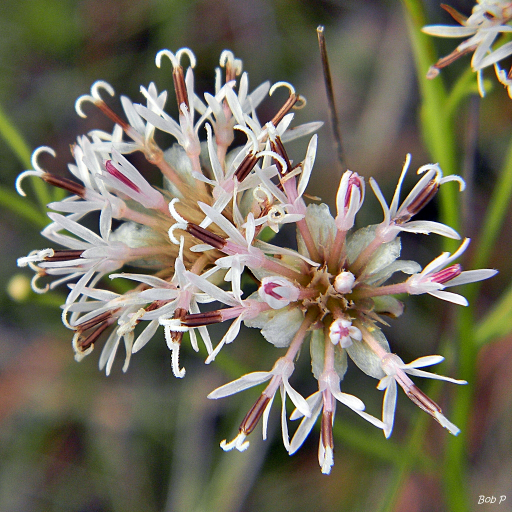
Plant Overview
Known affectionately as the Coastalplain Palafox, this native beauty of the American Southeast is like a brushstroke of lavender against a sandy landscape. Unlike most of its cousins in the aster family, it skips the "petals" (ray florets) entirely, resulting in a minimalist, modern-looking bloom that seems to float in the air on wiry stems.
🔍 How to Identify
- 🌸 The "Petalless" Bloom: The flower heads lack outer ray petals. Instead, they consist of clusters of small, tubular disk florets that range from white to pale pink.
- 💜 Stamen Show: The most striking feature is the dark purple or lavender stamens that poke out from the center, giving the flower a "fuzzy" or starburst appearance.
- 🍃 Slender Foliage: As the name integrifolia suggests, the leaves are "entire" (smooth-edged), narrow, and arranged alternately along the stem, keeping the plant looking light and airy.
🏡 In Your Garden
- 🏜️ The Sand Specialist: This plant is a specialist for dry, sandy soils. It thrives in high-drainage areas like sandhills or pine flatwoods and is exceptionally drought-tolerant once its deep root system is established.
- 🦋 Pollinator Magnet: Because it blooms from late summer into autumn, it serves as a critical pit stop for migrating butterflies, including Monarchs, and is a favorite for native bees.
- 🌱 Low Maintenance: It hates being "babied." Over-watering or planting it in heavy, rich clay soil will likely cause it to fail; it prefers the rugged life of the coastal plain.
⚠️ Safety & Toxicity
- ✅ Status: Generally considered non-toxic to humans and common household pets.
- 🐾 Safe for Pets: There are no recorded cases of Palafoxia integrifolia causing systemic poisoning in cats or dogs, making it a safe choice for a "wild" backyard aesthetic.
✨ Fun Fact
The genus was named in honor of José de Palafox y Melci, a famous Spanish Duke and General who became a national hero for his heroic defense of his home city during the Napoleonic Wars. This "wildflower" carries the name of a warrior!

Detailed Care Instructions

Place in a bright room that is sun drenched almost all day. Or directly in a south-facing window.

Some plants require more regular watering than others, which should be done every few days. It's critical to maintain the soil moist all of the time. The water requirements of the same plant placed in pots with varying sizes will differ. Because the water in the smaller pot evaporates faster than the water in the larger pot, it will require more watering. Regardless of pot size, the surface should constantly be maintained moist.








