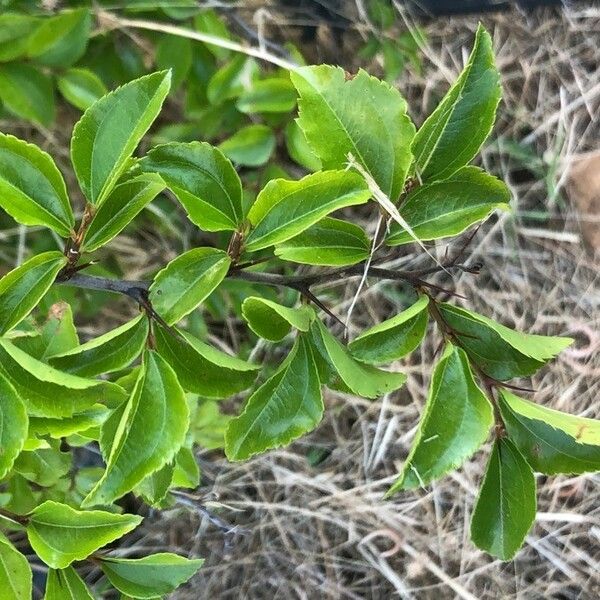
Plant Overview
Commonly known as the Cross-thorn or Bamboo-leaf Buckthorn, Paliurus ramosissimus is a resilient, deciduous shrub that looks like it was designed by a geometric artist. Native to the coastal regions of East Asia, it is famous for its "zigzag" branch structure and its role as a natural, impenetrable fortress. Whether found clinging to a salt marsh or styled as a rugged bonsai, this plant is the definition of "tough love."
🔍 How to Identify
- 🔀 The Zigzag Stem: The most striking feature is the way the branches change direction at every node, creating a distinct, angular "Z" pattern.
- 🍃 Glossy Leaves: The leaves are small, oval, and possess three very prominent veins running from the base to the tip, giving them a pleated look.
- ⚔️ Twin Thorns: At the base of the leaves, you will find pairs of sharp spines—one straight and one slightly curved—ready to catch the unwary gardener.
- 🚁 Winged Fruit: After the tiny yellow flowers bloom, the plant produces unique, woody fruits that look like miniature flying saucers or wide-brimmed hats.
🏡 In Your Garden
- 🌊 Coastal Warrior: Unlike many garden plants, the Cross-thorn is highly salt-tolerant. It thrives in maritime conditions where salty spray would wither more delicate species.
- 🛡️ The Living Fence: Due to its dense growth habit and formidable thorns, it is historically used as a "security hedge." It provides excellent cover for small birds who can navigate the thorns, while keeping larger intruders out.
- ✂️ Bonsai Potential: Because it responds well to pruning and has such naturally interesting branch architecture, it is a favorite for enthusiasts looking to create a "wind-swept" or "rugged" tree aesthetic in a small pot.
⚠️ Safety & Toxicity
- 🌵 Physical Hazard: The primary danger of this plant is its thorns. They are exceptionally sharp and can easily puncture skin or thin gardening gloves. Always wear heavy-duty leather gloves when pruning.
- 🐾 Pet & Child Safety: While not specifically listed as highly toxic, the berries are not considered edible and should be kept away from curious children and pets to avoid stomach upset.
- 🦶 Ground Clearance: Be careful when planting near walkways; the dropped thorny branches can be a hazard to bare feet or bicycle tires.
✨ Fun Fact
The genus name Paliurus is ancient; it is closely related to Paliurus spina-christi, the species traditionally believed to have been used to weave the "Crown of Thorns" mentioned in biblical texts. Ramosissimus essentially translates to "very branched," perfectly describing its tangled, zigzagging nature!

Detailed Care Instructions
To grow Paliurus ramosissimus, also known as the palestine buckthorn, follow these steps:
- Choose an appropriate location: Paliurus ramosissimus prefers full sun but can tolerate partial shade. Ensure the soil is well-draining.
- Prepare the soil: Remove any weeds or grass from the planting area and loosen the soil with a garden fork or tiller. This will help the roots establish easily.
- Planting: Dig a hole that is slightly larger than the root ball of the plant. Place the Paliurus ramosissimus in the hole, ensuring the top of the root ball is level with or slightly above the soil surface. Backfill the hole with soil, gently firming it around the roots.
- Watering: Water the plant thoroughly after planting and keep the soil evenly moist but not waterlogged. Once established, Paliurus ramosissimus is drought-tolerant but will benefit from regular watering during dry periods.
- Mulching: Apply a layer of organic mulch around the base of the plant to help conserve moisture, suppress weeds, and regulate soil temperature. Keep the mulch a few inches away from the trunk to avoid rot.
- Pruning: Paliurus ramosissimus has a naturally bushy growth habit, but you can prune it lightly to shape it if desired. Pruning is best done during the dormant season.
- Fertilizing: Paliurus ramosissimus usually doesn't require regular fertilization. However, if the plant appears weak or lacks vigor, you can apply a balanced slow-release fertilizer according to the manufacturer's instructions.
- Pests and diseases: This plant is generally pest and disease resistant. However, keep an eye out for common issues like aphids or powdery mildew. Treat accordingly if necessary.
- Winter protection: Paliurus ramosissimus is hardy to USDA zones 4-8. If you live in a colder zone, you may want to provide some winter protection, such as covering the plant with a layer of mulch or burlap.
- Monitoring: Regularly monitor your Paliurus ramosissimus for any signs of stress, diseases, or pests. Address any issues promptly to ensure the plant's health and vitality.
Remember to research any local regulations or specific care instructions for growing Paliurus ramosissimus in your region.

Place in a bright room that is sun drenched almost all day. Or directly in a south-facing window.

Paliurus Ramosissimus is a plant that requires regular watering to thrive. When watering this plant, it is important to ensure that the soil is moist but not waterlogged. Overwatering the plant can lead to root rot and other problems.
To water Paliurus Ramosissimus, first check the soil moisture level by inserting your finger into the soil up to your second knuckle. If it feels dry, it is time to water the plant.
Use a watering can with a narrow spout to pour water slowly and gently onto the soil around the base of the plant. Avoid getting water on the leaves and stems, as this can cause damage and encourage the growth of fungal diseases.
Water the plant until the soil is moist but not saturated. Allow any excess water to drain away from the pot or container.
The frequency of watering will depend on the weather conditions, the size of the plant, and the type of soil it is planted in. During hot and dry weather, the plant may need water more frequently, whereas during cooler weather, it may need less water.
It is important to monitor the plant's growth and appearance regularly to ensure it is receiving the right amount of water. If the leaves start to wilt or turn yellow, it may be a sign that the plant needs more water. Adjust the watering schedule accordingly to keep the plant healthy and thriving.
To properly fertilize this plant, it is recommended to use a slow-release fertilizer in the early spring. The fertilizer should have a balanced NPK ratio and be applied according to the manufacturer's instructions. Avoid fertilizing during periods of drought or extreme temperatures. It is important to not over-fertilize as this can harm the plant. Additionally, consider using organic fertilizers to promote long-term soil health and sustainability.
The best soil for Paliurus Ramosissimus plant is well-draining that is rich in organic matter. The soil pH should be slightly acidic to neutral, in the range of 6.0-7.0. Avoid alkaline soil as it can cause leaf yellowing and stunted growth. The plant prefers a sandy loam soil texture that is able to retain moisture without causing waterlogged conditions. A top dressing of compost or well-rotted manure can be added to the soil to improve its fertility. Potting soil substitute should contain vermiculite or perlite and peat moss to ensure good drainage and water retention. Avoid using heavy clay soils or soils prone to waterlogging. The soil should be kept moist but not waterlogged, to prevent root rot or soil-borne diseases. Additionally, regular fertilization with a balanced, slow-release fertilizer during the growing season can help promote healthy growth and blooming.
To propagate this plant, you will need to take a few steps. First, select a healthy mature plant with strong stems and leaves. Take a cutting from this plant, choosing a stem that is at least six inches long and has several sets of leaves. Cut the stem at a 45-degree angle using a sharp, clean pair of scissors or pruning shears.
Next, remove the leaves from the lower half of the stem. If there are any flowers or buds on the cutting, remove them as well. Dip the cut end of the stem into rooting hormone powder, which will help encourage the cutting to grow roots.
Prepare a pot with well-draining soil, and make a hole in the middle using your finger or a pencil. Insert the cutting into the hole, and gently press the soil around it to hold it in place. Water the cutting thoroughly, and place the pot in a warm, bright location with indirect sunlight.
Keep the soil moist but not waterlogged, and mist the cutting with a spray bottle regularly to help it retain moisture. Within a few weeks, the cutting should begin to grow new leaves and roots. Once the cutting has established itself in its new pot, it can be transplanted into a larger, permanent container or outdoors in a suitable location.








