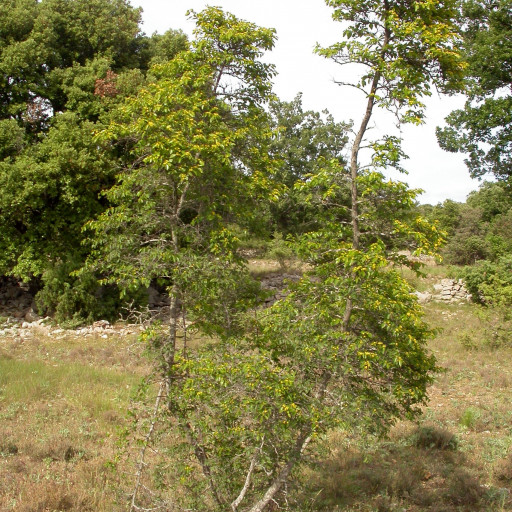
Plant Overview
Known widely as Christ’s Thorn or the Jerusalem Thorn, this resilient Mediterranean shrub carries a heavy weight of history and folklore. Legend suggests its flexible, spiny branches were woven into the crown of thorns mentioned in biblical accounts. Beyond its religious significance, it is a master of survival, thriving in the harshest, rockiest landscapes where other plants falter.
🔍 How to Identify
- 🌿 Zig-Zag Stems: The branches grow in a distinctive, angular "staggered" pattern, giving the shrub a dense, tangled, and slightly chaotic appearance.
- ⚔️ Dual Thorns: At the base of each leaf, look for a pair of sharp spines. One is straight and points upward, while the other is curved backward like a hook—a "double-trap" design.
- 🛸 Disc-like Fruit: The most unique feature is the fruit, which looks like a tiny, woody flying saucer or a wide-brimmed hat with ruffled, papery edges.
- 🌼 Golden Clusters: In early summer, it produces small, star-shaped yellow flowers that are surprisingly delicate and honey-scented compared to its rugged armor.
🏡 In Your Garden
- 🛡️ Living Security: Because of its impenetrable growth and "hook-and-stab" thorn system, it has been used for centuries as a natural barbed wire to protect livestock or mark property boundaries.
- ☀️ Drought Warrior: This plant hates "wet feet." It has evolved to survive in poor, sun-scorched, and rocky soil, making it an excellent choice for xeriscaping or slopes where erosion control is needed.
- 🦋 Pollinator Magnet: Despite its aggressive thorns, the nectar-rich flowers are a favorite for bees and butterflies, making it a rugged addition to a wildlife-friendly garden.
⚠️ Safety & Toxicity
- 🩹 Physical Hazard: Use extreme caution. The thorns are designed to catch and hold; they can easily pierce thick gardening gloves and cause painful scratches or skin irritation.
- 🐾 Pet & Child Safety: While the plant is not considered chemically toxic if accidentally ingested in small amounts, the physical danger of the spines makes it unsuitable for areas where children or pets play.
✨ Fun Fact
The flat, circular fruits are often called "Stepmother's Bread" in several European cultures. In ancient times, they were dried and ground into a meal, though today they are primarily appreciated for their unique look in dried floral arrangements.

Detailed Care Instructions
To grow Paliurus Spina-christi (Christ's thorn), follow these steps:
- Climate and soil conditions: Paliurus Spina-christi prefers warm, dry climates and can tolerate various soil types. However, it thrives in well-draining soil with a pH level between 6 to 8.
- Propagation: This plant can be propagated through seeds or cuttings. If using seeds, scarify the hard outer coat by lightly scratching them with sandpaper or soaking them in warm water overnight. For cuttings, take semi-hardwood cuttings in the late summer or early fall.
- Planting: Choose a sunny location with good airflow. Dig a hole twice the size of the root ball or cutting and add compost or organic matter to enrich the soil. Place the plant in the hole, backfill with soil, and gently firm it around the base.
- Watering: Paliurus Spina-christi is drought-tolerant once established but may require regular watering during the first year to promote root growth. Water deeply and less frequently to encourage deeper root development.
- Mulching: Apply a layer of organic mulch around the base of the plant to retain moisture, suppress weeds, and regulate soil temperature.
- Pruning: Pruning is generally not necessary for Paliurus Spina-christi, but you can trim any dead or damaged branches as needed.
- Fertilizing: Apply a balanced, slow-release fertilizer in the early spring. Avoid excessive nitrogen, which can lead to excessive foliage growth and reduced flowering.
- Pests and diseases: Paliurus Spina-christi is generally resistant to pests and diseases. However, keep an eye out for common garden pests like aphids, mites, and scale insects. Treat any infestations promptly using appropriate organic or chemical methods.
By following these care instructions, you should be able to successfully grow Paliurus Spina-christi.
To water this particular plant, it is important to consider its growing environment before providing it with water. The Paliurus Spina-christi plant thrives in well-draining soil that is not overly moist. Therefore, it is recommended to wait until the soil has dried out slightly before watering it again.
When providing water, it is best to use room-temperature or tepid water. This helps prevent the roots from becoming shocked by sudden temperature changes. It is also important to water the plant from the base rather than from above to prevent the foliage from getting wet.
Another important aspect to consider is the frequency of watering. During its growing season, the Paliurus Spina-christi plant may require more frequent watering, especially if it is growing in a hot and dry environment. However, during its dormant season, it will require less frequent watering.
Overall, it is important to pay attention to the plant's soil moisture levels and adjust watering accordingly. Overwatering can lead to root rot, while underwatering can cause the plant to wilt and dry out.
To fertilize this plant, apply a balanced fertilizer (10-10-10) in early spring, before new growth appears. Use a slow-release fertilizer to avoid over-fertilization. Water the plant thoroughly after fertilizing. Repeat the fertilizer application once a year in the following spring, if necessary. Avoid fertilizing during the plant's dormant period in winter.
The ideal soil for the Paliurus Spina-christi plant is a well-draining and organically rich soil that is slightly alkaline in nature. It should have a pH level between 7.0 and 8.5. The soil should be loose, loose and have good aeration. A mixture of sand and loam soil is recommended with an addition of perlite or vermiculite to improve drainage and prevent soil compaction. Avoid using heavy clay or compacted soils that retain water and reduce air circulation around the roots. To maintain the optimal nutrient level in the soil, adding compost or organic fertilizers is recommended at the time of planting and during the growing season. Additionally, the plant prefers full sun exposure, so choosing an area with adequate sunlight and well-draining soil is essential for healthy growth.
To propagate this plant, select a healthy specimen with a strong root system. Take hardwood cuttings from the plant in late autumn or early winter. Cut segments that are around 20-25 cm in length and have a diameter of around 1 cm. Make sure the cutting is taken from an area that is free from disease and damage. Remove all the leaves from the cutting except for two or three at the top.
Next, trim the base of the cutting at a 45-degree angle and dip it into rooting hormone powder. Place the cutting into a pot filled with sterile potting soil and water it thoroughly. Cover the pot with a plastic bag to create a humid environment and place it in a warm but shaded location. Make sure to keep the soil moist but not too wet.
After around 8-10 weeks, check to see if the cutting has rooted by gently tugging on it. If there is resistance, then roots have formed and the plastic bag can be removed. Continue to care for the new plant by watering it regularly and moving it to a sunnier location once it has established itself.








