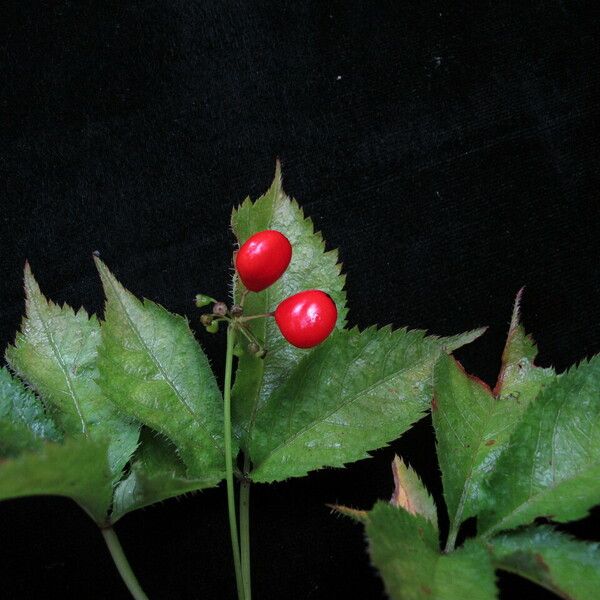
Plant Overview
Known as "Notoginseng" or "Sanchi," this legendary mountain herb has been a cornerstone of traditional medicine for centuries. Often referred to as "More Precious than Gold," it is famed for its incredible ability to support blood circulation and healing. While it shares a lineage with the famous Korean Ginseng, the Panax Pseudoginseng is a distinct, shade-loving treasure that grows slowly and demands the quiet of a forest-like environment to thrive.
🔍 How to Identify
- 🍃 Leaf Structure: It features a distinctive palmate arrangement, where 5 to 7 serrated leaflets radiate from a single point, resembling a delicate green hand.
- 🔴 The Berry Crown: In late summer, the plant produces a striking, spherical cluster (umbel) of tiny, brilliant red berries that sit atop a central stalk like a ruby jewel.
- 🍠 The Rhizome: Beneath the soil, the plant develops a knobby, grayish-brown root that is dense and heavy, which becomes more wrinkled and potent as the plant ages.
🏡 In Your Garden
- ☁️ The Shade Dweller: This plant is naturally adapted to the "dappled gloom" of mountain forests. It will scorch in direct sunlight; in a home garden, it requires 70-80% shade to mimic its ancestral canopy.
- 💧 The Drainage Balance: While it craves a humid environment and moist soil, its precious taproot is highly susceptible to rot. Use a "fluffy" soil mix rich in organic leaf mold and sand to ensure water moves through quickly.
⚠️ Safety & Toxicity
- 🌿 For Humans: Widely used in traditional medicine, but it should be handled with professional guidance. It is generally discouraged for use during pregnancy or by those with specific blood-clotting disorders.
- 🐾 For Pets: Like many plants in the Panax family, it contains saponins. If ingested by curious cats or dogs, it can cause mild stomach upset, drooling, or lethargy.
✨ Fun Fact
In ancient China, this plant was nicknamed "Jin Bu Huan," which translates literally to "Not Exchanged for Gold." This reflects a time when soldiers carried the powdered root into battle, believing its life-saving ability to stop bleeding was more valuable than any amount of treasure.

Detailed Care Instructions
To grow Panax Pseudoginseng (also known as Himalayan Ginseng or Indian Ginseng), follow these steps:
- Climate and soil requirements: Panax Pseudoginseng prefers a cool, temperate climate with a temperature range of 10-25°C (50-77°F). It can grow in partial shade or dappled sunlight. The soil should be well-draining and rich in organic matter.
- Seeds or seedlings: You can start from seeds or purchase young seedlings from a garden center. If using seeds, soak them in warm water for 24 hours before planting to soften the outer shell. This will help with germination.
- Planting: Choose a location with partial shade or dappled sunlight. Prepare the soil by removing any weeds or rocks and amending it with compost or well-rotted manure. Plant the seeds or seedlings at a depth of about ¼ to ½ inch in the soil.
- Watering: Keep the soil consistently moist, but not waterlogged. Water regularly, especially during periods of dry weather. Avoid overwatering, which can lead to root rot.
- Mulching: Apply a layer of organic mulch, such as straw or wood chips, around the base of the plant. This helps retain soil moisture and suppresses weed growth.
- Fertilizing: Feed the plants with a balanced, organic fertilizer once or twice during the growing season. Follow the instructions on the fertilizer package for dosage and application methods.
- Pruning: Trim any dead or damaged leaves or stems as needed. Prune after flowering to maintain a neat shape and encourage bushier growth.
- Harvesting: The roots of Panax Pseudoginseng are typically harvested after three to four years of growth. Dig up the entire root system, wash off the soil, and allow it to dry in a well-ventilated area. Once dry, store the roots in a cool, dark place in an airtight container.
Remember to research local regulations before harvesting, as Panax Pseudoginseng may be protected or regulated in certain areas.
To water this plant, first check the soil's moisture level by sticking your finger into the top inch of soil. If it feels dry, water the plant until the excess water drains out of the bottom of the pot. Wait until the soil dries out again before watering the plant. In general, it's better to underwater this plant than to overwater it, as too much moisture can lead to root rot.
To properly fertilize the plant, start by using a nitrogen-rich fertilizer during the growing season. You can also use a phosphorus and potassium-rich fertilizer to encourage root development. Fertilize the plant every 2 to 3 weeks during the growing season, but stop fertilizing during the winter. Make sure to follow the instructions on the fertilizer label and use the appropriate amount for the size of the plant. Over-fertilization can harm the plant, so it is important not to exceed the recommended amount of fertilizer.
Panax Pseudoginseng is a plant that requires a specific type of soil to thrive. The soil should be well-drained and loamy, with a slightly acidic pH ranging from 5.5 to 6.5. The soil should also be rich in organic matter, such as compost or leaf mold, to provide the plant with the necessary nutrients for growth. Additionally, it is important to ensure that the soil is consistently moist but not waterlogged, as excessive moisture can cause root rot and other plant diseases. Finally, it is recommended to avoid using heavy clay soils, as they can impede root growth and cause stress to the plant.
To propagate this plant, you will need to first obtain root cuttings from the mature plant. Carefully dig out the roots and select the ones that are thick and healthy. Cut them into small sections, around 2-3 inches in length, using a clean, sharp knife.
Prepare a mixture of sterile soil and sand in a pot or container. Bury the cuttings up to half of their length in the soil, making sure the cut ends are facing downwards. Keep the soil moist but not waterlogged, and place the pot in a warm, bright spot that receives indirect sunlight.
After a few weeks, you should start to see new growth emerge from the cuttings. Once the new plants have a few leaves, you can carefully transplant them into individual pots filled with potting soil. Water them regularly and fertilize them occasionally to encourage strong, healthy growth. Keep them in a shaded area for a few weeks to help them acclimate to their new environment before moving to a brighter location. With proper care, your propagated Panax Pseudoginseng plants should thrive and grow into mature specimens.








