Plant Overview
Often called "Green Gold," the American Ginseng is a legendary denizen of the cool, deciduous forests of North America. Its botanical name, Panax, translates to "all-healing" in Greek, reflecting the deep reverence cultures have held for its slow-growing, human-shaped roots for centuries. Finding a mature specimen in the wild is often described by enthusiasts as spotting a hidden forest treasure.
🔍 How to Identify
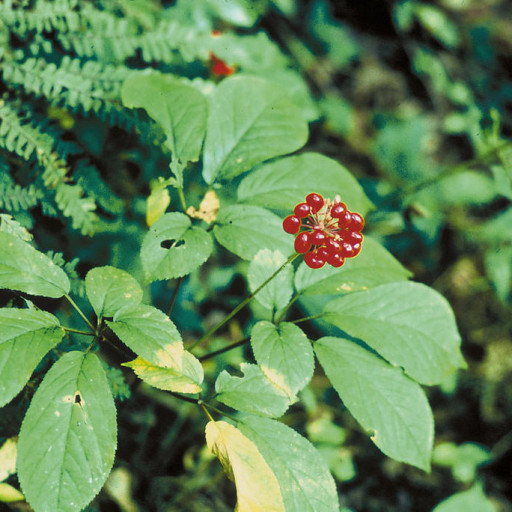
- 🖐️ Leaf Structure: It features distinctive "prongs" (palmate leaves) usually consisting of five serrated leaflets that radiate from a single point like fingers on a hand.
- 🔴 The Berries: In late summer, mature plants produce a small, tight cluster of brilliant, ruby-red berries that sit atop a central stalk.
- 🥕 The Root: Beneath the soil lies a fleshy, tan-colored taproot that often forks and gnarles as it ages, sometimes resembling a tiny, subterranean person.
🏡 In Your Garden
- 🌳 The Shade Requirement: This is not a sun-lover; it craves the "dappled gloom" of a hardwood canopy. It requires nearly 70-80% shade to prevent its delicate leaves from scorching, making it perfect for deep-shade woodland gardens.
- ⏳ Patience is Key: Ginseng is the tortoise of the plant world. It can take 5 to 10 years for a root to reach maturity, and it resents being transplanted because its long taproot is highly sensitive to disturbance.
⚠️ Safety & Toxicity
- 🐾 Pet Sensitivity: While the root is a famous herbal supplement for humans, the saponins within the plant can cause digestive upset, drooling, or lethargy in cats and dogs if chewed.
- 💊 Human Caution: Though prized for its medicinal qualities, it can interact with blood thinners and blood pressure medications. Additionally, wild-harvesting is strictly regulated or illegal in many areas to protect the species from extinction.
✨ Fun Fact
You can tell the age of a Ginseng plant by counting its "prongs" (leaf stalks). A first-year seedling has only one prong with three leaflets, while a mature, five-year-old plant typically boasts three to four prongs with five leaflets each!

Detailed Care Instructions
Ginseng is an especially difficult plant to grow and doing so takes a lot of patience and care. For this reason, many people choose to get their fresh ginseng from expert growers rather than cultivate it themselves.
Can you grow ginseng indoors?
Ginseng is difficult to grow in general, so your best bet is always to grow it outdoors in its natural environment. Generally, ginseng does not do well indoors and will not become established.
How long does it take to grow ginseng?
After a lengthy planting preparation (which can take up to 18 months), ginseng can take between three and four years to reach maturity and be official ready to harvest.
| Color | Greenish White |
| Soil Ph | 6.0-6.5 |
| Humidity | Normal |
| Toxicity | Non-Toxic |
| Soil Type | Rich, Moist, Organic, Good Drainage |
| Bloom Time | Late June To July |
| Difficulty | Medium |
| Plant Type | Deciduous Perennial |
| Mature Size | 8 To 16 Inches Tall |
| Native Area | Deciduous Forests From Midwest To Maine, Appalachian And Ozark Regions, Eastern Canada |
| Sun Exposure | Partial Shade To Shade |
| Hardiness Zones | 3-7 |
To grow Panax Quinquefolius, also known as American ginseng, follow these steps:
- Obtain seeds or transplants: Purchase fresh American ginseng seeds or transplants from a reputable source. Transplants may be easier for beginners as they are more mature.
- Site selection: Choose a suitable site with the right growing conditions. American ginseng prefers shaded areas with well-draining, loamy soil. It thrives in hardwood forests with 70-90% shade.
- Prepare the planting site: Clear away any weeds or competing vegetation. Till the soil to a depth of about 8 inches, breaking up clumps and removing rocks and debris. Ensure the soil is rich in organic matter.
- Planting seeds or transplants: If using seeds, sow them directly in the soil during the fall or early spring. Plant them approximately 1 inch deep and 4-6 inches apart, ensuring they are well-covered with soil. If using transplants, carefully plant them at the same depth they were previously growing, spacing them about 6-8 inches apart.
- Watering: Keep the soil consistently moist, but not overly wet. Use a gentle spray or mist nozzle to prevent disturbing the seeds or transplants. Be cautious not to overwater, as this can lead to root rot.
- Mulching: Apply a layer of organic mulch, such as shredded leaves or straw, around the plants to retain moisture, suppress weed growth, and maintain a cool root environment.
- Shade provision: If your selected site doesn't receive sufficient shade, create shade using shade cloths, trellises, or natural cover like trees.
- Pest control: Monitor for pests such as deer, slugs, or insects that may damage the plants. Use appropriate methods like fences or organic pest control products to protect your ginseng.
- Maintenance: Regularly weed the area surrounding the plants to prevent competition for nutrients and water. Apply organic fertilizers, such as compost or well-rotted manure, annually to provide additional nutrients to the soil.
- Harvesting: American ginseng takes several years (5-8 years) to reach maturity for harvesting. The roots are typically harvested in the fall when they have fully developed. Consult local regulations or experts for proper harvesting techniques.
Remember, growing American ginseng requires patience, as it is a slow-growing plant. Additionally, check if there are any specific regulations or permits required for growing and harvesting American ginseng in your region.

Place in a window with dappled sun or a spot in the middle of a room. Or directly in a window facing west or east.

To water this plant, you should first ensure that the soil is completely dry before watering it again. This can be determined by sticking your finger about an inch deep into the soil to feel for moisture. If it feels dry, it's time to water.
When watering, use room temperature water and pour it directly onto the soil around the plant's root zone, avoiding getting water on the leaves or stem. Ensure that the water penetrates the soil deeply and reaches the root zone, but do not overwater as this can lead to root rot.
In addition to regular watering, it's important to maintain a level of humidity around the plant, which can be achieved by misting the leaves regularly or placing a tray of gravel filled with water near the plant. Finally, it's important to monitor the plant's growth and adjust watering frequency accordingly, as larger plants may require more water than smaller ones.
To fertilize this plant, apply a balanced fertilizer in the early spring before new growth emerges. Use a slow-release formula and follow the manufacturer's instructions for dosage. Be sure to water the plant thoroughly after fertilizing. Avoid fertilizing in the fall or winter to prevent stimulating new growth that may not survive the cold temperatures.
The Panax Quinquefolius plant prefers a well-draining soil that is high in organic matter. The soil should have a slightly acidic pH between 6.0 and 6.5. A soil mix that consists of a combination of loam, sand, and perlite or vermiculite will provide the ideal texture and structure that allows for good root development and water drainage. An ideal ratio for this mix would be 1:1:1 of loam, sand, and perlite or vermiculite. Avoid using heavy, clay soils as they can hold onto water for much longer periods, leading to waterlogged conditions and root rot. It is also important to ensure that the soil is free of any pests or diseases, which can harm the plant. Therefore, sterilize the soil before use by heating it in an oven or microwave, or by using a commercial soil sterilizer.
Panax Quinquefolius is a plant species that can be propagated through various means without using its common names. Here is a detailed guide on how to propagate this plant:
- Division: The plant can be propagated by dividing the rhizomes or underground stems. Use a sharp, sterile knife to cut through the rhizome and make sure each section has at least one bud. Plant each piece in a container or in the ground, making sure to keep the soil consistently moist.
- Seed: Panax Quinquefolius can be propagated by sowing seeds in a well-draining potting mix. The seeds should be lightly covered with soil and kept moist until they germinate. It is important to note that the plant may take several years to reach maturity when propagated from seed.
- Stem cuttings: Another method to propagate this plant is by taking stem cuttings. Cut about 4 to 6 inches of stem and remove the lower leaves. Dip the cutting in rooting hormone and insert it into a well-draining potting mix. Keep the soil moist and the cutting in a warm, humid location until it roots.
- Tissue culture: This method is typically used by commercial growers. It involves taking a tiny piece of the plant tissue and placing it in a sterile growth medium that is specifically designed for plant propagation. The resulting plantlets are then transplanted into soil.
Propagation of Panax Quinquefolius requires patience and careful attention to detail, but it can be a rewarding task. Remember to keep the soil moist, provide adequate lighting, and monitor the plants for signs of pests or disease.








