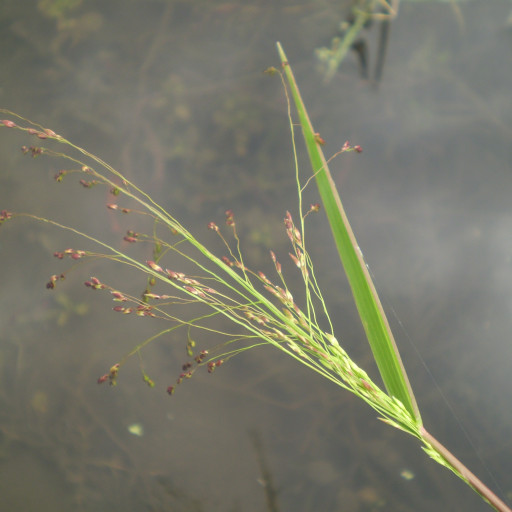
Plant Overview
Commonly known as Fall Panicum or Smooth Witchgrass, this hardy annual is a familiar sight as summer fades into autumn. Known for its "zigzag" stems and delicate, airy seed heads that resemble fireworks, it often pops up in garden beds and farm fields just when other plants are slowing down. While some gardeners view it as a persistent weed, it plays a vital role in the ecosystem by providing a high-energy feast for migrating songbirds and wintering wildlife.
🔍 How to Identify
- 🌾 The Stems: Look for "kinked" or "knee-bent" stems (technically called geniculate) that give the plant a sprawling, zig-zagging appearance as it grows along the ground.
- 🍂 The Seed Heads: It produces large, open, and airy panicles that can reach up to 15 inches long, appearing like a fine, golden mist or lace from a distance.
- 🖐️ Texture: Unlike many of its "hairy" relatives in the Panicum family, the stems and leaf sheaths of Fall Panicum are remarkably smooth and hairless to the touch.
🏡 In Your Garden
- 🌱 The Opportunist: This plant thrives in "disturbed" soil—areas you’ve recently tilled, dug up, or left bare. It loves moisture and is often the first to claim a spot near a leaky garden hose or a low-lying damp patch.
- ✂️ Control Strategy: Because it is an annual, it puts all its energy into seed production. If you want to keep it from taking over your landscape, it is best to pull the plant or prune the seed heads before they turn brown and begin to drop.
⚠️ Safety & Toxicity
- ✅ General Status: Fall Panicum is generally considered non-toxic to humans and common household pets like cats and dogs.
- 🐄 Livestock Caution: In agricultural settings, this grass can occasionally accumulate high levels of nitrates or cause "photosensitization" (skin sensitivity to sun) in grazing animals like horses and sheep, particularly during drought periods.
- 🤧 Allergy Note: Like most members of the grass family, it releases fine pollen during the late summer and fall which may trigger hay fever in sensitive individuals.
✨ Fun Fact
Fall Panicum has a clever travel strategy: once the large seed heads dry out, they can break off entirely and roll across the ground like a miniature tumbleweed, using the wind to scatter thousands of seeds far away from the parent plant!

Detailed Care Instructions
To grow Panicum Dichotomiflorum, also known as fall panicum, follow these steps:
- Select an appropriate location: Choose a spot in your garden that provides full sun to partial shade. Fall panicum can tolerate a variety of soil types, but it prefers fertile, well-draining soil.
- Prepare the soil: Before planting, loosen the soil and remove any weeds or debris. Add compost or well-rotted manure to improve soil fertility if needed.
- Sow the seeds: Fall panicum is typically propagated from seeds. Sow the seeds directly into the garden bed during spring or early summer, once the soil has warmed up. Scatter the seeds evenly and lightly rake them into the soil, ensuring they are covered with a thin layer of soil.
- Water regularly: Keep the soil moist but not waterlogged. Water the seeds regularly to ensure germination. Once established, fall panicum is tolerant of drought conditions, but regular watering will promote healthy growth.
- Thin out seedlings: When the seedlings have grown a few inches tall, thin them out to achieve a spacing of around 6-12 inches between plants. This allows proper air circulation and reduces competition for resources.
- Provide ongoing care: Monitor the plants for pests and diseases. If necessary, apply appropriate organic pest control methods. Additionally, consider using a slow-release fertilizer to provide nutrients throughout the growing season.
- Harvest or prune: In late summer or early fall, when the panicum has reached its full height, it can be harvested by cutting the entire plant close to the ground. Dry the harvested plant material thoroughly before storing or using it as needed.
- Propagation: If you want to propagate more fall panicum plants, you can collect the seeds from mature plants and save them for subsequent planting seasons.
Remember to check your local climate and growing conditions as they may require some adjustments specific to your area.

Place in a bright room that is sun drenched almost all day. Or directly in a south-facing window.

To water this plant, first, identify its growing environment and ensure it has access to adequate sunlight. Then, check the soil to ensure it is dry to the touch before watering, as the plant prefers moderately dry conditions. When watering, use room temperature water to avoid shocking the roots, and ensure the water is distributed evenly throughout the soil. Avoid overwatering, as excess water can lead to root rot and other issues. To prevent fungal growth and disease, avoid watering the foliage directly and instead aim for the base of the plant. Finally, avoid watering during periods of high humidity or rain to prevent waterlogging and promote optimal growth.
To fertilize this plant, apply a balanced fertilizer with equal amounts of nitrogen, phosphorus, and potassium. The fertilizer should be applied in the spring before new growth appears and again in mid-summer. Use a slow-release granular fertilizer and apply according to the manufacturer's instructions. Water the plant well after fertilizing to ensure that the nutrients reach the roots. Avoid over-fertilizing, as this can lead to excessive growth and reduce the plant's overall health.
When selecting soil for this particular plant, it is important to choose a type that provides good drainage to prevent over-watering. The soil should also be nutrient-rich, with a good balance of organic matter. A pH range of 5.5 to 7 is recommended for optimal growth. It is also important to choose a soil that is free from contaminants, such as heavy metals and pesticides, which may harm the plant's growth and development. The texture of the soil should be medium to fine, allowing for adequate root growth and efficient nutrient uptake. Overall, a well-draining, fertile soil is recommended for this plant to thrive and produce healthy growth.
To propagate this plant, you will need to collect seeds from mature plants, or take stem cuttings that have at least two leaf nodes.
To collect seeds, wait for the seed heads to turn brown and brittle. Then, gently shake the seed heads to loosen the seeds, and collect them in a paper bag or envelope. Store the seeds in a cool, dry place until you are ready to plant.
To take stem cuttings, identify a healthy stem that has at least two nodes and no flowers or seeds. Using a sharp, sterilized knife, make a clean cut just below the bottom node and just above the top node. Remove any leaves from the bottom node. Dip the cut end in rooting hormone, and plant the cutting in a container filled with well-draining soil. Water thoroughly and keep the cutting in a warm, bright location until it starts to root and produce new leaves.








