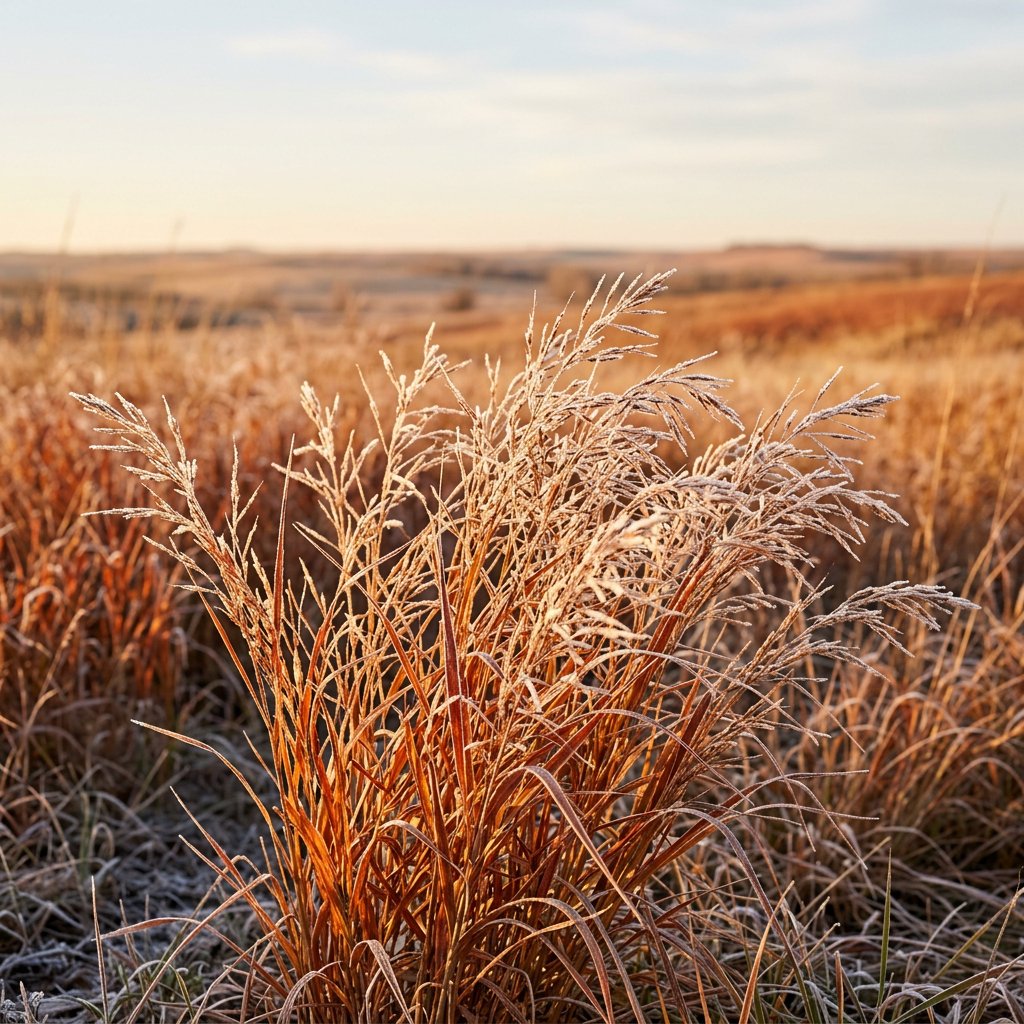
Plant Overview
Known as the backbone of the North American Tallgrass Prairie, Switchgrass is a resilient, clump-forming perennial that brings a sense of wild, airy movement to any landscape. Often called the "Cloud Grass" due to its misty flower panicles, it has transitioned from a humble forage crop to a superstar of modern, sustainable garden design.
🔍 How to Identify
- 🌾 Stately Stature: It grows in stiff, narrow clumps that reach anywhere from 3 to 6 feet tall, maintaining a strictly upright form that won't "flop" even in heavy rain.
- 🍃 Slender Foliage: The leaves are long, flat, and medium-green with a characteristic "hairy" patch where the leaf blade meets the stem (the ligule).
- ☁️ Cloud-like Blooms: In late summer, the plant is topped with finely textured, pinkish-purple seed heads that look like a delicate haze or "smoke" hovering over the foliage.
🏡 In Your Garden
- 🌱 The Deep Root Advantage: Unlike many garden ornaments, Switchgrass features a massive, deep root system. This means it is incredibly drought-tolerant and acts as a "soil anchor," making it the perfect choice for stabilizing slopes or preventing erosion.
- 🍂 Winter Interest: Resist the urge to prune in autumn! The foliage turns a brilliant golden-yellow or deep burgundy in the fall and remains standing throughout winter, providing a beautiful architectural silhouette and vital shelter for songbirds.
- ☀️ Sun Seeker: While it can survive in partial shade, it needs full sun to maintain its "ramrod straight" posture; too much shade or overly rich fertilizer will actually make the stems go limp.
⚠️ Safety & Toxicity
- ✅ Safe for Pets: Switchgrass is generally considered non-toxic to dogs, cats, and humans. It is a popular choice for "wildlife-friendly" backyards.
- 🐴 Livestock Note: While safe for household pets, certain varieties can occasionally cause "photosensitivity" (skin sensitivity to light) in horses or sheep if consumed in massive quantities as their primary forage.
✨ Fun Fact
Switchgrass is a "carbon sequestration" champion. Because its roots reach up to 10 feet deep into the earth, it breathes in carbon dioxide and locks it deep underground, making it one of the most eco-friendly plants you can grow to combat climate change!

Detailed Care Instructions
| Color | Pink-Tinged |
| Soil Ph | Acid, Neutral, Alkaline |
| Invasive | Weed |
| Lighting | Full Sun |
| Soil Type | Sandy, Clay, Moist |
| Bloom Time | Summer |
| Plant Type | Perennial, Buncgrass |
| Mature Size | Up To 6 Ft. Tall |
| Native Area | North America |
| Sun Exposure | Full Sun, Partial Shade |
| Hardiness Zones | 3-9 |
To grow Panicum virgatum, also known as switchgrass, you can follow these steps:
- Choose a suitable location: Panicum virgatum prefers full sun but can tolerate some shade. It grows well in a variety of soil types, including sandy or clay soil, as long as it is well-drained.
- Prepare the soil: Clear the area of any weeds or grasses and loosen the soil to a depth of 8-10 inches. Add organic matter, such as compost or well-rotted manure, to improve soil fertility and moisture retention.
- Planting: Panicum virgatum can be grown from seeds or transplants. If you choose to sow seeds, plant them in early spring when the soil temperature reaches around 60°F (15°C). Sow the seeds thinly, as the plants tend to grow in clumps. If using transplants, space them about 2-3 feet apart.
- Watering: Keep the soil moist but not waterlogged. Panicum virgatum is relatively drought-tolerant once established, but it needs consistent watering during its initial growth period.
- Mulching: Apply a layer of organic mulch, like wood chips or straw, around the plants to suppress weed growth and retain moisture. Keep the mulch a few inches away from the base of the plants to prevent rotting.
- Fertilization: Panicum virgatum is generally low-maintenance and doesn't require heavy fertilization. However, if the soil is poor, you can apply a balanced slow-release fertilizer in early spring.
- Maintenance: Panicum virgatum is relatively low maintenance. Remove any weeds that may compete with the plants for nutrients and water. In the spring, you can cut back the previous year's growth to a few inches above the ground to encourage fresh growth.
- Division: Every few years, you may want to divide Panicum virgatum to maintain its vigor. This is best done in early spring before new growth emerges. Dig up the clump and carefully separate it into smaller sections, ensuring each section has enough roots. Replant the divisions in well-prepared soil.
Remember to check your local gardening regulations and choose a variety of Panicum virgatum that is suited to your climate zone.

Place in a bright room that is sun drenched almost all day. Or directly in a south-facing window.

Water the plant deeply, allowing the water to seep into the soil and reach the roots of the plant. Avoid shallow watering, which can cause the plant to develop a weak root system. Water only when the topsoil is dry to the touch and avoid overwatering, as this can lead to root rot. Use a watering can or sprinkler to distribute water evenly. It is important to note that the watering needs of this plant may vary depending on factors such as soil type, temperature, and humidity.
Apply a well-balanced, slow-release fertilizer in the early spring or late fall. Water deeply after application to ensure the nutrients reach the plant roots. Avoid over-fertilizing, which can lead to excessive growth and weak stems.
For the Panicum Virgatum plant, it is recommended to use a well-draining soil that is rich in organic matter. The ideal soil pH should be between 5.5 and 7.5. Soil that is too compacted or heavy in clay can be amended with sand to improve drainage, while soil that is too sandy may benefit from the addition of compost or peat moss to improve water retention. It is also important to ensure that the chosen soil is free from pests or diseases that could harm the plant.
To propagate this plant, start by collecting seeds from mature plants in the fall when they have finished blooming. The seeds should be stored in a cool, dry place until spring when they can be planted outdoors in a prepared seedbed.
Alternately, you can propagate this plant by dividing mature clumps in the spring before new growth emerges. To do so, carefully dig up the clump and use a sharp knife to divide it into several smaller clumps. Each new clump should have roots and several shoots.
Once you have divided the clumps, plant them in a prepared bed and water regularly until they are established. It is important to ensure the soil stays moist but not waterlogged as the plants establish themselves. With proper care and attention, the new plants should thrive and grow into mature specimens over time.
Common pests of the blackwell switchgrass include Thrips. Make a habit of checking your blackwell switchgrass frequently for pests so that any infestations can be caught and managed early.








