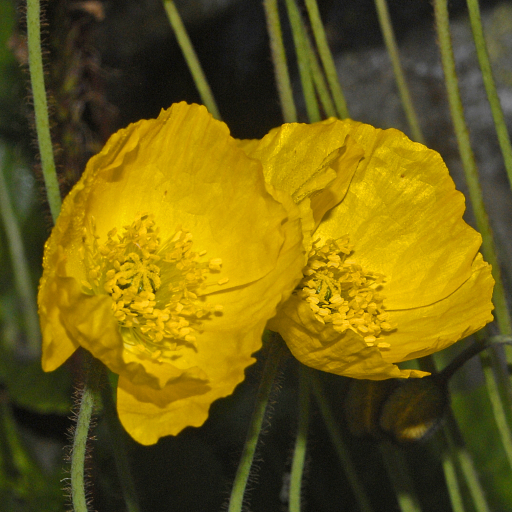
Plant Overview
Known as the Ice Poppy or Arctic Poppy, this resilient beauty looks like it was delicately crafted from colorful tissue paper. While most flowers shy away from the frost, this poppy thrives in subarctic conditions, bringing vibrant splashes of yellow, orange, and white to rocky, windswept landscapes. It is the ultimate "tough-yet-tender" resident of the high north, symbolizing endurance in the face of the cold.
🔍 How to Identify
- 🌸 Petal Texture: Large, four-petaled blooms that appear permanently wrinkled, resembling delicate crepe paper or fine silk.
- 🌿 Foliage: Blue-green leaves that are deeply lobed and covered in fine, bristly hairs, growing in a compact "rosette" close to the ground.
- 🍦 The Stem: Long, slender, leafless stalks that often arch gracefully under the weight of the heavy flower bud before straightening up to bloom.
🏡 In Your Garden
- 🏔️ Cool Climate Specialist: This plant is a "cryophile," meaning it truly loves the cold. If you live in a hot, humid region, it will likely struggle or wilt by mid-summer. It is best treated as a short-lived perennial that thrives in rock gardens or gravelly soil.
- 🚫 The "Do Not Disturb" Rule: Like many poppies, Papaver croceum develops a deep, sensitive taproot. It absolutely hates being moved once it has settled. For the best results, sow seeds directly into their "forever home" rather than trying to transplant seedlings.
⚠️ Safety & Toxicity
- 🐾 Toxicity Level: Mildly to moderately toxic. Like most members of the poppy family, all parts of the plant contain alkaloids that can cause digestive distress if eaten.
- 👶 Keep Away: While the flowers are beautiful, they should be kept out of reach of curious pets and toddlers. Additionally, the milky sap found inside the stems can cause minor skin irritation for some gardeners.
✨ Fun Fact
- ☀️ Solar Tracking: The Ice Poppy is "heliotropic," meaning the flower heads act like tiny satellite dishes, slowly turning to track the sun across the sky. This helps them stay warm and attract pollinators in their chilly native habitats!

Detailed Care Instructions
To grow Papaver croceum, or the saffron-colored poppy, follow these guidelines:
- Choose the right location: Papaver croceum enjoys full sun exposure, so select a spot in your garden that receives at least 6-8 hours of direct sunlight daily.
- Prepare the soil: This plant prefers well-draining soil with a slightly alkaline to neutral pH level. If your soil is heavy or clayey, amend it with organic matter such as compost or well-rotted manure to improve drainage and fertility.
- Sow seeds: You can either start Papaver croceum from seeds or purchase young plants from a nursery. If sowing seeds, do it directly in the garden in late spring or early summer, as they require a period of cold stratification to germinate. Spread the seeds over the prepared soil and lightly cover them with a thin layer of soil or compost.
- Watering: Keep the soil consistently moist but not waterlogged, especially during the germination period. Once established, the plant can tolerate dry spells but will benefit from regular watering during extended droughts or hot summers.
- Mulching: Applying a layer of organic mulch around the base of the plant helps retain soil moisture, suppress weed growth, and regulate soil temperature. Use materials like wood chips, straw, or compost, ensuring you don't pile it up against the stems.
- Maintenance: Papaver croceum is generally low-maintenance. However, it's essential to remove any weeds that compete for nutrients and water. Additionally, deadhead the flowers regularly to promote continuous blooming and prevent self-seeding.
- Fertilization: While not overly demanding, you can feed your Papaver croceum with a balanced, slow-release fertilizer once or twice a season. Alternatively, incorporate some well-balanced organic fertilizer into the top layer of soil around the plant during early spring.
- Pests and diseases: Papaver croceum is generally resistant to most pests and diseases. However, keep an eye out for common issues like aphids or powdery mildew. In case of infestations, treat with organic insecticidal soap or horticultural oil, or use neem oil for control.
Following these steps should help you successfully grow Papaver croceum and enjoy its beautiful saffron-colored blooms.
To water this plant, it is best to ensure that the soil is moist, but not waterlogged. It is recommended to water deeply and thoroughly, until the water reaches the plant's roots. However, it is important to avoid getting water on the leaves and flowers, as this can lead to fungal diseases. Additionally, it is important to avoid overwatering, as this can cause root rot and other problems. It may be helpful to mulch around the plant to help retain moisture in the soil. Finally, it is important to monitor the plant regularly and adjust watering as needed based on weather conditions and soil moisture levels.
To fertilize this plant, you should use a balanced fertilizer with equal amounts of nitrogen, phosphorus, and potassium. Apply the fertilizer in the spring before the growing season begins and again in the summer after the plant has flowered. Be sure to follow the instructions on the fertilizer packaging and avoid over-fertilizing, which can damage the plant.
Papaver Croceum plant requires well-drained soil with a pH level of 6.0 to 7.5. The soil should be rich in nutrients and organic matter to support the growth of the plant. The ideal soil composition for this plant is sandy loam, with a light texture that allows for good water retention and drainage. The soil structure should be loose and friable to allow the roots to spread easily and absorb nutrients efficiently. It is important to avoid soils that are too heavy or compacted as they may restrict root growth and cause waterlogging. Adding compost, organic matter, or fertilizer to the soil can help provide the plant with the necessary nutrients for optimal growth. Additionally, supplemental watering may be required during dry periods to prevent drought stress and support healthy growth.
Papaver Croceum is a perennial plant native to Europe and Asia, and is commonly grown for its striking flowers. To propagate this plant, one can either divide existing plants or grow new ones from seeds.
To divide an existing plant, wait until the plant has finished flowering and the foliage has died back in the fall. Use a clean, sharp knife to divide the clumps of tubers, making sure each division has several buds. Replant the divisions immediately and water thoroughly.
Another way to propagate Papaver Croceum is by collecting and sowing seeds. Once the flowers have faded, seeds can be collected from the seed pods. Spread the seeds on a tray to dry, and store them in an airtight container until ready for planting. In the early spring, sow the seeds in well-draining soil in full sun. Cover the seeds with a light layer of soil and keep the soil moist until they germinate.
Whether propagating by division or from seed, Papaver Croceum requires full sun, well-drained soil, and minimal watering. With proper care, this beautiful plant can add vibrant color to any garden or landscape.








