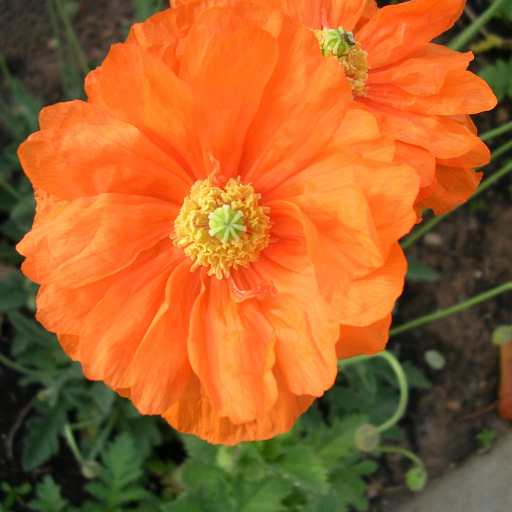
Plant Overview
Known affectionately as the Spanish Poppy, this delicate perennial is like a sunset captured in silk. Native to the sun-drenched rocky crevices of Southern Spain and Morocco, it brings a wild, airy elegance to any landscape. Unlike its more aggressive cousins, it dances on thin, wiry stems, making it a favorite for gardeners who love a "cottage-core" or meadow-like aesthetic.
🔍 How to Identify
- 🌸 Apricot Blooms: The flowers are a distinct soft orange or "sherbet" color, featuring four tissue-paper-thin petals that look slightly rumpled or crinkled.
- 🌿 Feathery Foliage: The leaves form a low, attractive mound of grayish-green, deeply lobed foliage that remains close to the ground.
- 📏 Wiry Stems: Each bloom sits atop a tall, exceptionally slender, and leafless stalk that sways gracefully even in the slightest breeze.
🏡 In Your Garden
- 🪨 The Rock Breaker: Its name literally translates to "rock-breaker," hinting at its preference for gritty, well-draining soil. If your garden has heavy clay, this poppy will likely struggle with "wet feet" and root rot during the winter.
- 🌱 The Gentle Wanderer: While individual plants are relatively short-lived perennials, they are excellent self-seeders. They won't aggressively take over, but they will "pop up" in unexpected, charming cracks and crevices throughout your garden next season.
⚠️ Safety & Toxicity
- 🐾 Mildly Toxic: Like most members of the poppy family, the milky sap contains alkaloids that can be harmful if ingested in large quantities.
- 👶 Watch the Little Ones: It is best to keep this plant out of reach of curious pets or small children. Ingestion can lead to digestive upset, nausea, or lethargy.
✨ Fun Fact
📜 Etymological Roots: The species name rupifragum comes from the Latin words rupes (rock) and frango (to break). This refers to the plant's incredible ability to thrive in the harshest limestone cliff faces, where its roots find purchase in the tiniest stony fissures.

Detailed Care Instructions
To grow Papaver Rupifragum, also known as the Spanish Poppy or Atlas Poppy, follow these steps:
- Choose the right location: Papaver Rupifragum prefers full sun but can tolerate partial shade. Select a location that receives at least 6-8 hours of direct sunlight per day.
- Prepare the soil: The plant prefers well-draining soil. Amend the soil with organic matter, such as compost or aged manure, to improve its fertility and drainage.
- Sow the seeds: Papaver Rupifragum can be grown from seeds. Sow the seeds directly into well-prepared soil in early spring or late summer/early fall. Sprinkle the seeds over the soil surface and lightly press them into the soil, ensuring good seed-to-soil contact.
- Watering: Keep the soil consistently moist but not overly wet. Water the plant regularly, especially during dry periods. Ensure proper drainage to prevent waterlogging, which may lead to root rot.
- Thin out seedlings: Once the seedlings emerge and grow a few inches tall, thin them out to provide enough space for each plant to grow adequately. Space them about 6-12 inches apart, depending on the recommended spacing for the specific variety.
- Mulch: Apply a layer of organic mulch, such as straw or wood chips, around the base of the plants. This helps conserve soil moisture, suppress weed growth, and protect the roots from extreme temperatures.
- Fertilizing: Papaver Rupifragum generally does not require heavy feeding. However, you can apply a balanced organic fertilizer in early spring or provide a light application of compost, if desired. Always follow the specific fertilizer instructions for the best results.
- Pests and diseases: Monitor the plant for common pests, such as aphids or slugs, and treat them promptly using organic pest control methods. Proper spacing, good air circulation, and avoiding overhead watering can help prevent diseases like powdery mildew.
- Blooming and deadheading: Papaver Rupifragum typically flowers from early summer to mid-fall, producing bright orange or red-orange flowers with dark centers. Deadhead the spent flowers to promote continuous blooming.
- Winter care: Papaver Rupifragum is a perennial plant, but it may die back in colder regions during winter. Apply a layer of mulch around the base of the plant to protect the roots from freezing temperatures.
By following these steps, you can successfully grow Papaver Rupifragum and enjoy its beautiful blooms.

Place in a bright room that is sun drenched almost all day. Or directly in a south-facing window.

To water this plant, it is important to make sure that the soil is moist but not waterlogged. This can be achieved by checking the soil regularly and watering deeply when the top inch or so feels dry to the touch. It is important to water the soil directly at the base of the plant, avoid getting the foliage wet. The plant should be watered in the early morning or late evening to avoid evaporation and ensure that the soil stays moist throughout the day. Additionally, the plant should be watered less frequently during periods of cooler weather or if it is planted in a shady area.
To fertilize this plant, apply a balanced fertilizer once or twice a month during the growing season. Use a fertilizer with an NPK ratio of 10-10-10 or 12-12-12, applying at a rate of 1 tablespoon per square foot. Water the plant well before and after fertilizing. Avoid over-fertilizing, as this can lead to excessive foliage growth at the expense of flowers.
The ideal soil for a certain plant species that belongs to the Papaver genus is generally well-draining and fertile. It is recommended to use a soil mixture that is light and sandy to loamy in texture with a neutral to alkaline pH range. The soil should also have good water retention capacity but still allow excess water to drain properly. Organic matter can be added to the soil to improve its fertility and nutrient content. The plant prefers a position in full sun or partial shade and requires regular watering during the growing period. Further, proper mulching of the soil can help to retain moisture and suppress weeds. Careful plant spacing is also necessary to provide enough air circulation and prevent disease outbreaks. This plant species is relatively low-maintenance once established and can thrive in a variety of soil types and conditions.
To propagate the plant in question, you should first select healthy and robust parent plants that are free from any pests or diseases. Next, you will need to follow these steps:
- Cut off healthy stems of the parent plant using a sharp and sterile gardening scissors or knife. Make sure to choose stems that are at least 6 inches long with 2 to 3 nodes or leaves.
- Remove all the lower leaves carefully and make a clean-cut at a 45-degree angle at the bottom of the cutting.
- Dip the cut end of the cutting into a rooting hormone powder or gel to encourage root growth.
- Fill a small container, preferably 4 to 6 inches in diameter, with well-draining soil mix. You can use a combination of vermiculite, perlite, and sand to create a light and aerated soil mix.
- Water the soil mix and let it drain thoroughly before planting the cuttings.
- Make a small hole in the soil mixture and insert the cutting gently. Make sure the leaf nodes are below the soil level and the stem is planted upright.
- Firm the soil around the cutting and water gently. Cover the container with a plastic bag or glass jar to create a mini greenhouse effect and keep the cutting in a warm and bright place.
- Check the cuttings frequently and water as needed to keep the soil slightly moist but not too wet.
- After 2 to 4 weeks, you should start to see new growth and roots forming at the base of the cutting. Once the roots become well-established, you can transplant the new plants into larger pots or directly into the garden.
Overall, propagating Papaver Rupifragum plant from stem cuttings is an easy and effective way to create new plants that will be genetically identical to the parent plant.








