Plant Overview
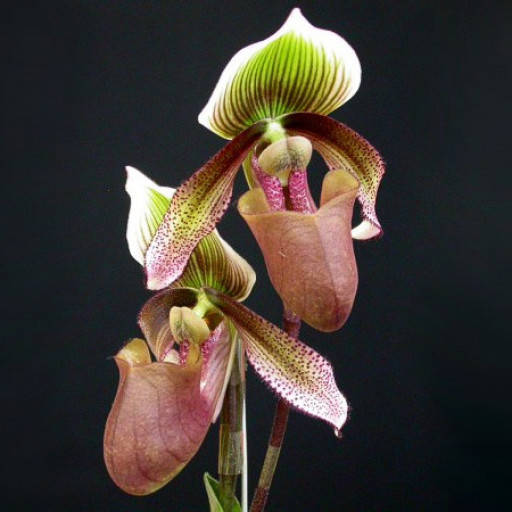
Commonly called the "Lady’s Slipper Orchid," these exotic beauties look like they stepped straight out of a Victorian naturalist’s sketchbook. Native to the humid forest floors of Southeast Asia, they are world-renowned for their unique pouch-shaped flowers and striking, often marbled foliage. Unlike the common Phalaenopsis orchids found in grocery stores, these are terrestrial plants that carry an air of prehistoric mystery.
🔍 How to Identify
- 👡 The Slipper Pouch: The most iconic feature is the modified lower petal (labellum) which forms a deep, hollow pouch designed to look like a slipper.
- 🎭 The Dorsal Sepal: Above the pouch sits a large, often fan-like petal (the dorsal sepal) that frequently displays bold stripes, spots, or "flames" of color.
- 🍃 Mottled Foliage: Many species feature stunning "tessellated" leaves, patterned with dark and light green patches that look almost like camouflage or snakeskin.
🏡 In Your Garden
- 💧 The Moisture Balance: Unlike many orchids that grow on trees, "Paphs" lack pseudobulbs (water-storage organs). This means they hate drying out completely; they prefer "wet feet" more than their epiphytic cousins.
- ☁️ Low Light Lovers: These are the "vampires" of the orchid world. They thrive in lower light levels, making them perfect for north-facing windows or shaded corners where other flowering plants might struggle.
- 🪴 Specialized Soil: They prefer a "sweet" (less acidic) environment. Many growers add a bit of crushed limestone or oyster shells to their bark mix to keep the plant happy and mimic its natural limestone cliff habitats.
⚠️ Safety & Toxicity
- ✅ Pet Safe: Paphiopedilum orchids are generally considered non-toxic to cats, dogs, and horses.
- 🧴 Skin Irritation: While not poisonous, the sap or the tiny hairs on the leaves can cause mild skin irritation (contact dermatitis) in sensitive individuals. It is always best to wash your hands after pruning or repotting.
✨ Fun Fact
The "slipper" is actually a clever trap! When an insect falls into the pouch, the walls are too slippery to climb. The only way out is through a narrow back exit that forces the bug to squeeze past the plant's pollen, effectively "gluing" a pollen packet to the insect's back for transport to the next flower.

Detailed Care Instructions
| Humidity | Normal |
| Lighting | Part Sun |
| Difficulty | Medium |
| Temperature | 16°C - 23°C |
| Hardiness Zones | 9A - 11B |
To grow a Paphiopedilum plant, also known as a slipper orchid, you need to provide the following conditions:
- Light: Place the plant in bright, indirect light. Avoid direct sunlight as it can burn the leaves.
- Temperature: Paphiopedilum orchids prefer a temperature range of 60-75 °F (15-24 °C) during the day and 55-65 °F (13-18 °C) at night. Avoid extreme temperature fluctuations.
- Humidity: These orchids thrive in high humidity environments. Aim for around 50-70% relative humidity. Placing the pot on a humidity tray or using a humidifier can help increase humidity levels.
- Watering: Water the plant when the potting mix feels slightly dry. Paphiopedilums do not like to dry out completely but also must not be overwatered. Ensure proper drainage to prevent waterlogging.
- Potting mix: Use an orchid-specific potting mix that provides good drainage. A mixture of bark, sphagnum moss, charcoal, and perlite is often suitable.
- Fertilizer: Feed the plant with diluted orchid fertilizer once a month during the growing season (spring and summer). Follow the instructions on the fertilizer packaging for proper dilution rates.
- Air circulation: Good air movement is important to prevent the growth of fungi and maintain a healthy plant. Use a small fan or ensure that the plant is not placed in a stagnant air environment.
- Repotting: Paphiopedilums typically require repotting every 1-2 years or when the potting mix breaks down and becomes decomposed. Repotting should be done after the plant has finished flowering.
Remember, Paphiopedilum orchids are sensitive to overwatering and low light conditions, so ensure you provide the right amount of water and appropriate lighting. With proper care, the Paphiopedilum orchid can thrive and produce beautiful blooms.

Place in a window with dappled sun or a spot in the middle of a room. Or directly in a window facing west or east.

Paphiopedilum is a type of orchid that requires regular watering to thrive. The best way to water this plant is to use a watering can with a long spout. The water should be room temperature or slightly warmer, but not hot.
Begin by pouring water slowly around the base of the plant, taking care not to get any water on the leaves or flowers. Allow the water to soak into the soil for a few minutes. If the pot has drainage holes, let excess water run through and discard it.
It is important to avoid overwatering as this can lead to root rot. A good rule of thumb is to water the plant about once a week, but the frequency may vary depending on the growing conditions. In general, the soil should remain evenly moist but not waterlogged.
During the growing season, it may be necessary to water more often as the plant may require more moisture. On the other hand, during the dormant season, watering should be reduced to prevent the plant from getting too wet.
In addition to regular watering, Paphiopedilum can benefit from occasional misting to increase humidity around the plant. This can be done using a spray bottle filled with water.
The best way to fertilize this type of plant is to use a balanced fertilizer, with equal or similar amounts of nitrogen, phosphorus, and potassium. It's essential to dilute the fertilizer to half the recommended strength, as Paphiopedilum plants are relatively sensitive to high levels of nutrients. Depending on the season, fertilize once a month or every other month. During active growth periods, you can increase the frequency of fertilization to every three weeks. Be sure to water the plant thoroughly before adding fertilizer to avoid root burn. Finally,, never fertilize a dry plant, as it can cause damage to the roots.
Paphiopedilum plants are typically grown in a well-draining soil mix that is rich in organic matter. The soil should be slightly acidic with a pH between 5.5 and 6.5. A recommended soil mix for Paphiopedilum includes a combination of sphagnum moss, perlite, and bark chips. The sphagnum moss helps to retain moisture, while the perlite and bark chips provide good drainage and aeration. It is important to ensure that the soil is damp but not waterlogged, as Paphiopedilum plants can be susceptible to root rot. Adding a slow-release fertilizer to the soil mix can also be beneficial for maintaining healthy growth and blooming.
Propagation of this plant can be accomplished by dividing the pseudobulbs. These pseudobulbs should be removed from the parent plant, with care taken not to damage the roots. Each division should have at least one healthy new growth and a few healthy roots. The divisions should be potted up into fresh soil mix, watered, and placed in a bright, warm, and humid location. Water the young plants regularly and provide fertilizer as needed. With proper care and attention, the new plants should begin to grow and thrive in their new pots.
Common pests of the ladyslipper include Scale insect, mealybugs, spider mites, thrips. Make a habit of checking your ladyslipper frequently for pests so that any infestations can be caught and managed early.







