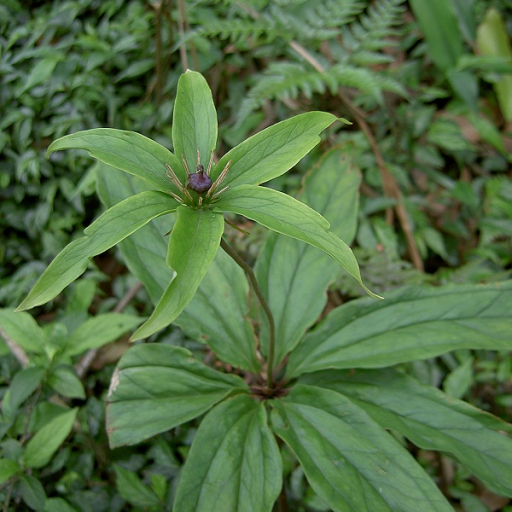
Plant Overview
Known as the Himalayan Paris or the Love Lily, this enigmatic woodland resident looks like something plucked from a dark fairy tale. Its name doesn't refer to the French capital, but rather the Greek prince Paris, reflecting the plant's legendary and symmetrical beauty. Highly prized in the Himalayas for its rare medicinal properties, it remains a mysterious, slow-growing gem for collectors of unusual shade plants.
🔍 How to Identify
- 🍃 The Leaf Whorl: Instead of growing along the stem, the leaves form a perfect, umbrella-like circle (whorl) at the very top. Depending on the variety, you might count anywhere from 5 to 10 lance-shaped leaves.
- 🕷️ Spider-like Blooms: The "flower" is a structural masterpiece. It features narrow, thread-like yellow petals that look like spider legs, surrounding a thick, dark purple or green ovary.
- 🔴 Scarlet Seed Pod: In autumn, the center of the bloom develops into a striking, bright red berry-like capsule that eventually splits open to reveal juicy seeds.
🏡 In Your Garden
- 🌳 The Woodland Mimic: This plant thrives in "dappled shade," mimicking its natural habitat under the forest canopy. It is the perfect companion for ferns and hostas in cool, north-facing corners.
- 🍂 Soil Nuance: It is a "heavy feeder" that loves leaf mold and rich, organic soil. Because it grows from a delicate rhizome, it hates being moved—transplanting it often results in the plant "sulking" and refusing to grow for a season.
- ⏳ Slow Motion Growth: Be patient! Paris polyphylla is an advocate for "slow living." It can take several years to establish itself and flower, but the architectural payoff is worth the wait.
⚠️ Safety & Toxicity
- 🚫 Toxic Status: All parts of the plant are considered toxic to humans and animals.
- 🤢 The Risk: It contains paridins and saponins. If ingested, it can cause intense abdominal pain, vomiting, and diarrhea. The bright red berries are particularly tempting to children and should be treated with extreme caution.
- 🐾 Pet Safety: Keep this plant out of reach of dogs and cats, as chewing on the rhizome or leaves can lead to severe gastrointestinal distress.
✨ Fun Fact
- Paris polyphylla is a "medical superstar" in Traditional Chinese Medicine. It is a key ingredient in Yunnan Baiyao, a famous powder used to stop bleeding and heal wounds. Due to its high value and slow growth, it is currently protected in many regions to prevent over-harvesting in the wild.

Detailed Care Instructions
To grow Paris Polyphylla, also known as the Himalayan mayapple or Upright Indian Sorrel, you can follow these steps:
- Choose the right location: Paris Polyphylla prefers moist, shady areas with well-draining soil. Partial shade or dappled sunlight is ideal. Avoid areas with direct sunlight or dry soil.
- Prepare the soil: The soil should be rich in organic matter, loose, and well-draining. If your soil is heavy clay or sandy, you may need to amend it with compost or well-rotted organic matter to improve its structure and fertility.
- Planting: Dig a hole slightly larger than the root ball of the plant. Place the plant in the hole, making sure the crown (where the stem meets the roots) is level with the soil surface. Backfill the hole with soil, gently firming it around the plant.
- Watering: Keep the soil consistently moist, but not waterlogged. Water deeply and regularly, especially during dry periods. Mulching with organic matter can help conserve moisture and suppress weeds.
- Fertilizer: Apply a balanced, slow-release fertilizer in spring to promote healthy growth. Follow the manufacturer's instructions for the appropriate dosage.
- Maintenance: Remove any weeds that may compete with the plant for nutrients and water. Keep an eye out for pests and diseases and take appropriate measures to control them if necessary. Regularly monitor soil moisture and water as needed.
- Propagation: Paris Polyphylla can be propagated by division. In early spring or early fall, divide mature clumps into smaller sections, ensuring each section has several stems and a healthy root system. Replant the divisions as individual plants.
- Winter care: In regions with cold winters, provide a layer of mulch around the plant to protect its roots from freezing temperatures. Remove the mulch in spring when the risk of frost has passed.
Remember that Paris Polyphylla plants may take several years to establish and grow to maturity. Be patient and provide the necessary care and conditions for successful growth.

Place in a window with dappled sun or a spot in the middle of a room. Or directly in a window facing west or east.

Paris polyphylla is a shade-loving perennial plant native to cool, moist forests in Asia. To water this plant properly, you should follow these guidelines:
1. Firstly, observe the soil moisture level before watering. Press your finger about an inch deep into the soil near the base of the plant. If the soil feels dry at that depth, it's time to water.
2. Use a watering can or a gentle hose attachment with a soft spray nozzle to water the plant. The goal is to provide a slow, even watering rather than a heavy stream that could overpower the delicate root system.
3. Water the plant at its base, rather than spraying the leaves. This method helps to prevent moisture-related diseases and fungal infections.
4. Pour water slowly around the base of the plant until you see the excess water start to flow out of the drainage holes in the pot or onto the soil if it's planted in the ground. This ensures that the water penetrates the roots and reaches the deeper soil layers.
5. Allow the soil to drain thoroughly after watering. Empty any excess water from the saucer or the drainage tray to avoid waterlogging, which can lead to root rot.
6. During hot and dry periods, water the Paris polyphylla plant more frequently to ensure that the soil remains consistently moist. However, it's important to avoid overwatering, as too much water can suffocate the roots.
7. Pay attention to the environment around the plant as well. If the air is dry, consider misting the foliage occasionally to increase humidity levels.
8. Regularly monitor the plant's overall health and adjust the watering schedule as needed. Wilting or yellowing leaves are often indicators of inadequate watering, while yellow or mushy leaves may indicate overwatering.
Remember, although Paris polyphylla requires consistent moisture, it is important to strike a balance and avoid waterlogged conditions. Monitoring the soil moisture level, providing slow and even watering, and adjusting the watering schedule based on environmental conditions and the plant's needs will help keep your Paris polyphylla healthy and thriving.
Sure, here are some instructions for fertilizing the Paris Polyphylla plant:
- Use a balanced, slow-release fertilizer with an NPK ratio of 10-10-10 or 14-14-14.
- Apply the fertilizer in early spring, just as new growth begins to emerge.
- Prepare a diluted fertilizer solution by following the package instructions. Generally, a 1:2 ratio of fertilizer to water is recommended.
- Water the soil around the plant thoroughly before applying the fertilizer solution.
- Pour the diluted fertilizer solution evenly over the soil, avoiding direct contact with the plant's leaves or stems.
- Use a watering can or a hose with a gentle sprayer attachment to avoid excess pressure that may damage the plant.
- After application, water the soil again to help the fertilizer soak in and prevent any potential burn to the roots.
- Repeat the fertilization process every 4-6 weeks during the growing season. Adjust the frequency based on the fertilizer package instructions and the plant's response.
- Monitor the plant for any signs of fertilizer burn or nutrient deficiencies. If necessary, adjust the fertilizer application or consult a gardening expert for further guidance.
- Remember to always follow the instructions provided by the fertilizer manufacturer and apply fertilizers according to the specific needs of your Paris Polyphylla plant.
Paris Polyphylla is a perennial plant that belongs to the Trilliaceae family. When it comes to selecting the appropriate soil for this plant, certain considerations should be kept in mind.
- Soil Type: Paris Polyphylla thrives in moist, well-drained soil. It prefers a loamy or sandy soil texture that allows for good drainage while retaining enough moisture to keep the roots hydrated. Avoid heavy clay soils that can become waterlogged.
- pH Level: The ideal soil pH for Paris Polyphylla ranges between slightly acidic to neutral, ideally around 6.0 to 7.0. Consider conducting a soil test to determine the pH level of your soil and make necessary amendments if required.
- Organic Matter: Adding organic matter like well-aged compost or peat moss to the soil before planting can help improve its structure, drainage, and moisture-retaining capacity. Organic matter also contributes essential nutrients and promotes healthy microbial activity.
- Moisture Requirements: Paris Polyphylla prefers consistently moist soil, as it naturally occurs in cool and humid environments. To ensure adequate moisture retention, consider incorporating organic matter and installing a mulch layer around the base of the plant. This will help conserve soil moisture and prevent weed growth.
- Drainage: Although Paris Polyphylla likes moist soil, it is essential to ensure proper drainage to prevent waterlogging, which can lead to root rot. If your soil has poor drainage, consider amending it with materials like sand or perlite to improve the drainage capability.
- Sunlight Requirements: Paris Polyphylla typically prefers partial to full shade, making it an excellent choice for woodland gardens or shaded areas. While soil selection isn't directly related to sunlight requirements, it's essential to consider the overall growing conditions suitable for this plant.
By taking these factors into account and providing a suitable growing environment, you can ensure the optimal growth and health of Paris Polyphylla.
Paris polyphylla is a perennial herbaceous plant that can be propagated through different means like division, seed germination, or tissue culture.
- Division: The plant can be divided to propagate. Dig up the mature plant and carefully separate the rhizomes or tuberous roots into smaller sections, ensuring each division has at least one healthy shoot or bud. Replant the divisions into well-draining soil, keeping them at the same depth as they were originally. Provide regular watering and adequate shade until the divisions establish themselves.
- Seed Germination: Collect mature seeds from the plant when the fruits turn brown and begin to split open. Soak the seeds in water for 24 hours to help with germination. Prepare a well-draining soil mix and sow the seeds evenly on the surface, lightly pressing them down. Cover the seeds with a thin layer of soil or vermiculite. Keep the soil evenly moist and maintain a warm temperature around 70-75°F (21-24°C). Germination can take several weeks to several months, so be patient. Once the seedlings develop a few true leaves, transplant them into individual pots or a designated garden area.
- Tissue Culture: Tissue culture is a more advanced propagation method that requires specialized equipment and knowledge. It involves culturing tiny tissue samples in a laboratory setting to produce new plants. This method is often used for mass propagation or when other propagation methods are not feasible. It may be best to seek assistance from a professional horticulturist or plant nursery if you wish to propagate Paris polyphylla through tissue culture.
Regardless of the propagation method you choose, it's important to ensure that the new plants receive adequate care, including proper watering, light conditions, and soil quality. Observation and regular monitoring will help you address any issues that may arise as the propagated plants establish themselves.








