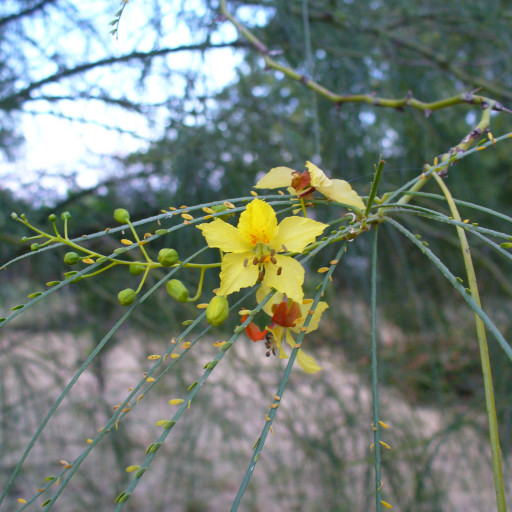
Plant Overview
Often called the Jerusalem Thorn or Mexican Palo Verde, this desert beauty is a master of survival in the harshest environments. Despite its delicate, weeping appearance, it is incredibly hardy, often lighting up arid landscapes with a golden haze of fragrant blooms. It is a favorite for xeriscaping, providing "dappled" shade that allows light to reach plants growing beneath its airy canopy.
🔍 How to Identify
- 🌿 The Foliage: Look for long, flat, ribbon-like leaf stalks (rachises) that can reach up to 12 inches long, lined with tiny, oval leaflets that often drop during dry spells to conserve moisture.
- 🟢 The Bark: The smooth, lime-green bark is a standout feature; it stays green even on older branches, allowing the tree to continue growing even when it has no leaves.
- 🌼 The Flowers: Fragrant yellow blossoms appear in loose clusters. If you look closely, the topmost petal (the "banner") often turns from bright yellow to a deep orange or spotted red as the flower ages.
🏡 In Your Garden
- ☀️ Sun Seeker: This plant craves the most intense sunlight you can offer. It is a "pioneer species," meaning it is designed to thrive in open, harsh spaces and won't mind poor, sandy, or rocky soil.
- 💧 Water Strategy: While it is extremely drought-tolerant once established, it develops a deep taproot that makes it very difficult to transplant. Choose its "forever home" carefully and ensure the soil drains rapidly to prevent root rot.
⚠️ Safety & Toxicity
- 🌵 Physical Warning: While the plant is not considered toxic to humans or pets if touched or accidentally nibbled, it is armed with short, sharp spines at the base of the leaves.
- 🐕 Safe Placement: Avoid planting it near high-traffic walkways or play areas. The thorns are small but sharp enough to cause painful scratches to curious pets or wandering toddlers.
✨ Fun Fact
The green bark of the Parkinsonia aculeata is a clever survival hack! When the tree drops its leaves during a severe drought to save water, the bark actually takes over the process of photosynthesis, feeding the tree until the rains return.

Detailed Care Instructions
| Humidity | Normal |
| Lighting | Part Sun |
| Toxicity | Poisonous |
| Difficulty | Easy |
| Hibernation | Cold Period |
| Temperature | 24°C - 32°C |
| Hardiness Zones | 9 - 11 |
To grow Parkinsonia aculeata, also known as the Jerusalem thorn or Mexican paloverde, you can follow these steps:
- Climate: Ensure that you are in a suitable climate for the plant. Parkinsonia aculeata is native to Mexico and thrives in dry and warm regions, such as arid and desert areas.
- Soil: The plant prefers well-draining soil. If your soil is heavy or clay-like, amend it with sand or organic matter to improve drainage.
- Sunlight: Parkinsonia aculeata requires full sun exposure to thrive. Make sure the plant receives at least 6-8 hours of direct sunlight each day.
- Watering: Initially, you will need to water the plant regularly to help establish its roots. Afterward, it is drought-tolerant and requires little watering. Allow the soil to dry out between waterings, as overwatering can cause root rot.
- Pruning: The Jerusalem thorn can grow as a small tree or large shrub. Regular pruning helps maintain its shape and remove any dead or diseased parts. Pruning also encourages better growth and flowering.
- Propagation: Parkinsonia aculeata can be propagated from seeds. Collect seeds from fully matured pods and plant them in well-draining soil. Keep the soil moist until the seeds germinate, which typically takes around two weeks.
- Fertilizer: Parkinsonia aculeata is quite hardy and does not require regular fertilization. However, you can apply a balanced fertilizer in early spring to boost growth if needed. Be cautious not to overfertilize, as it can lead to excessive leaf growth rather than flowering.
- Pests and diseases: Jerusalem thorn is generally pest and disease resistant. However, it can occasionally face issues such as aphids, mites, or root rot. Monitor the plant regularly, inspect the leaves for any signs of infestation, and take appropriate measures if needed.
Remember to check local regulations before planting, as Parkinsonia aculeata might be considered invasive in some regions.

Place in a bright room that is sun drenched almost all day. Or directly in a south-facing window.

The plant in question requires regular watering to thrive. It is important to monitor the soil moisture level to ensure the plant is not over or underwatered. When watering, it is recommended to thoroughly saturate the soil. However, it is essential to allow the soil to dry out before watering again, as this plant cannot tolerate constant moisture. It is also crucial to avoid getting water on the leaves as this can result in fungal disease. To prevent this, it is recommended to water at the base of the plant using a watering can or hose with a gentle flow.
To fertilize this plant, use a balanced fertilizer with equal parts nitrogen, phosphorus, and potassium. Apply the fertilizer once a month during the growing season, which is typically spring and summer. Before applying the fertilizer, water the plant thoroughly to avoid burning the roots. Follow the recommended dosage on the fertilizer package based on the size of the plant. Do not fertilize during the dormant season, which is typically fall and winter.
The ideal soil for this plant is well drained, loamy soil that is rich in nutrients and organic matter. It prefers a slightly acidic soil with a pH range of 6.5 to 7.5. The soil should also be able to hold moisture, but not excessively, as the plant does not tolerate waterlogged conditions. Adding sand or perlite to the soil mix can improve drainage. Additionally, the plant prefers a spot with full sun exposure and protection from strong winds.
To propagate this plant, you will need to collect ripe seeds from the mother plant. The seed pods should be allowed to mature and dry out completely before harvesting. Once the seeds have been collected, they should be cleaned and stored in a cool, dry place until you are ready to plant them.
To sow the seeds, you will need to prepare a suitable growing medium, such as a mixture of sand and soil. The seeds should be sown about 1/4 inch deep and covered with a thin layer of soil. Water the seeds regularly to keep the soil moist.
With proper care and attention, the seeds should begin to germinate within two to three weeks. Once the seedlings have reached a height of about four to six inches, they can be transplanted into individual pots or into a larger planting area.
When transplanting the seedlings, be sure to handle them carefully to avoid damaging the delicate roots. Water the plants regularly and provide them with plenty of sunlight and nutrients to encourage healthy growth.
Over time, the Parkinsonia aculeata plant will produce vibrant yellow blooms and develop a beautiful, bushy canopy of foliage. With proper care, this plant can bring beauty and joy to your garden for many years to come.
Common pests of the palo verde include Scale insect, mealybugs, spider mites, aphids. Make a habit of checking your palo verde frequently for pests so that any infestations can be caught and managed early.








