Plant Overview
Often called the Kidneyleaf Grass of Parnassus, this delicate wildflower is a true treasure of the Appalachian wetlands. Despite its name, it isn’t a grass at all, but a sophisticated bog-dweller that looks like it stepped out of a Victorian botanical illustration. According to ancient lore, these flowers were said to spring up on Mount Parnassus, the home of the Muses, making them a symbol of grace and poetic inspiration.
🔍 How to Identify
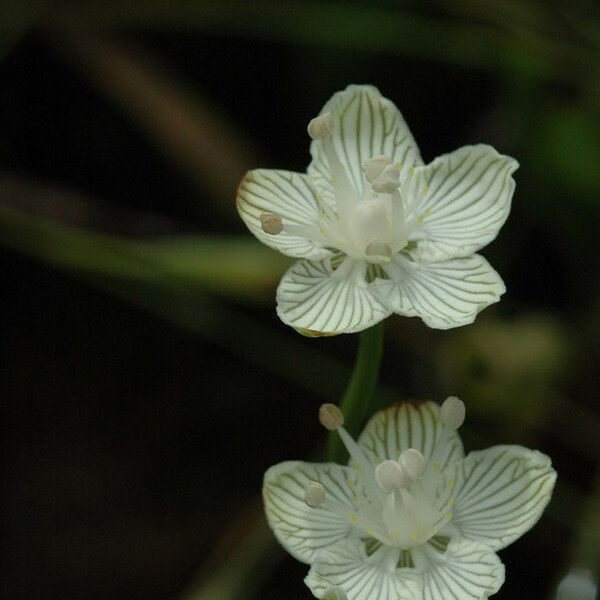
- 🌸 The "Veined" Petals: Each flower features five snowy white petals marked with intricate, parallel green veins. These lines aren't just decorative; they act as a roadmap for visiting pollinators.
- 🍃 Kidney-Shaped Foliage: The plant is named for its basal leaves, which are thick, smooth, and shaped like little kidneys or hearts. They grow in a tidy cluster right at the soil surface.
- 📍 The Clasping Bract: Look closely at the flower stem—halfway up, you’ll find a single, small leaf that "wraps" around the stalk, a unique signature of the Parnassia family.
🏡 In Your Garden
- 💧 The "Wet Feet" Rule: This plant is a specialist of "seepage" areas. In a home landscape, it will only survive in a dedicated bog garden or near a constant water feature. It cannot tolerate drying out even for a single afternoon.
- ⛰️ Acidic Affection: It thrives in the cool, acidic soils found along mountain stream banks. Because it has a sensitive root system adapted to these very specific niches, it is notoriously difficult to transplant and should be left in the wild or grown from specialized nursery seed.
⚠️ Safety & Toxicity
- 🟢 Non-Toxic: There are no records of Parnassia asarifolia being poisonous to humans or common household pets.
- 🐾 General Caution: While not toxic, it is not considered an edible plant. Keep an eye on curious pets to ensure they don't trample or graze on these rare beauties, as they are ecologically sensitive.
✨ Fun Fact
The green stripes on the petals are more than just pretty—they are "nectar guides." To a bee’s eyes, which see in the ultraviolet spectrum, these stripes glow like neon runway lights, directing the insect toward the center of the flower for a sugary reward!

Detailed Care Instructions
To grow Parnassia asarifolia (also known as Eastern grass-of-Parnassus), follow these steps:
- Obtain seeds or plant divisions from a reputable nursery or online supplier.
- Choose a suitable planting location. Parnassia asarifolia prefers moist, acidic soils found in wet meadows, bogs, and damp woods. It requires partial shade to full sun.
- Prepare the planting area by removing weeds, rocks, and other debris. Loosen the soil using a garden fork or tiller to promote good root development.
- Sow seeds in the desired location in early spring or early fall. If using divisions, gently plant them directly into the prepared soil.
- Cover the seeds or divisions lightly with soil, as they require a thin layer of soil cover to germinate successfully.
- Water thoroughly after planting and keep the soil consistently moist. Avoid overwatering, as Parnassia asarifolia prefers damp, rather than waterlogged, conditions.
- Mulch around the planted areas to conserve moisture and suppress weed growth.
- Continue to water regularly to keep the soil damp until the plants establish.
- Provide partial shade during hotter periods, as direct sunlight can scorch the leaves.
- Although Parnassia asarifolia is generally low maintenance, you may want to monitor for pests and diseases. If necessary, treat them using organic pest control methods.
- Enjoy the beautiful white flowers that bloom from late summer to early fall.
- Propagate by dividing mature plants in early spring or fall, as this can help expand your Parnassia asarifolia population.
Remember that local growing conditions may vary, so it's essential to research the specific needs of this plant in your area.

Place in a bright room that is sun drenched almost all day. Or directly in a south-facing window.

To water this plant, first check the moisture of the soil by touching it with your fingers. If it feels dry to the touch, it is time to water. Use a watering can or hose to gently pour water onto the soil around the plant, being careful not to overwater. Allow the soil to absorb the water before watering again. It is important to avoid getting the leaves of the plant wet, as this can lead to fungal disease. Water this plant regularly to keep the soil consistently moist but not waterlogged.
To fertilize this plant, use a balanced fertilizer with equal amounts of nitrogen, phosphorus, and potassium. Apply the fertilizer once or twice a month during the growing season. Be careful not to over-fertilize, as it can cause damage to the plant. Always follow the manufacturer's instructions for application rates and methods.
The Parnassia Asarifolia plant prefers a soil that is well-draining and rich in nutrients. A high-quality potting mix or a mixture of organic compost and sand is ideal for planting this species. The soil should be evenly moist but not waterlogged, and it is important to avoid overwatering and allowing the roots to sit in standing water. A neutral to slightly acidic soil pH is also beneficial for this plant. It is recommended to periodically fertilize the plant with a balanced fertilizer to ensure healthy growth.
To propagate this plant, first locate a mature and healthy specimen from which to take cuttings. Use a clean and sharp pair of scissors or pruning shears to make a clean cut of about 4-6 inches in length from one of the stem tips or side branches.
Remove the lower leaves from the cutting, leaving only a few at the top. Dip the cut end in rooting hormone powder, which can be purchased from most garden centers or online. This will help encourage root growth.
Fill a small pot with well-draining potting mix and poke a hole in the center with your finger or a pencil. Insert the cutting into the hole and gently press the soil around it. Water the soil until it is evenly moist.
Place the pot in a bright but indirect light location, such as a windowsill or under a grow light. Keep the soil moist and watch for new growth to appear, which should happen within a few weeks.
Once the new plants have established a good root system and several new leaves have emerged, they can be potted into individual containers or transplanted into the garden. Keep the soil moist and protect the new plants from frost or extreme heat until they are well established.








