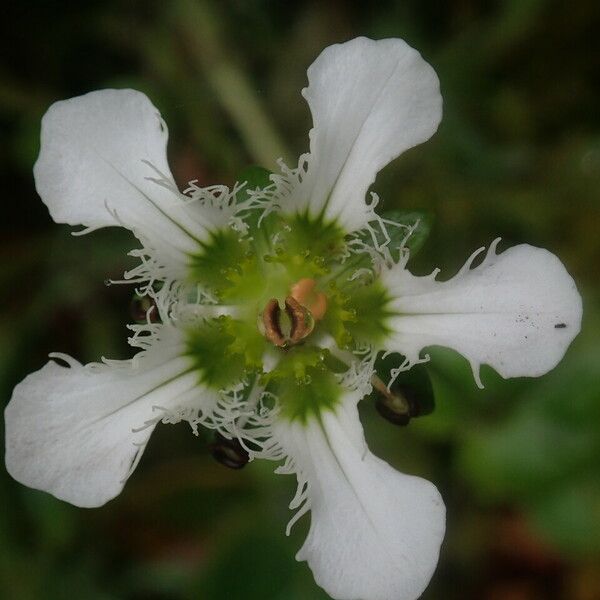
Plant Overview
Known as Wight's Grass of Parnassus, this delicate perennial is often called the "Snowy Star of the Highlands." Named after the Scottish botanist Robert Wight, it is a high-altitude gem that graces moist mountain meadows and stream banks with its ethereal, fringed white blossoms. In many cultures, these flowers are seen as symbols of purity and the rugged beauty of the wilderness.
🔍 How to Identify
- ❄️ Fringed Petals: The most striking feature is its five white petals, which are intricately "fimbriate" or fringed along the lower margins, looking like delicate lace.
- 💚 Heart-Shaped Leaves: Most of the foliage sits at the base in a lush rosette; these leaves are smooth, bright green, and distinctly heart-shaped (cordate).
- 📍 The Clasping Leaf: Look halfway up the flowering stem—you will find a single, stalkless leaf that appears to "hug" or clasp the stem tightly.
🏡 In Your Garden
- 💧 The Bog Specialist: Unlike many garden plants, Parnassia wightiana is a wetland specialist. It requires "wet feet," meaning it thrives in soil that stays consistently moist or even saturated, mimicking its native marshy habitats.
- 🏔️ Cool Temperaments: This plant struggles in high heat. It is best suited for rock gardens near water features or bog gardens where the soil temperature remains cool and the humidity is high.
⚠️ Safety & Toxicity
- 🟢 General Status: Non-toxic and generally safe.
- 🐾 Pets & Kids: There are no recorded reports of toxicity toward cats, dogs, or humans. However, because it grows in fragile ecosystems, it is best enjoyed visually rather than handled or consumed.
✨ Fun Fact
The "fringe" on the petals isn't just for decoration; it acts as a visual guide for pollinators. Inside the flower, it also possesses "staminodes"—sterile stamens that produce glistening drops of fake nectar to trick insects into visiting and pollinating the plant!

Detailed Care Instructions

Place in a bright room that is sun drenched almost all day. Or directly in a south-facing window.

Some plants require more regular watering than others, which should be done every few days. It's critical to maintain the soil moist all of the time. The water requirements of the same plant placed in pots with varying sizes will differ. Because the water in the smaller pot evaporates faster than the water in the larger pot, it will require more watering. Regardless of pot size, the surface should constantly be maintained moist.








